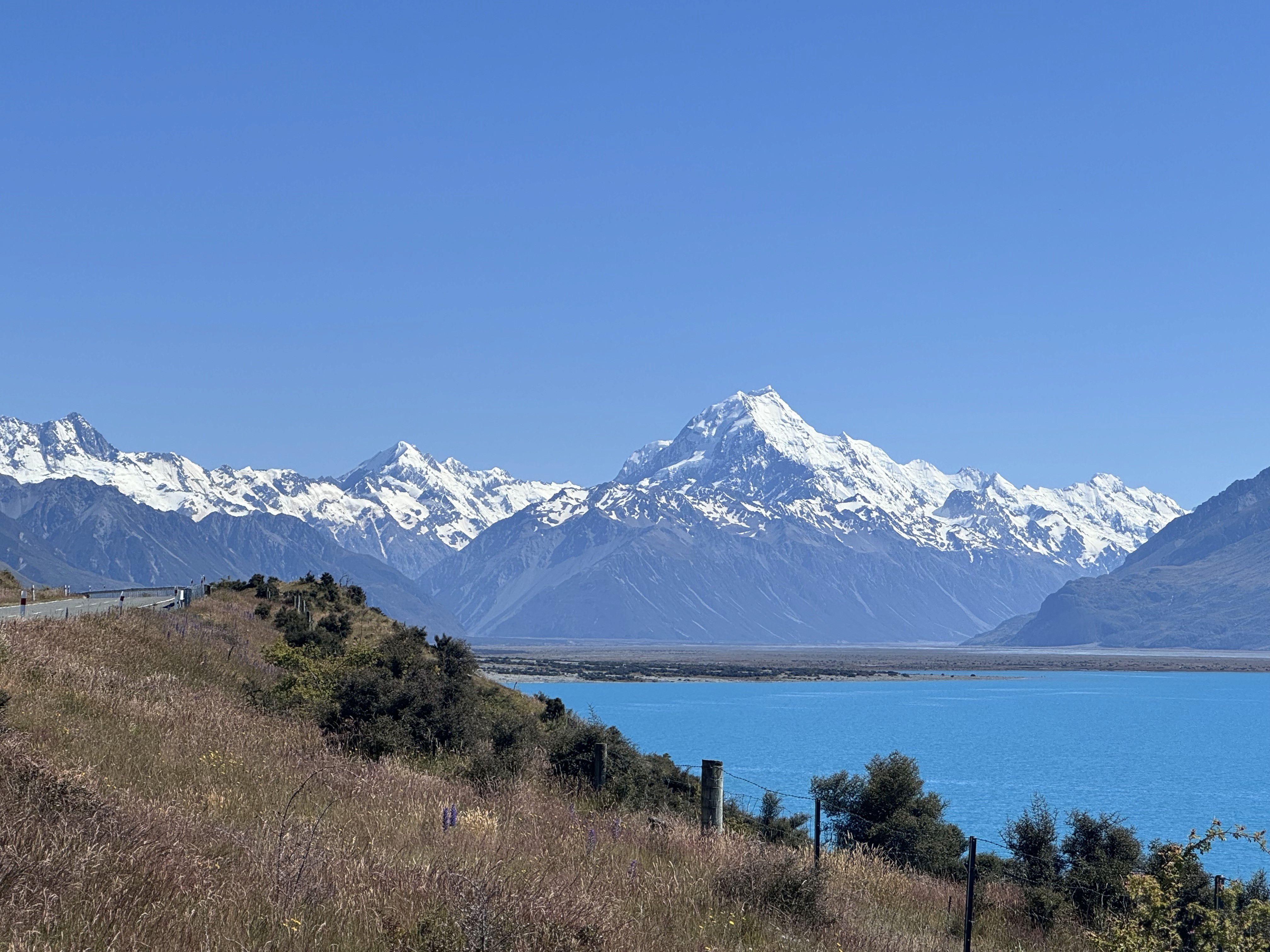
The Ultimate Waitomo Day Trip: Waitomo Glowworm Caves, Mangapohue Natural Bridge & Marokopa Falls
None
—
New Zealand
|
Day 5 of our North Island, NZ, Road Trip:
Our intended itinerary for the day to cover the Waitomo region (in that order) was:
Take a guided tour to the Waitomo glowworm caves in the morning
Proceed to the Mangapohue Natural Bridge
Check out the Marokopa falls
Waitomo Glowworm Caves
The Waitomo Glowworm Caves is a large cave with several underground chambers in the Waitomo region of North Island in New Zealand. It is a popular tourist destination known for its population of glowworms (Scientifically known as Arachnocampa luminosa, a fungal species that is the size of a mosquito), a species endemic to only New Zealand.
Waitomo means water that flows underground. In Maori, 'Wai' means water and 'tomo' alludes to entering a hole or flowing underground. This is how the place got its name referring to the Waitomo stream that flows within these underground caves.
Today, the place is very popular, thanks to these thousands of little glowworms that illuminate the dark grottoes with their magical bioluminescence- creating a stunning faux galaxy in the subterranean limestone caverns that impresses one and all.
Reaching Waitomo Glowworm Caves:
Address: 39 Waitomo Village Rd, Waitomo Caves, New Zealand.
By Car:
From Cambridge: It takes around 1 hour (around 70-90 kms), via SH1 and SH3
From Auckland: It takes around 2 to 2.5 hours (around 200 kms), via SH1 and SH3
There are other modes of public transportation available too to reach Waitomo.
We were renting a place in Cambridge to avoid these long distances from Auckland. Makes sense, right!
Tickets & Parking:
It is recommended to pre-book your Waitomo cave tour tickets in advance to ensure availability and to be able to select the tour time you prefer. We had purchased the tickets in advance to be able to start our tour in the morning. This way, we could have enough time for other activities the rest of the day.
There is ample of free parking at the Waitomo Glowworm Caves…actually almost everywhere in NZ :)
The Waitomo Caves: History, Geology and a little bit of Biology…
The tour begins with the history of the place and highlights the Maori and European connection. It is an interesting story of how the grotto was discovered by the Europeans and how tourism started back then. The Maori must have obviously discovered it centuries ago but the recorded evidence is from 1887 when a Maori, Tane Tinorau, and another European entered the caves on a raft and discovered this beautiful world of glowworms. Later in 1888, Tinorau and his wife, Huti, started taking visitors inside the cave for a fee.
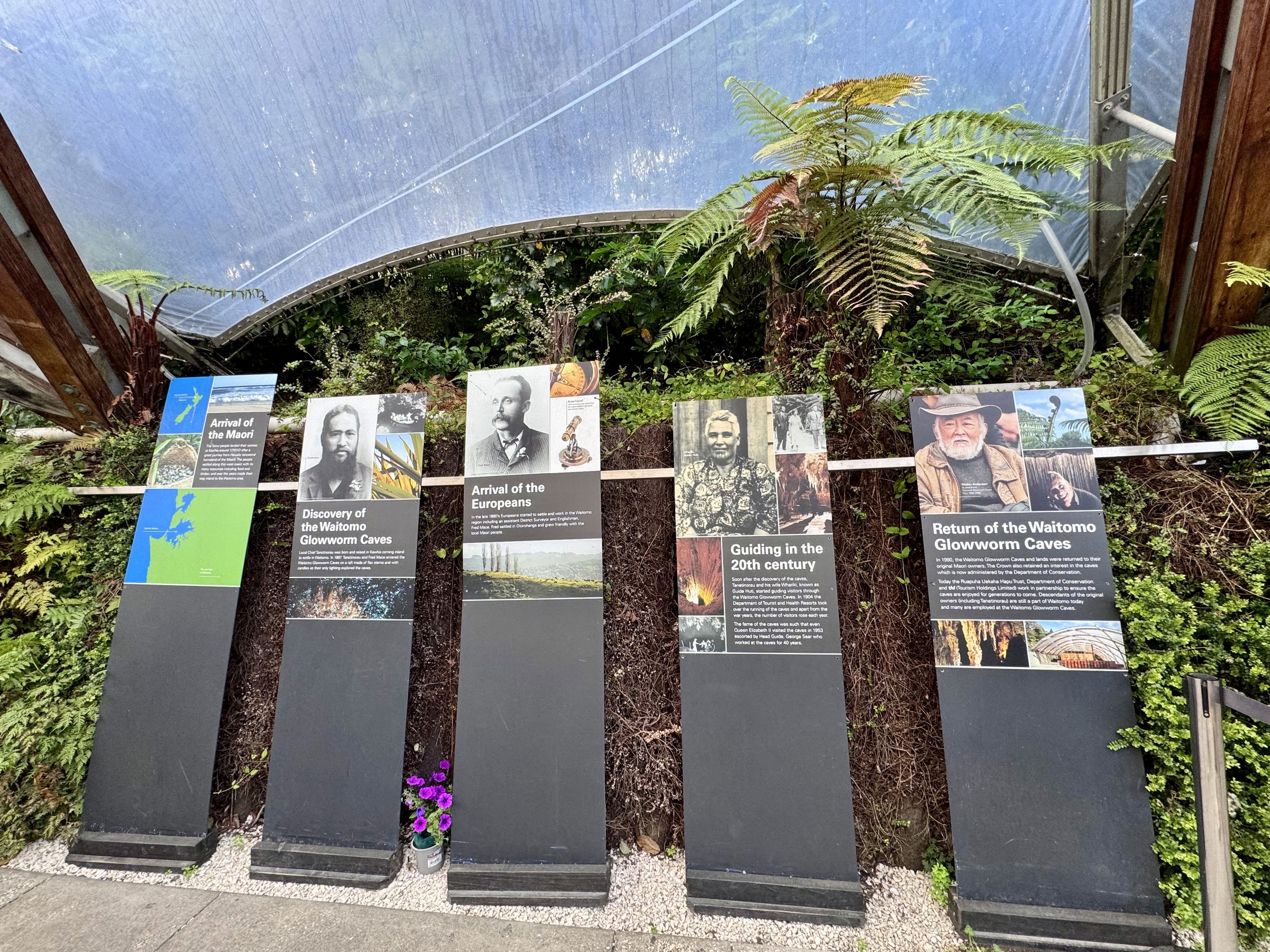
This is how these Waitomo caves had become tourist destinations over a century ago and these glowworms, unique to NZ, were introduced to the world. The glowworms emit light only in the larval stage. These larvae are attached to the ceiling and rocks by a network of sticky threads which give a hanging curtain effect. The light is emitted to lure the prey insects to the sticky droplets on the threads and consume them. They are nature's living lanterns - Magic for some and fatal for some :)
Coming to its geology, the Waitomo caves has 2 levels - The Upper Chamber and The Lower Chamber. The upper chamber is beautiful with many delicate cave formations of stalactites and stalagmites and is relatively drier as compared to the lower chamber. The Waitomo stream runs in the lower chamber and has a high humidity content required for the glowworms to survive.
The lower chamber is also home to Cathedral - the tallest chamber in the cave with great natural acoustics. Consequently, it has been the venue for many underground musical concerts offering a unique visual and acoustic experience to its visitors.
The Waitomo Caves Tour
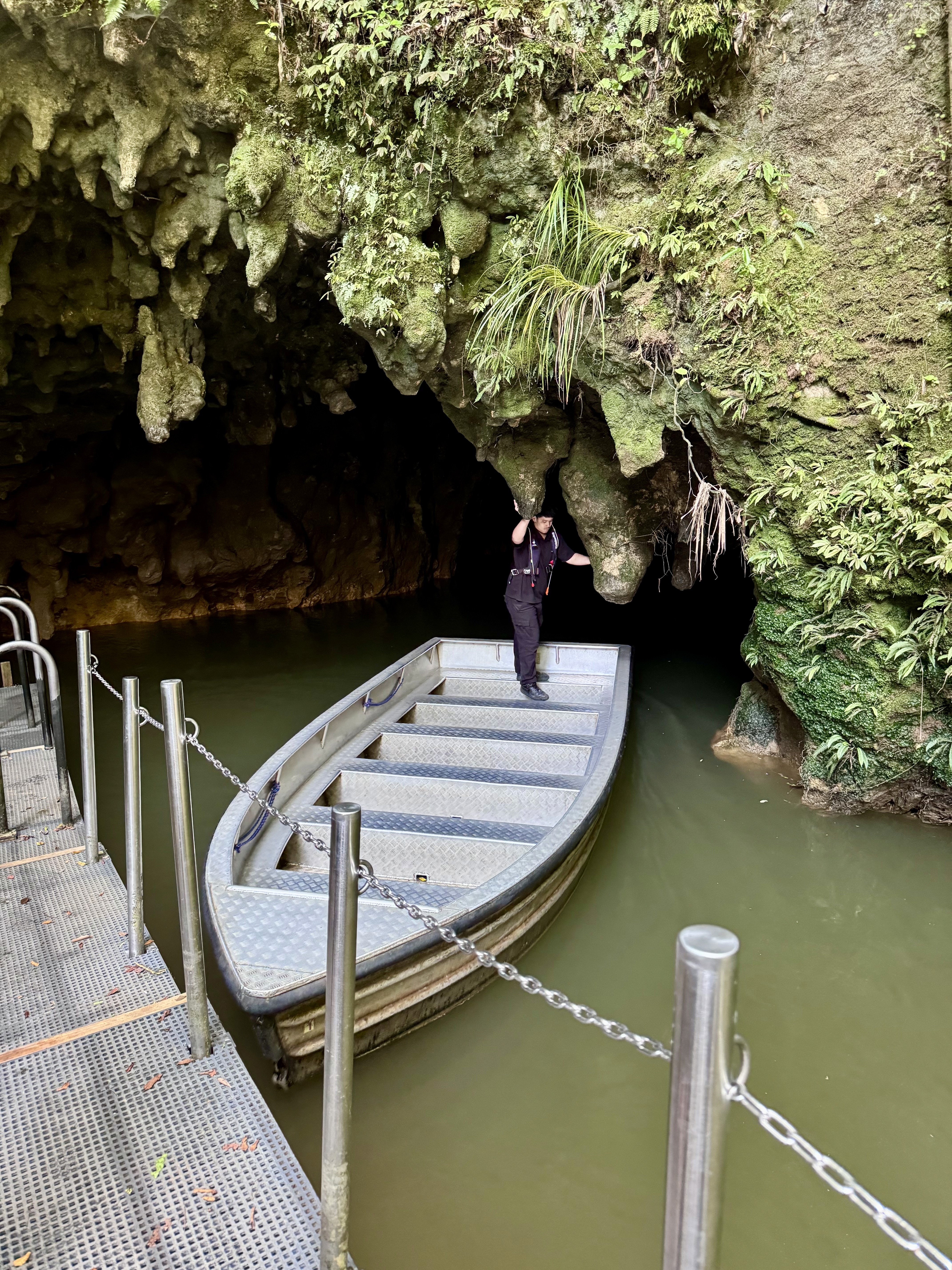
After the introduction outside at the Visitor Centre, we were taken inside through a maze of pathways to a Demonstration Chamber, the Cathedral and then to the lower level where the stream runs. Here, we were asked to switch off our phone lights and get into a tour boat for a 45-minute ride through the intricate waterways within the caves. Photography was prohibited only except when we were told to, to protect the glowworms from the sudden flashes.
It was pitch dark inside the caves as our boat navigated the still waters of the stream, and then gradually the ceilings and walls started glowing with thousands of glowworms hanging in there emitting light to create a starry effect. This was pure magic. It can be only seen and felt. Describing it here is difficult. The pictures too don't do justice so I am not putting in any pic taken inside the caves.
The tour ended rather quickly for me. I wish I had more time inside the caves to absorb the magic surrounding me. But alas, all good things come to an end and this too ended sooner than I wished for. The entire tour, from arriving at the visitor center to exiting the caves, not including the time at the cafe, took around 1.5 hours.
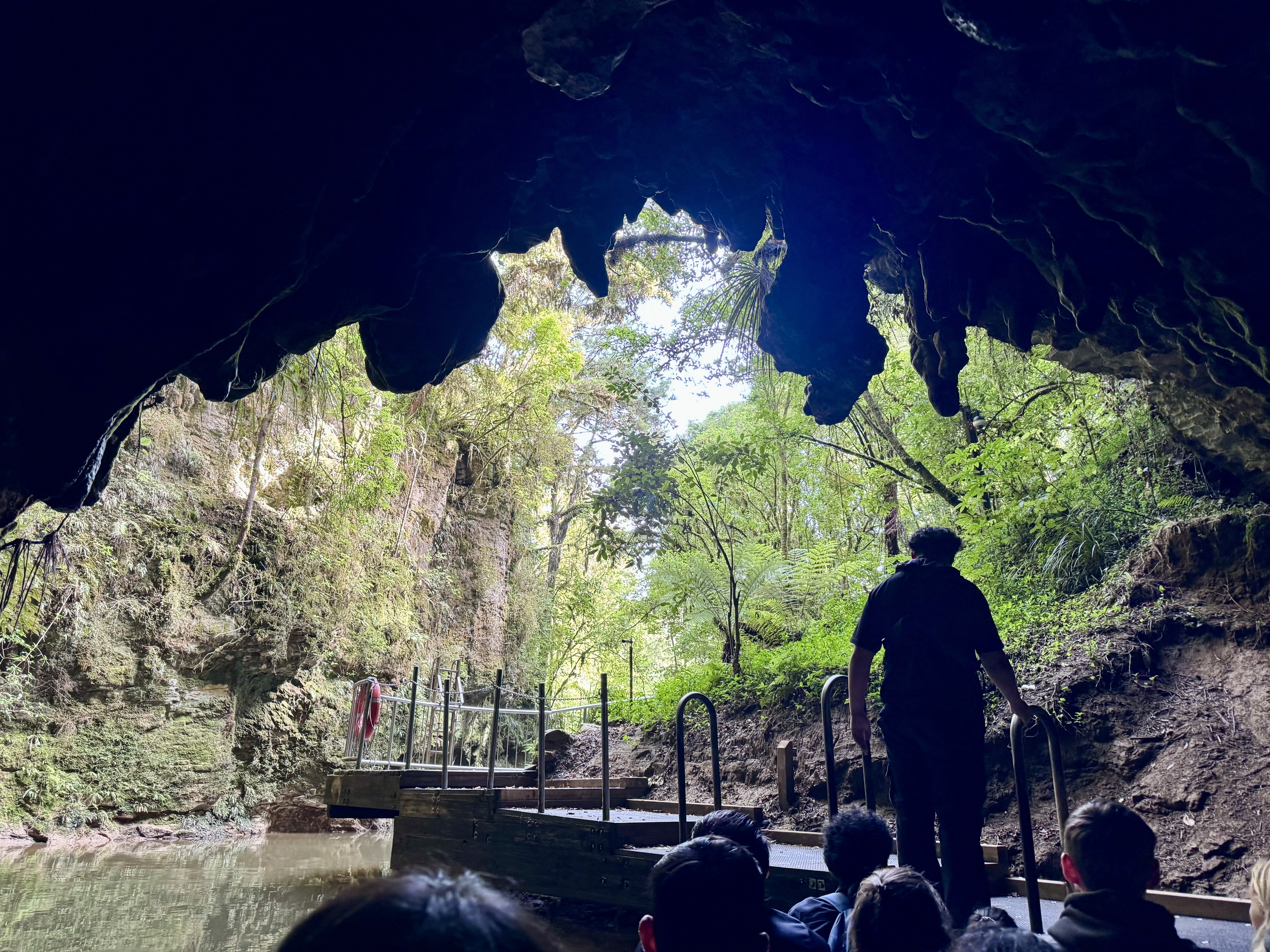
The exit of the Waitomo caves today from where once Tinarou and Mace entered the caves in 1887
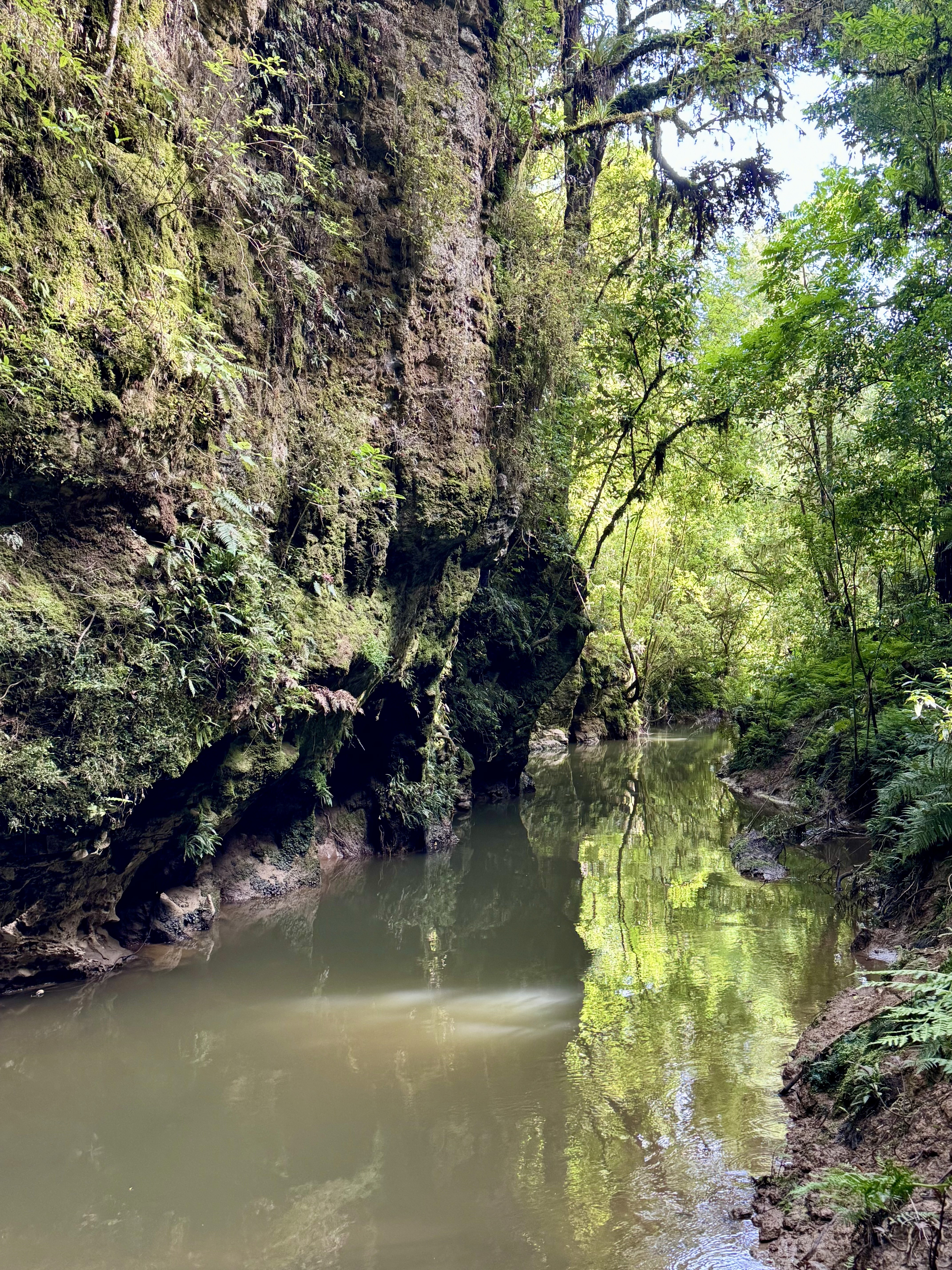
The Waitomo stream (also referred to as Waitomo river) that carved magic in this limestone region
We exited the boat and lumbered along the steps to reach a cafe. It was Christmas and most of the cafes in this part of the world were closed for the day. So we decided to have a quick meal at the cafe itself rather than trying our luck elsewhere. There were a few vegan/vegetarian options at the cafe and we were glad that we could eat at the cafe for all other shops and restaurants were closed in the vicinity as we soon found out.
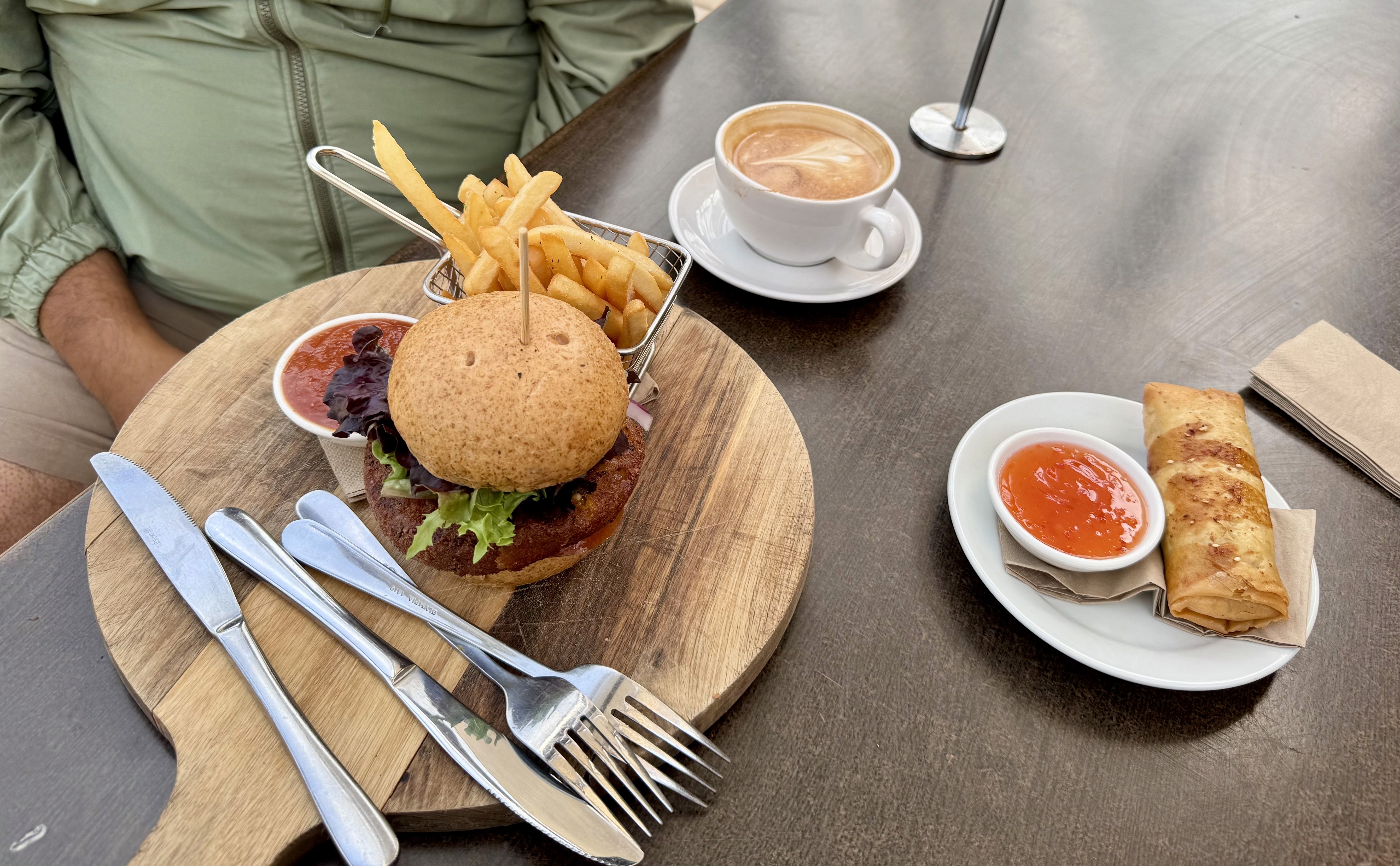
I love the spinach-feta cheese rolls (on the right) found in Australia and NZ. Miss them back home!
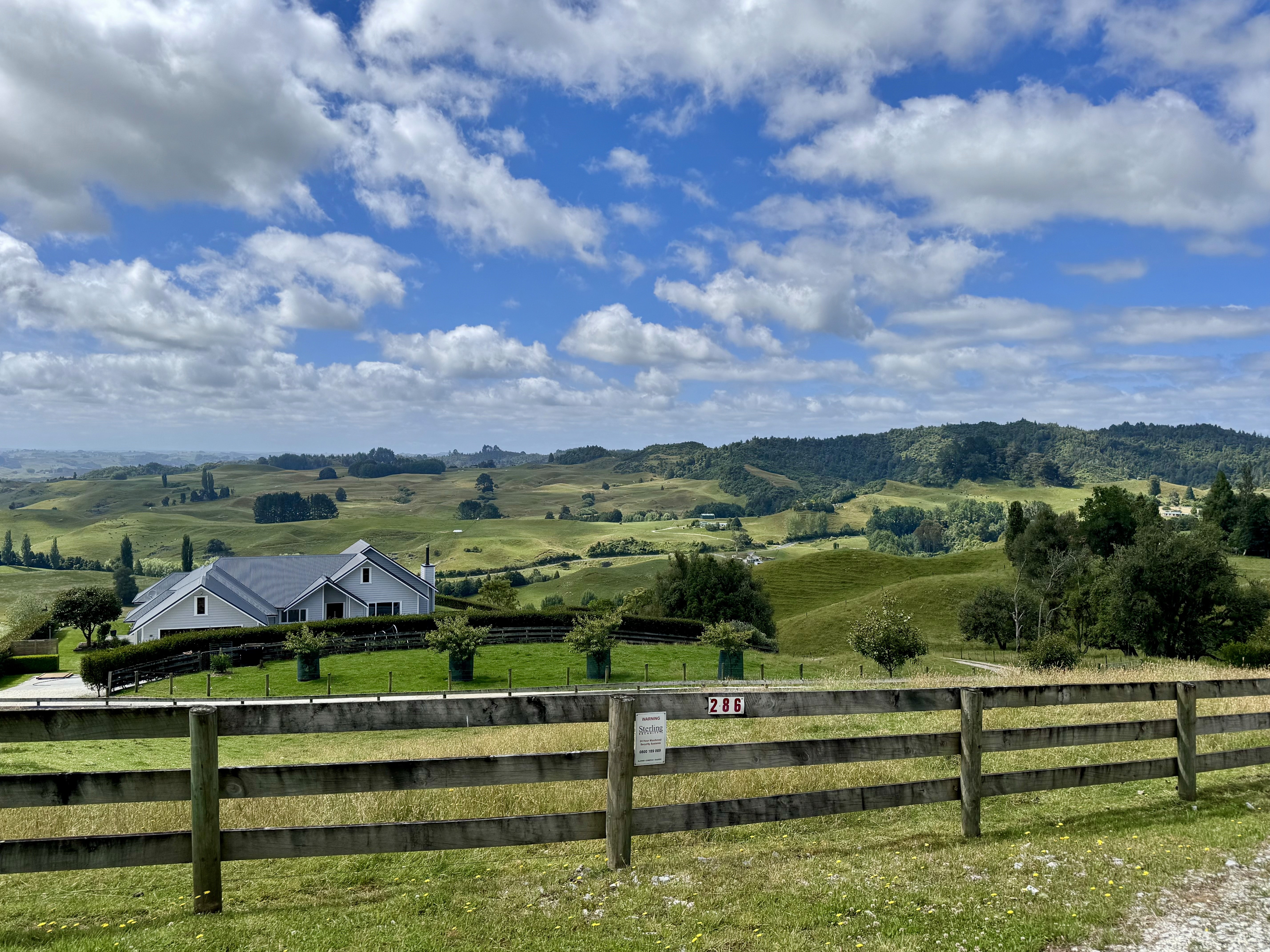
Pretty place while driving from Waitomo Caves - the clouds created a beautiful hide and seek effect on the picturesque plains below
Mangapohue Natural Bridge
Once you arrive in Waitomo, you cannot miss this stunning natural piece of art that is some 25 kms and only a 30-minutes drive away from the Waitomo Glowworm Caves. This is where Mother Nature has worked wonders over millions of years to carve out these natural limestone arches over the Mangapohue stream.
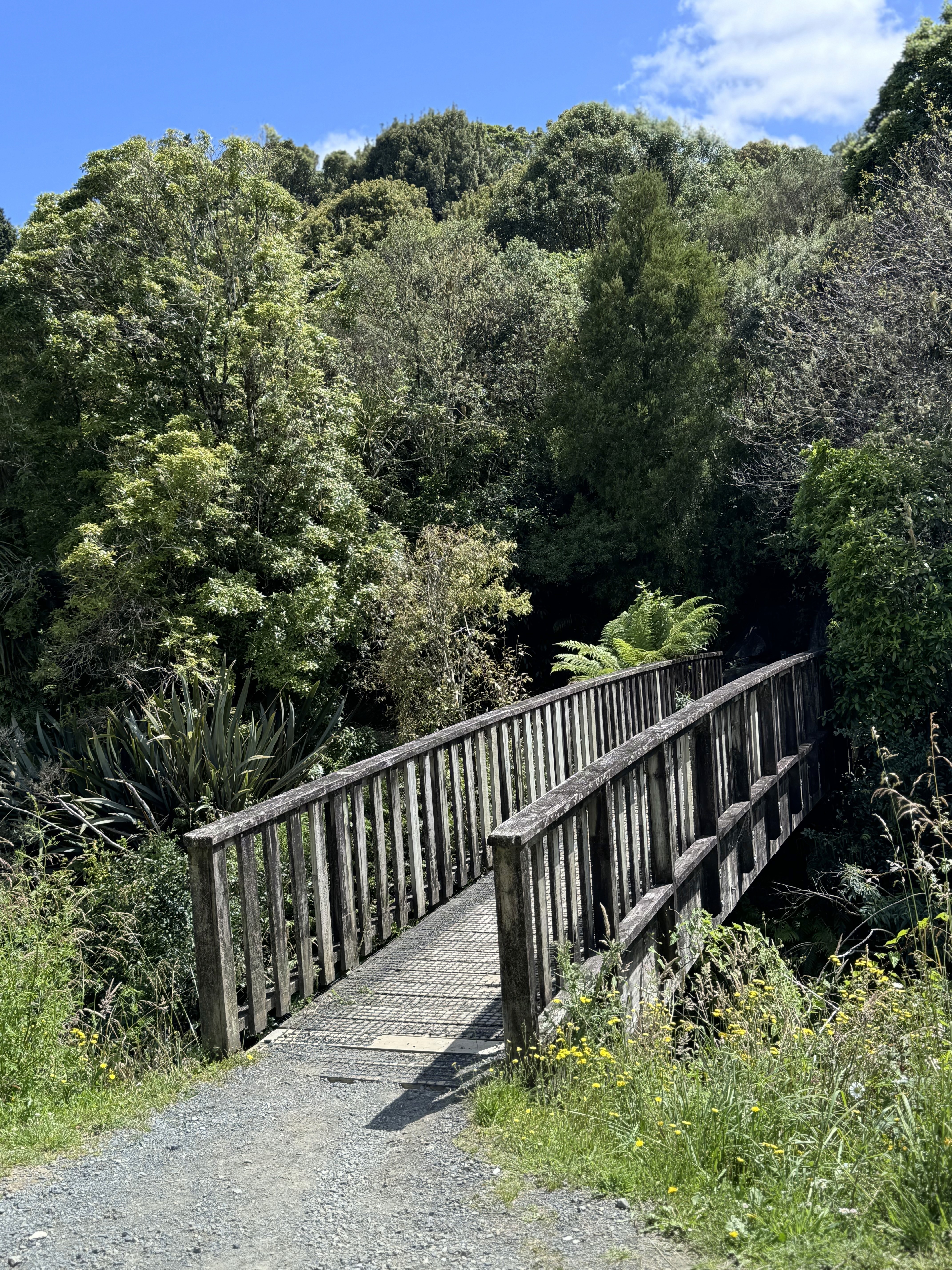
The wooden bridge across the Mangapohue stream from the car park which leads to the gorge
Mangapohue Natural bridge is a 17-metre high natural arch that is formed by the erosion of an ancient cave system over millions of years. Today, what we see as the natural arch bridge is actually the remnants of a limestone cave that was eroded by the Mangapohue stream over time immemorial.
Tourist Information for Mangapohue Natural Bridge:
Address/Location: Te Anga Road, Te Anga 3988, New Zealand
For the tourists, it is a short and easy work along the boardwalk created along the path of the Mangapohue stream which leads you the natural bridge and a little beyond across some farmlands. It takes just about 25-30 minutes at a leisurely pace to see the entire place.
It is a wheel-chair friendly, 700-metre loop walk with a few steps towards the end of the loop; easily accessible to all ages. It has ample of free car park and the entry too is free to this lovely place.
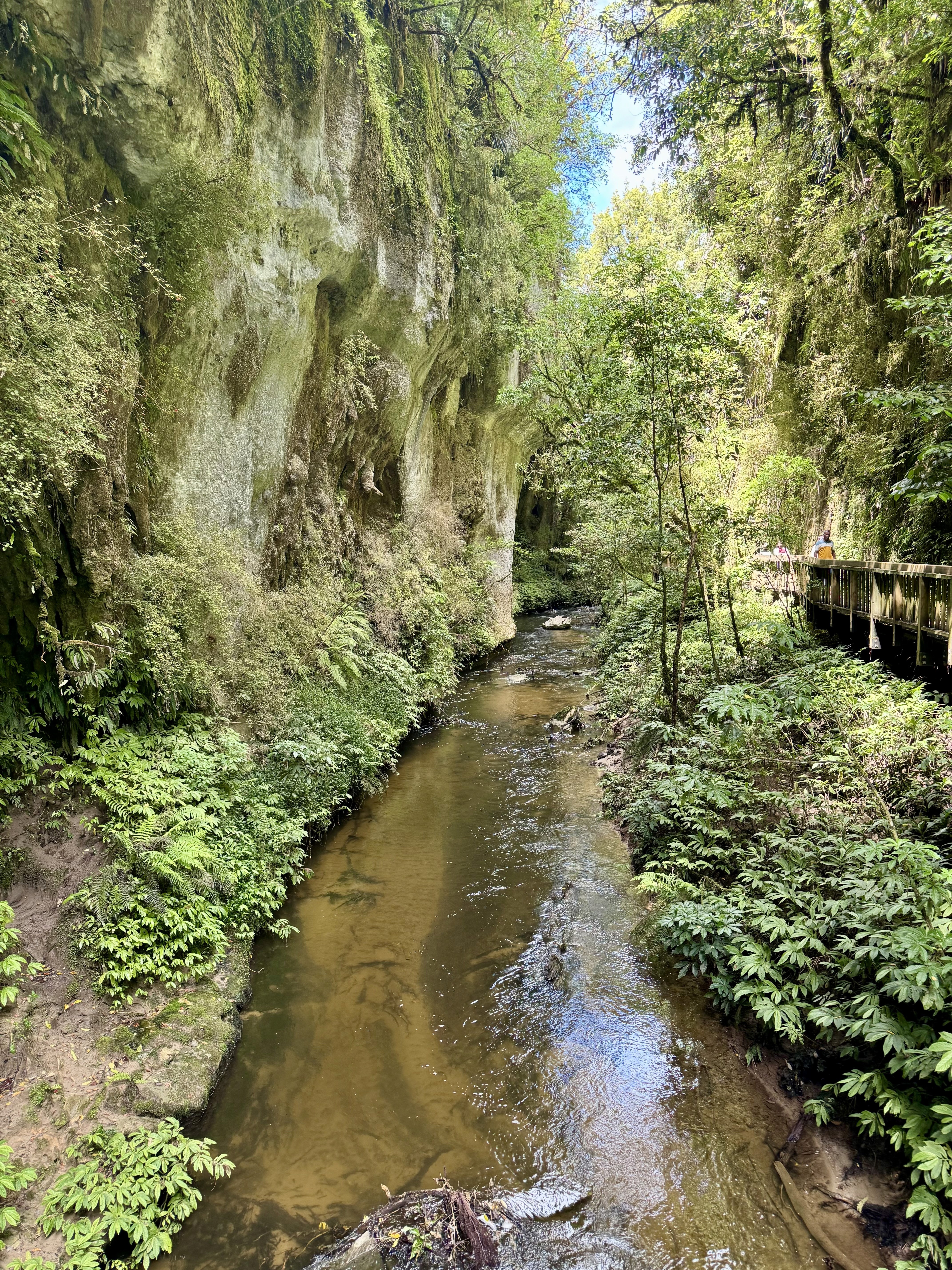
The crystal clear waters of Mangapohue stream flowing through the steep-sided limestone gorge
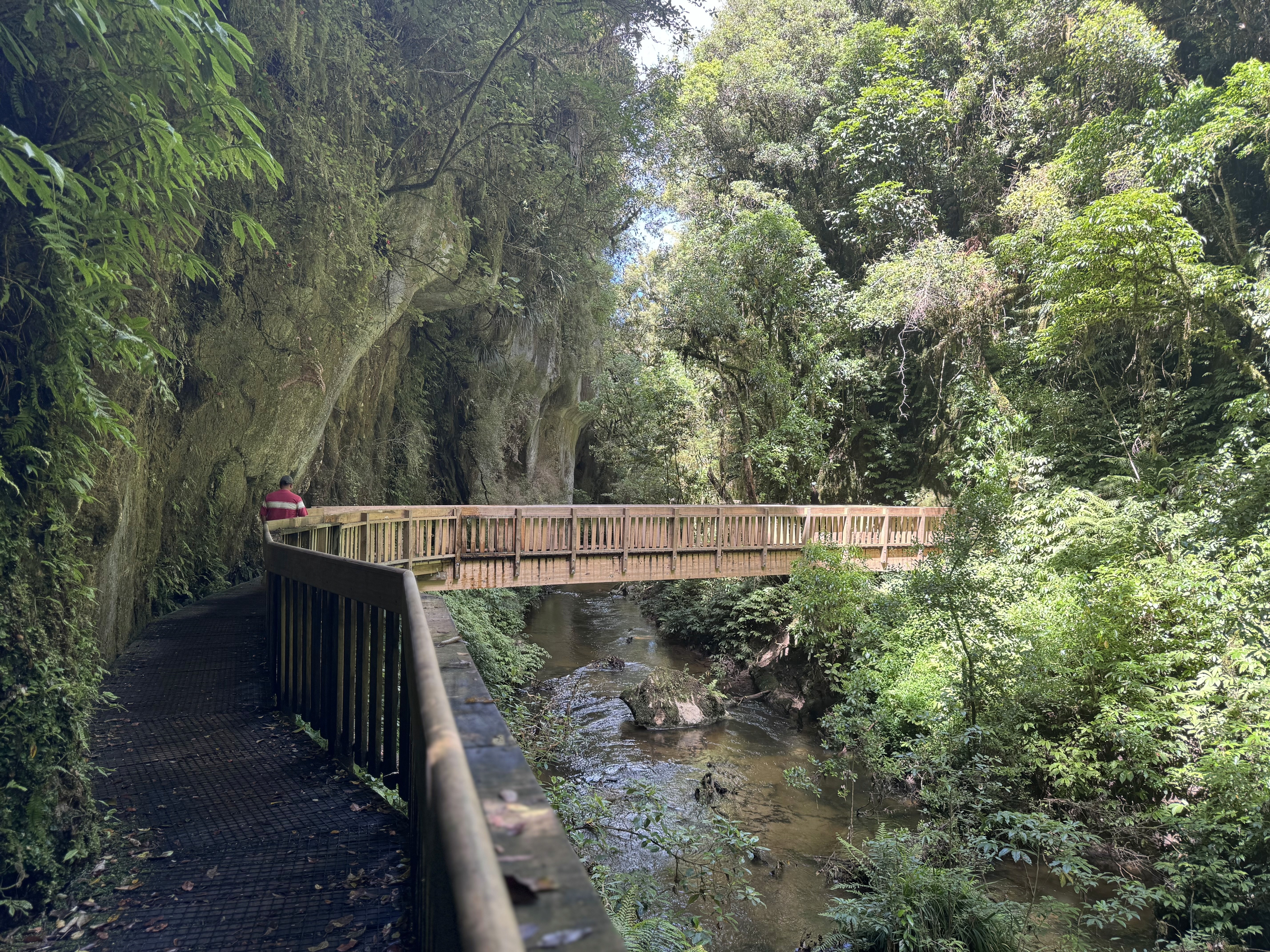
The boardwalk along the Mangapohue stream leading to the Mangapohe Natural Bridge
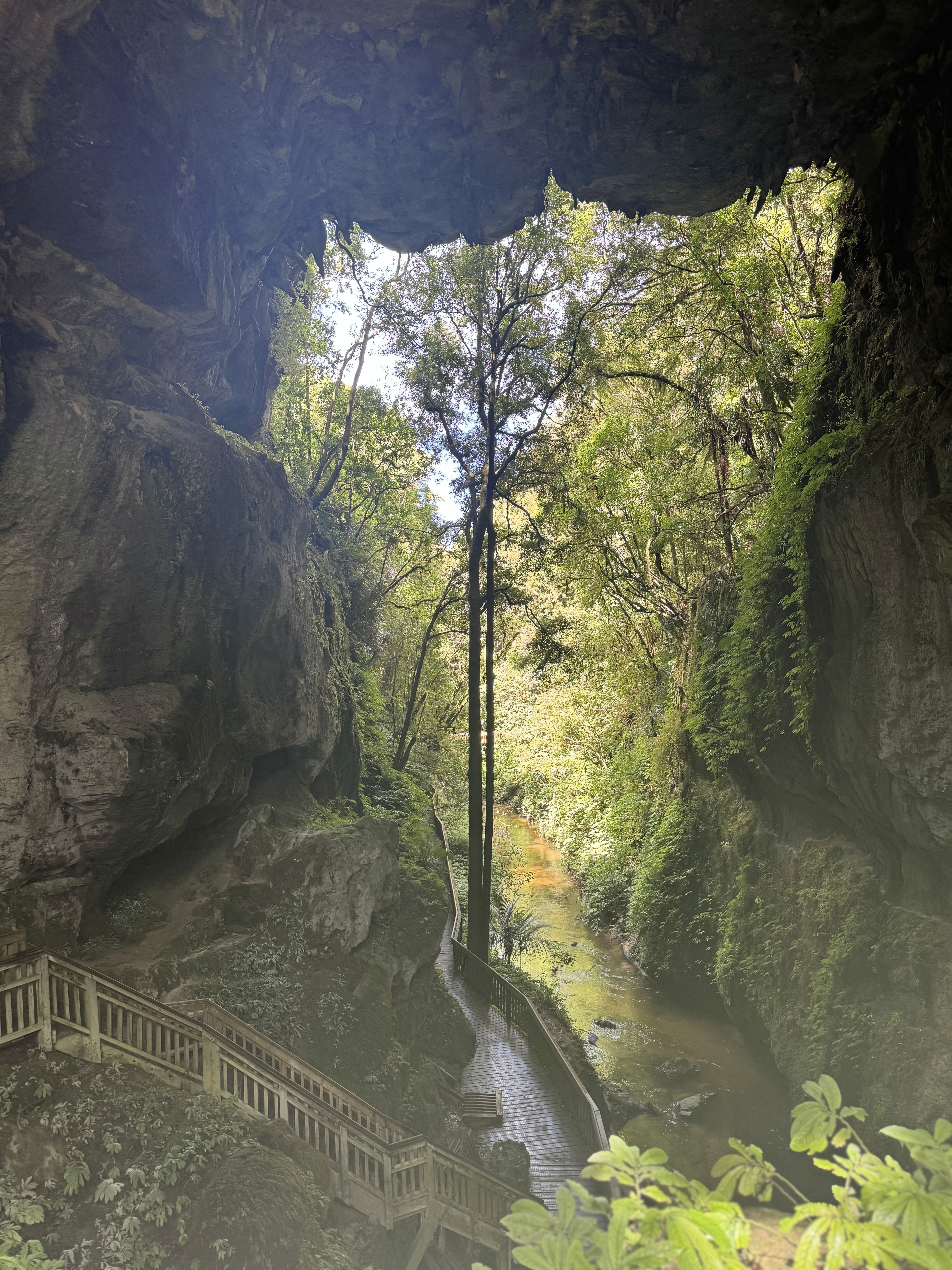
The Upper level of the Mangapohue Natural Bridge as seen from the viewing platform
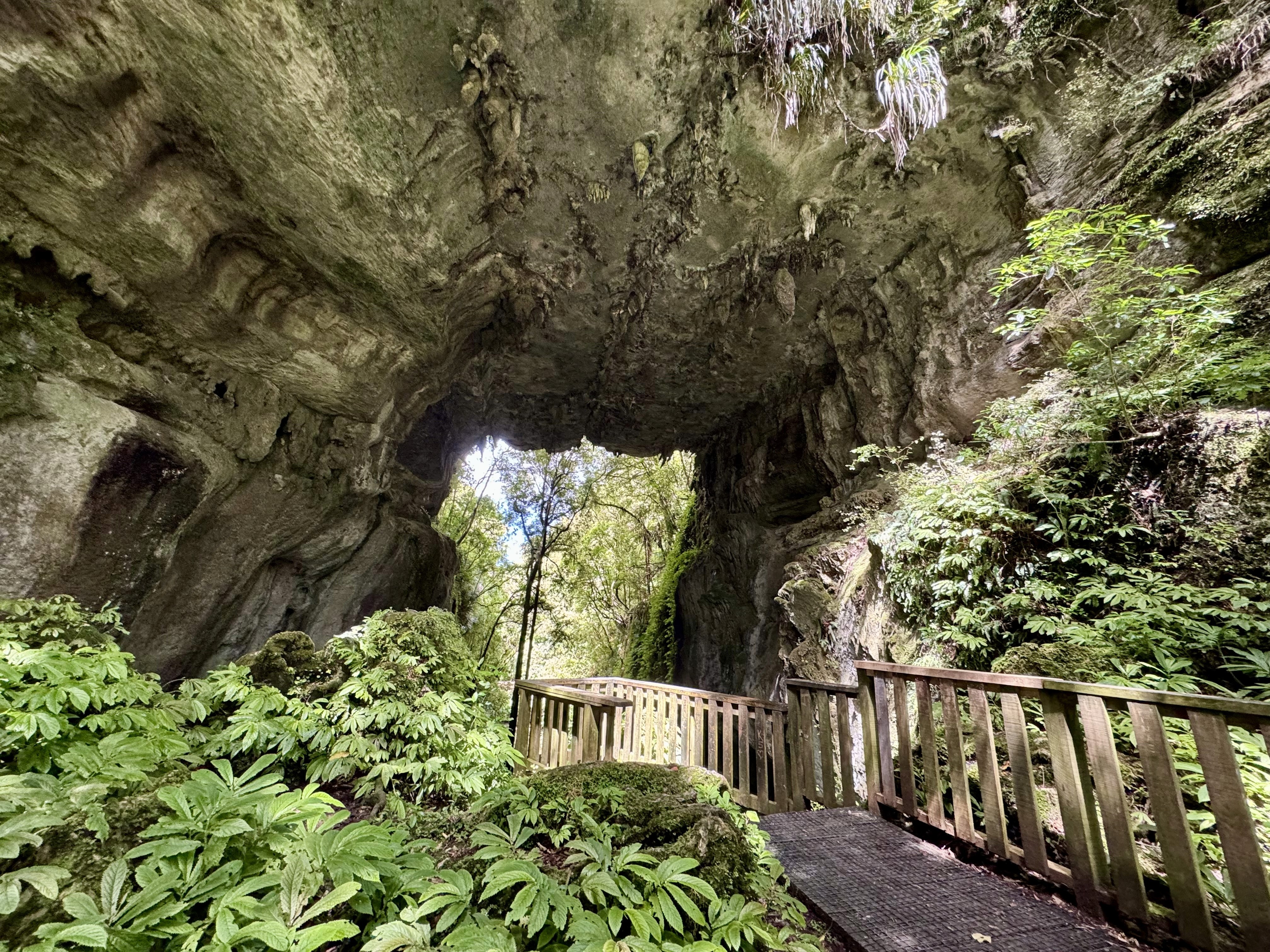
The viewing platform on the upper level of the Mangapohue Natural Bridge
Stopping at Mangapohue Natural Bridge is a highly recommended activity in the Waitomo region - visually stunning, easy and free for all. The walk is definitely scenic and informative, especially for paleontologists, with giant marine fossils embedded in the walls and outcrops of the gorge. You can also spot more marine fossils on the path leading to the farmlands behind this natural bridge. Climb down the steps behind the viewing platform to reach the grasslands and add another 15 minutes to your time at this place.
We, fossil amateurs, skipped the farmland walk, and proceeded to our next stop for the day.
Marokopa Falls
It has become more difficult lately with all the climate changes to spot good waterfalls on our outings. So make sure not to miss out on the Marokopa Falls which is considered to be 'New Zealand's most beautiful waterfall'. This 35-metres high gushing falls is indeed not to be missed!
Reaching Marokopa falls
Address/Location: Te Anga Road, Waikato 3977, New Zealand
A short 6-minute drive from Mangapohue Natural Bridge takes you to the parking lot and to the starting point of the trail to the falls. It is around 31 kms west of the Waitomo caves and just 5 kms from the Mangapohue Natural Bridge on the Te Anga Road.
The car park is free but small. It can get filled up quickly especially on weekends. However, a small patient wait for the visitors to return can yield you a parking spot as the walk to the falls and back is quite short.
Driving is the best bet to reach this place as there are no public buses to this spot.
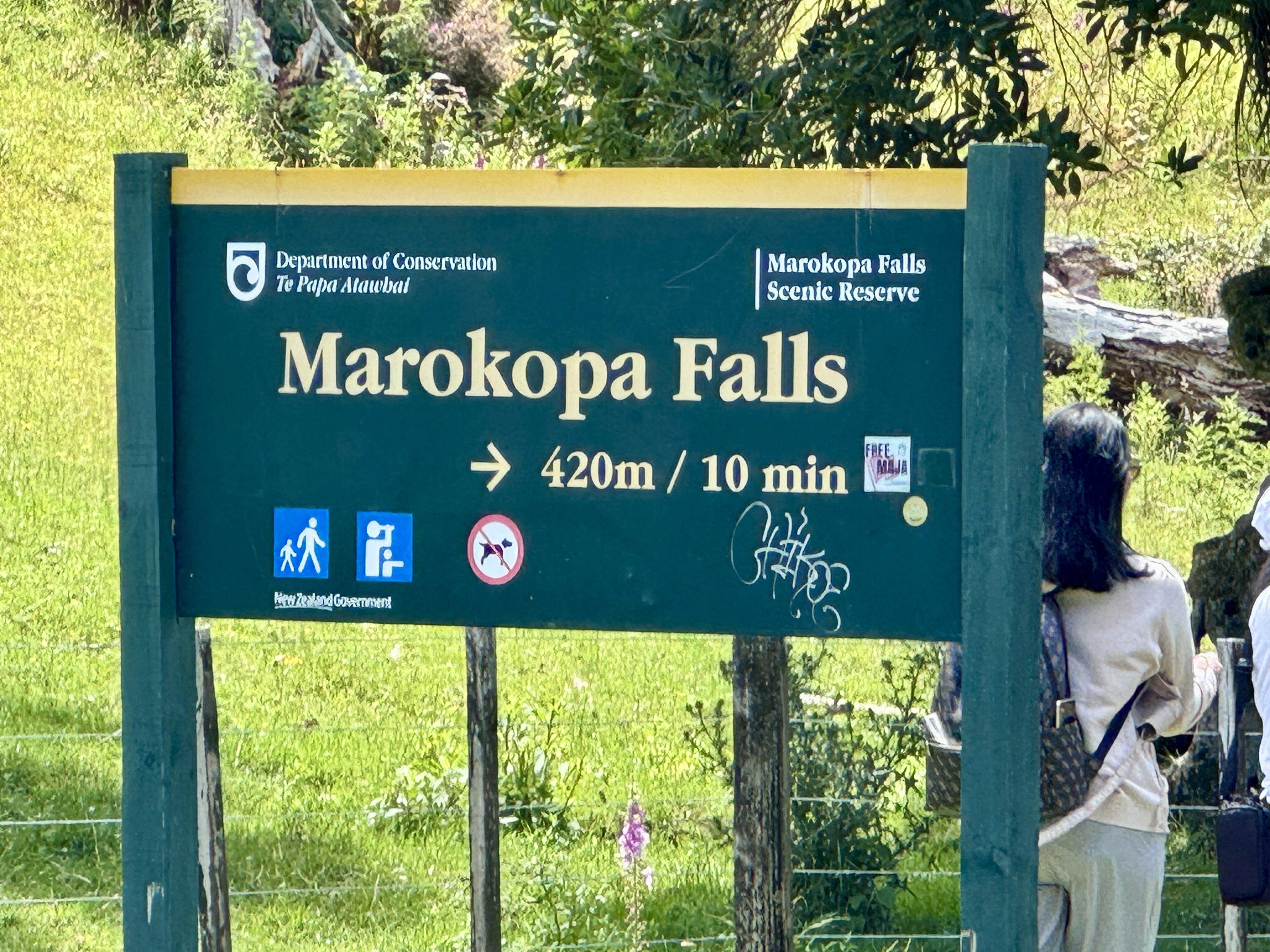
A short 10-minute easy walk from the car park leads us to Marokopa Falls viewing platform
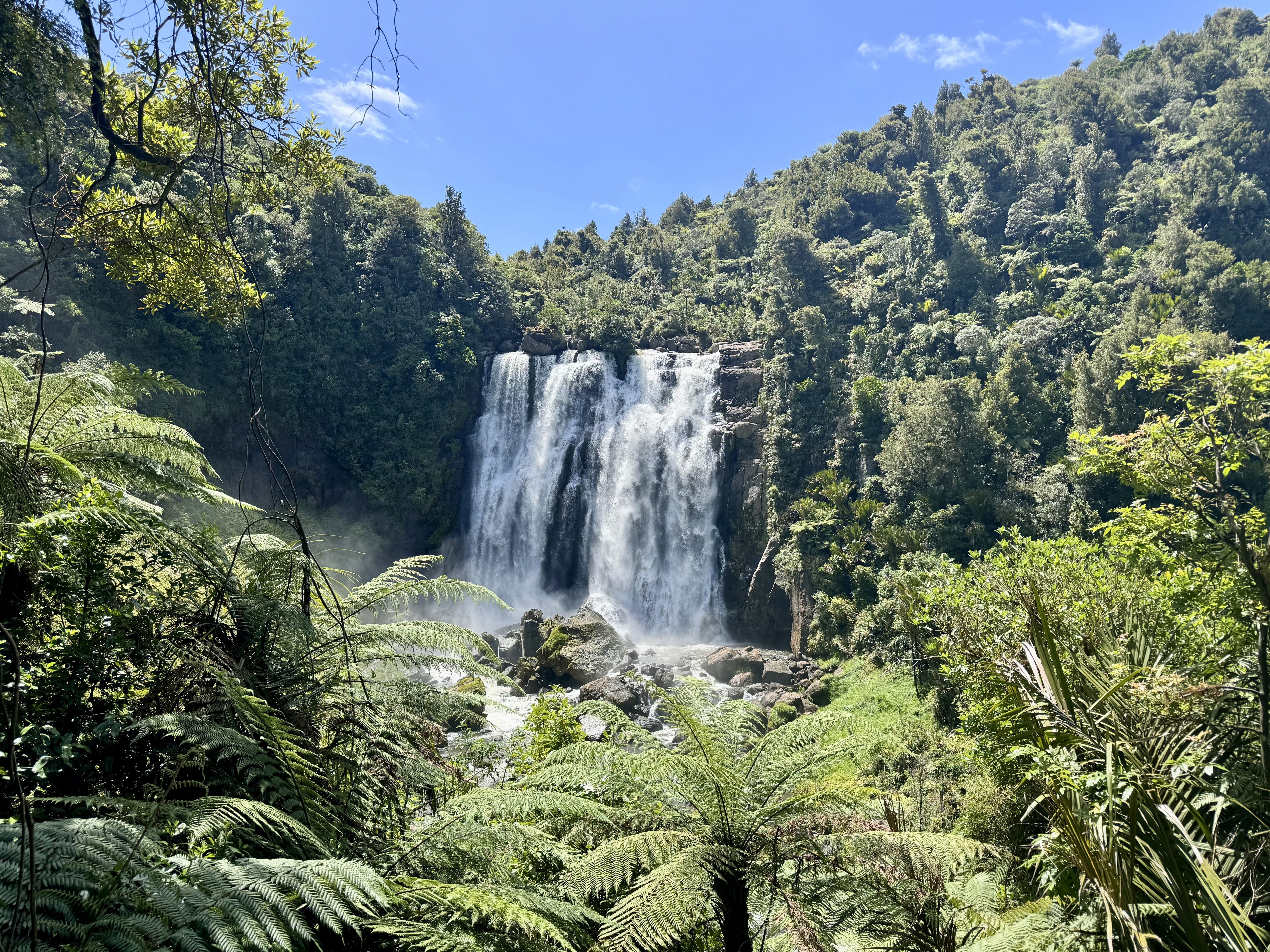
The walk to the falls is through lush native vegetation and is quite a treat to the eyes :)