Hell's Gate in Rotorua: A Place where Geothermal Wonders Blend with Maori Culture
None
—
New Zealand
|
Day 6 of our North Island, NZ, Road Trip
Reaching Rotorua
From Cambridge:
Rotorua is 87 kms and just a 1-hour drive from Cambridge. The route was very scenic through the Waikato region making Rotorua a great location for a day trip from Cambridge.
From Auckland:
Rotorua is 229 kms from Auckland and takes about 3 hours one way. It is a must-do weekend destination from Auckland.
The Hell's Gate Experience
The Hell's Gate is New Zealand's only natural raw geothermal mud spa reserve where you can bathe in the nutrient-rich mud and heal yourself in the sulfur-rich hot springs used by the Maoris for centuries before us. It is not just a geothermal reserve but a place of Maori culture, steeped in myths and legends that come alive as the earth boils below us as the steams billows into the sky above.
Tickets are priced at around $115 NZD per person for the entire Hell's Gate experience which includes:
Geothermal walk - around 90 minutes
Mud baths - 20 minutes + changing time
Sulphur spas - around 30 minutes
Complimentary Māori carving - 15 to 20 minutes
Complimentary Cool plunge pool - as per your preference :)
The entire Hell's Gate Experience takes around 3-4 hours and is a must-do when you are in Rotorua. Tickets can be booked on the spot as well. However, it is recommended that you book your tickets beforehand to avoid disappointment on crowded days. One can also book just the geothermal walk or just the mud bath + sulfur spa experience which are priced differently.
We had booked the Hell's Gate Experience in the afternoon at 12:30 pm. So we checked out a bit late from our AirBnB in Cambridge and reached the reserve just in time. We were asked to begin our tour by taking the self-guided interactive geothermal walk before soaking ourselves in the mud bath. Seemed logical!
The Myths and Legends of Hell's Gate:
It is rather fascinating to know the history of this raw and intense geothermal region, known as the Hell's Gate. It is a deeply spiritual place for the Maoris connected to its culture, tradition and fabled legends. Let's take a look at what makes this place special…
The Legend of Hurutini
There is rather a tragic tale as to why the Hell's Gate area is known as Tikitere in the Maori Culture. It is said that around some 650 years ago, there was a Maori princess by the name Hurutini, who flung herself into one of the boiling pools of the region to escape an abusive marriage. When her mother found her dead body floating on the pool, she let out a lamenting cry - "Aue teri nei tiki" which translates to "here lies my precious one". Over the years, the phrase was truncated to 'Tikitere' which became the name of this geothermal area.
O Te Mimi O Te Kākahi Waterfall
As soon as we enter the Hell's Gate Bush Walk and Geothermal Reserve, we see this Kakahi waterfall inside a dense vegetated area. This is the healing waterfall where the Maori warriors used to wash off blood and grime after returning home from their wars. The mineral rich water was used to heal and soothe their wounds for centuries. Kakahi was a famous Maori warrior of his times who made this waterfall popular amongst his tribe. Today, this thermal waterfall is off-limit for us tourists.
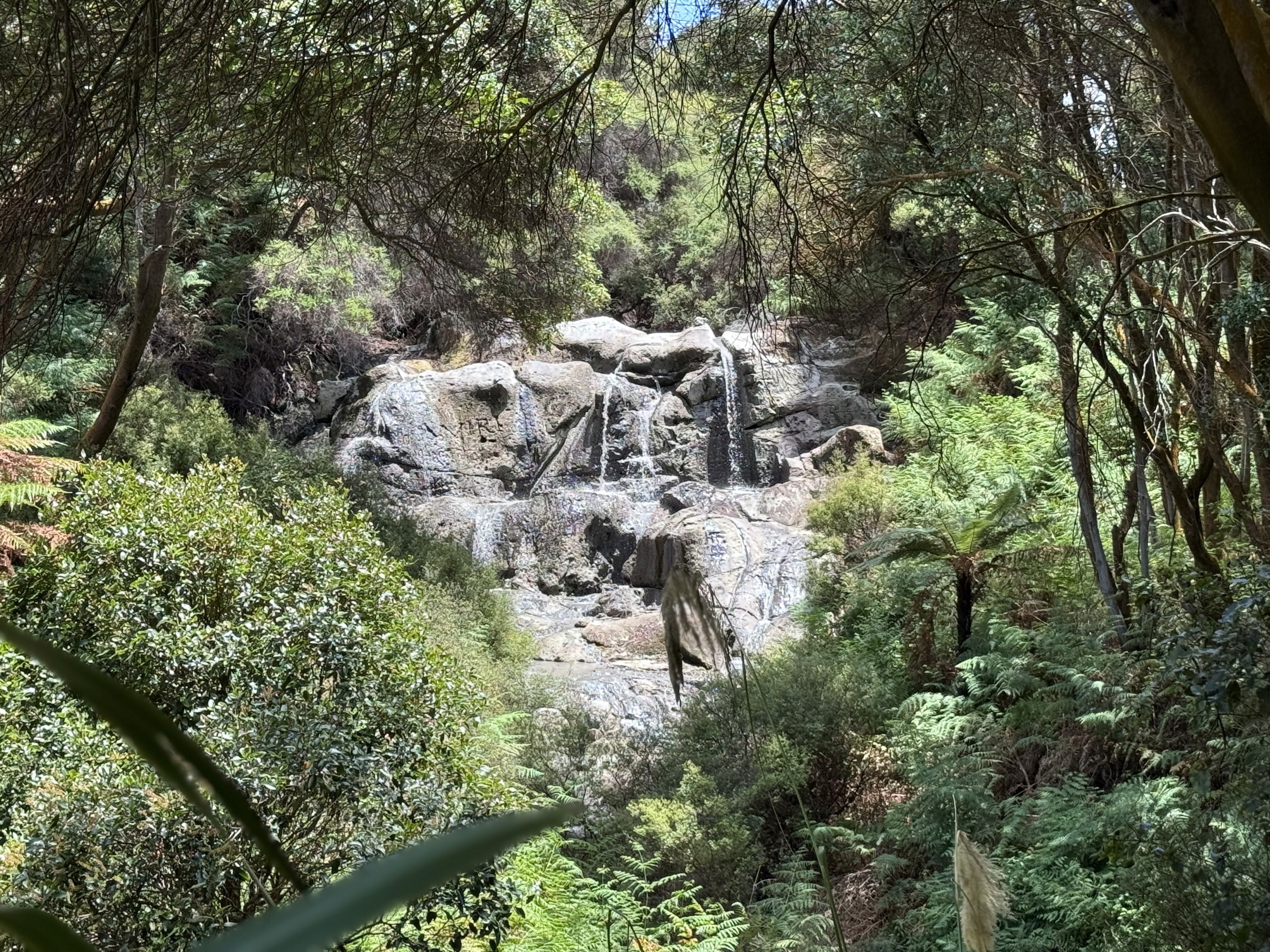
Kakahi healing waterfall
Rūaumoko - The Volcanic Spirit
Myths and legends are nothing but ultimate forms of personifications where the abstract (in this context - nature) is given a larger-than-life recognition in human and superhuman forms to revere it. Ruaumoko, the volcanic spirit, is said to be the unborn child of the Earth Mother (Papatūānuku) and Sky Father (Ranginui). His restless movements within his mother's womb is said to be reason of all the volcanic and geothermal activities in the region.
The reverence and the deep-rooted beliefs of the Maori in these legends is what makes the place all the more special. These very traditions and Maori culture have been instrumental in preserving the identity of this region over centuries and providing a holistic experience to its visitors.
The Geothermal Walk at Hell's Gate
The walk begins a short distance away from the visitor centre and takes about 1.5 hours depending on your pace. The walkway is elevated in parts with railings and information boards to help you immerse yourself in the history and legends of the place.
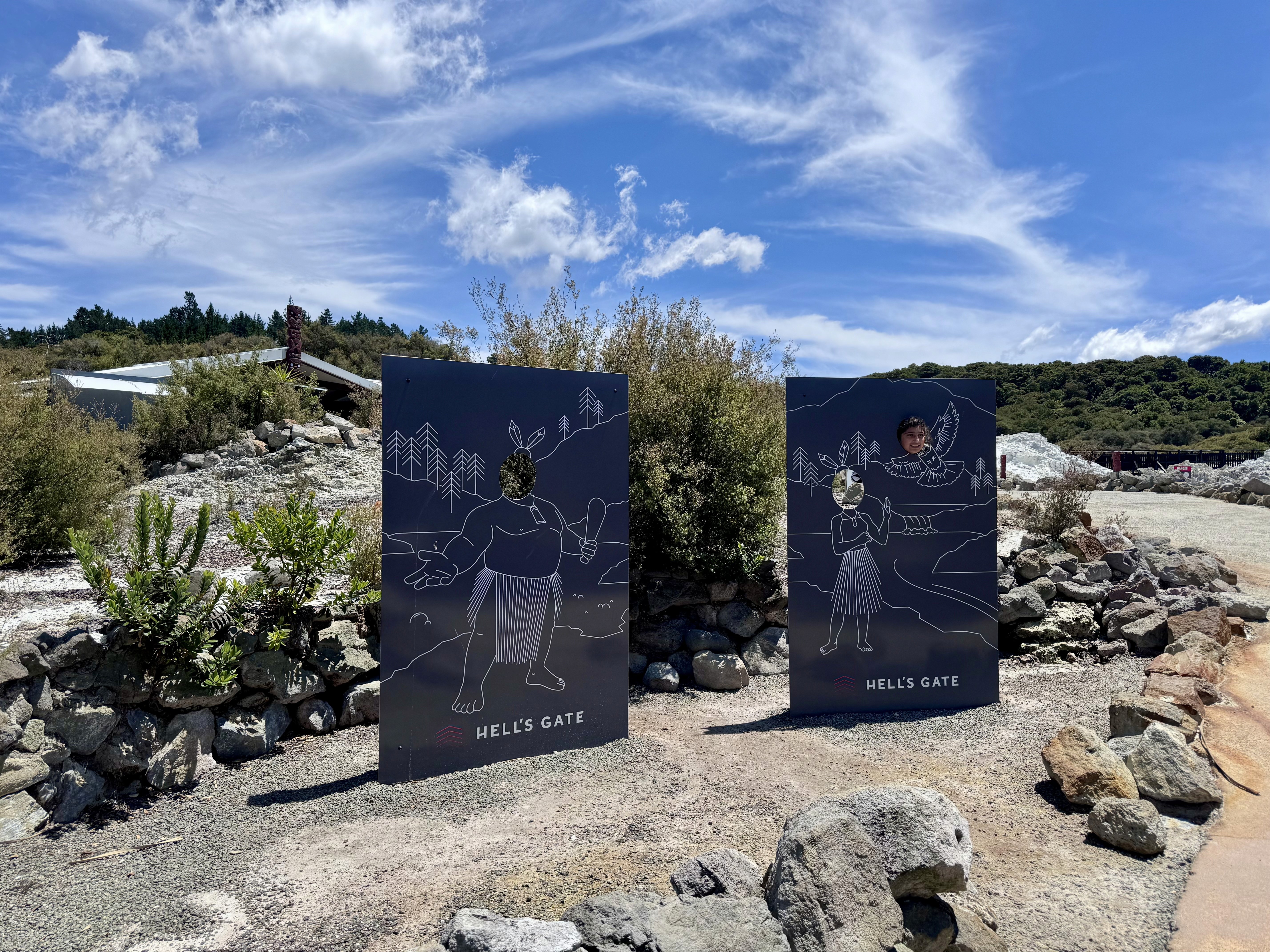
Welcome to Hell's Gate
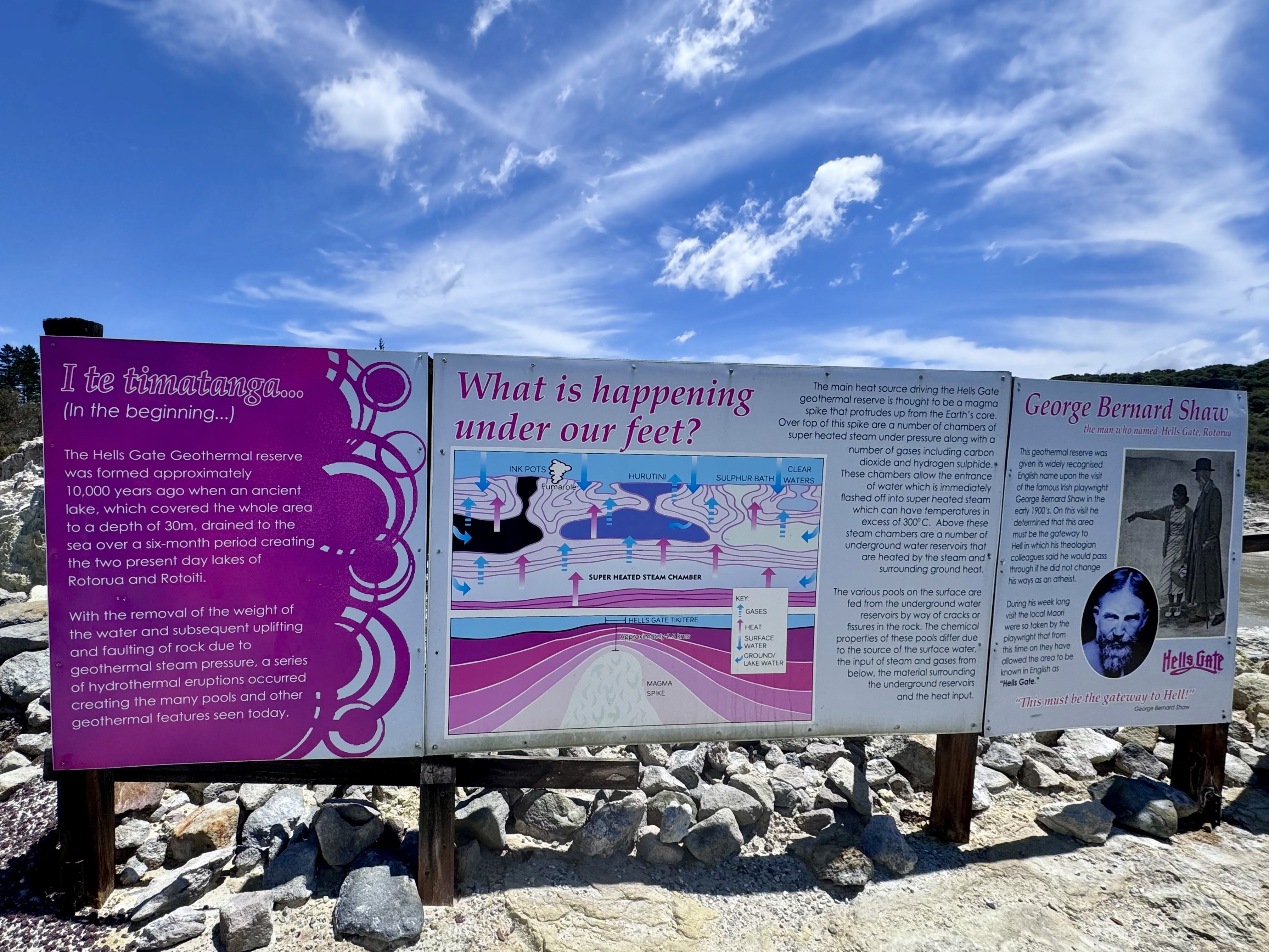
An at least 10,000 years old geothermal reserve which was given the English name of 'Hell's Gate' by the Maoris - as described by the Irish playwright, George Bernard Shaw. An irony considering that Shaw himself was an castigated atheist and he deemed this place fit to be called as the Gateway to Hell.
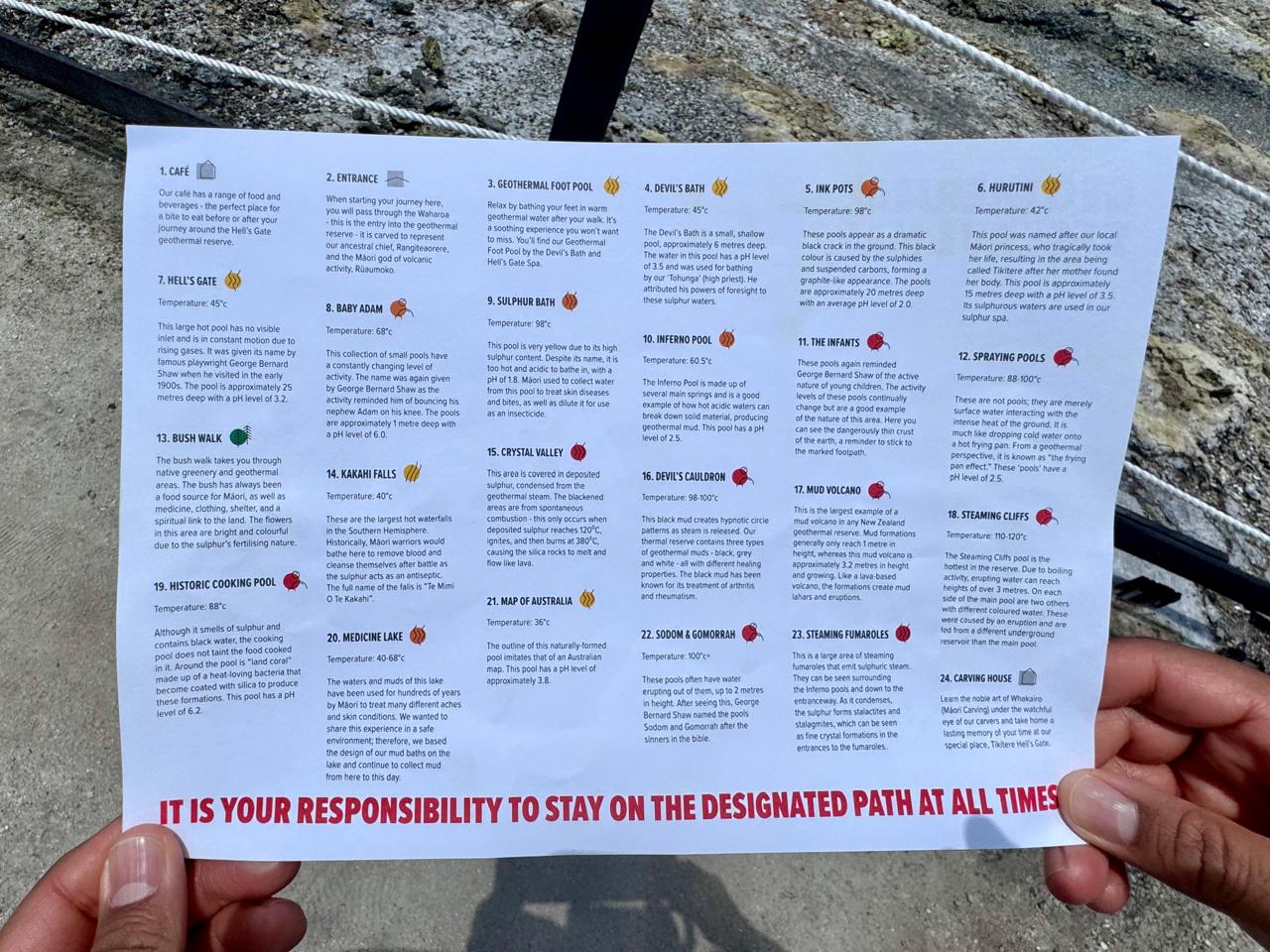
The various points of interest at Hell's Gate
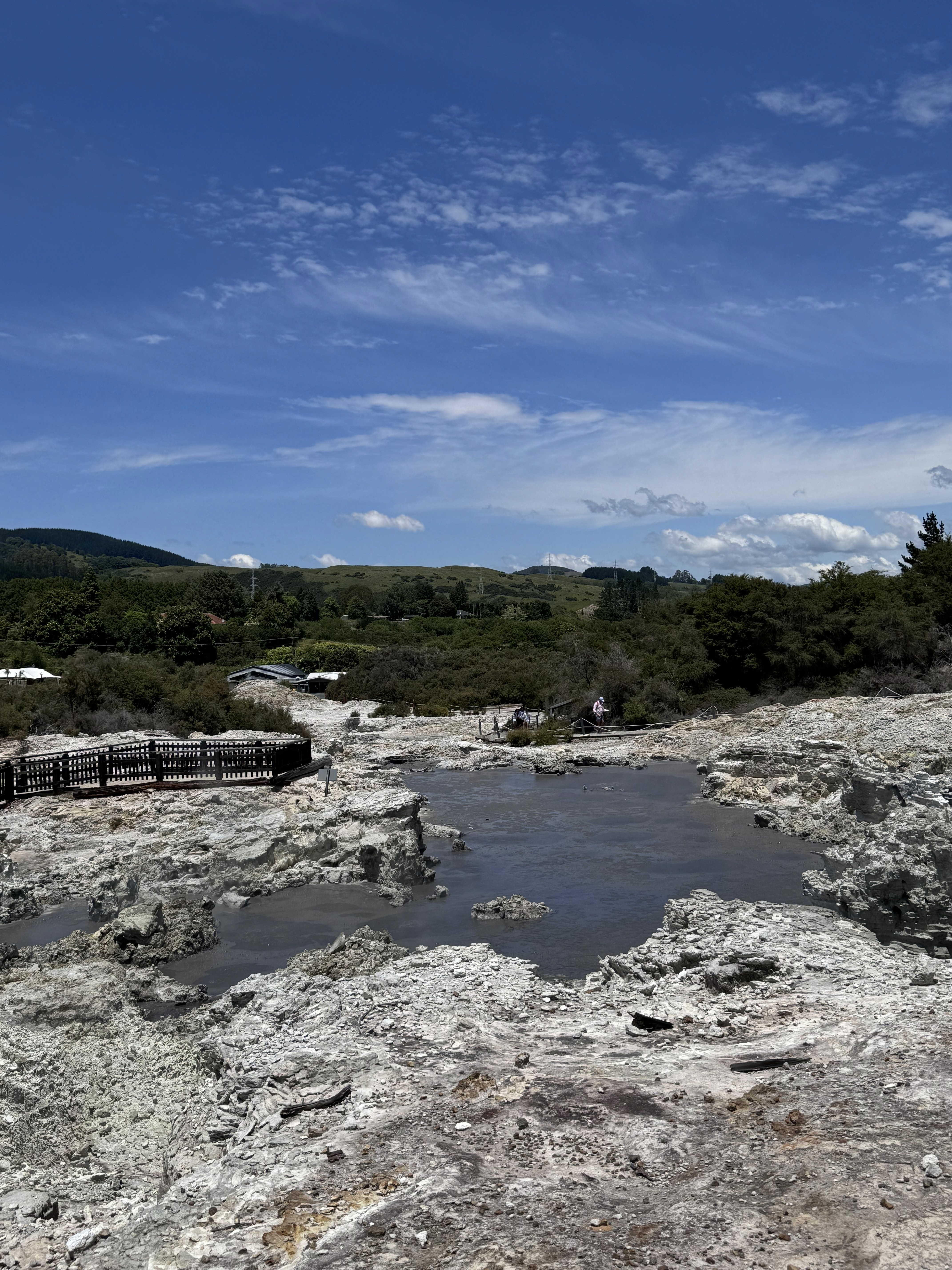
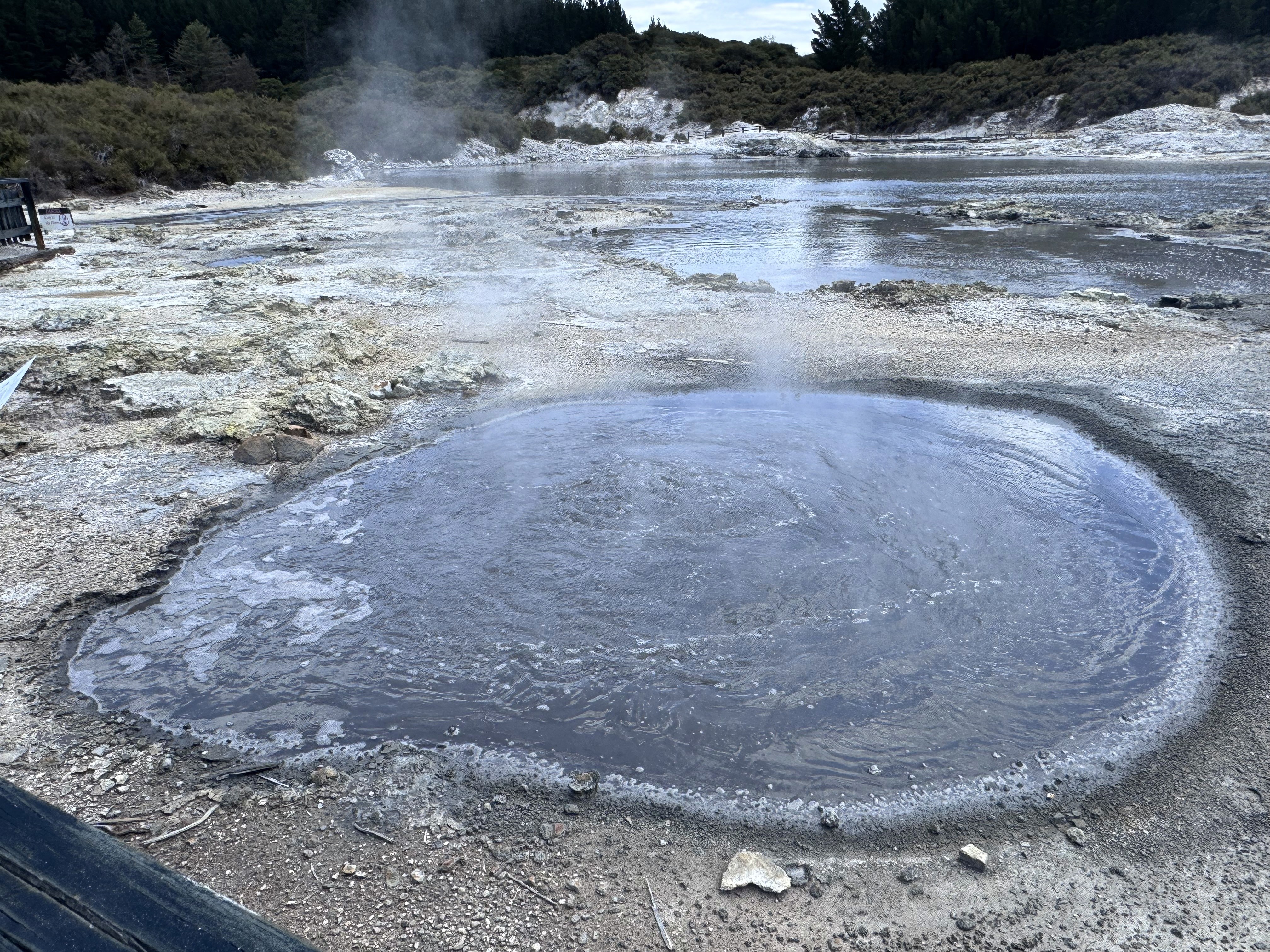
A hot bubbling pool at Hell's Gate
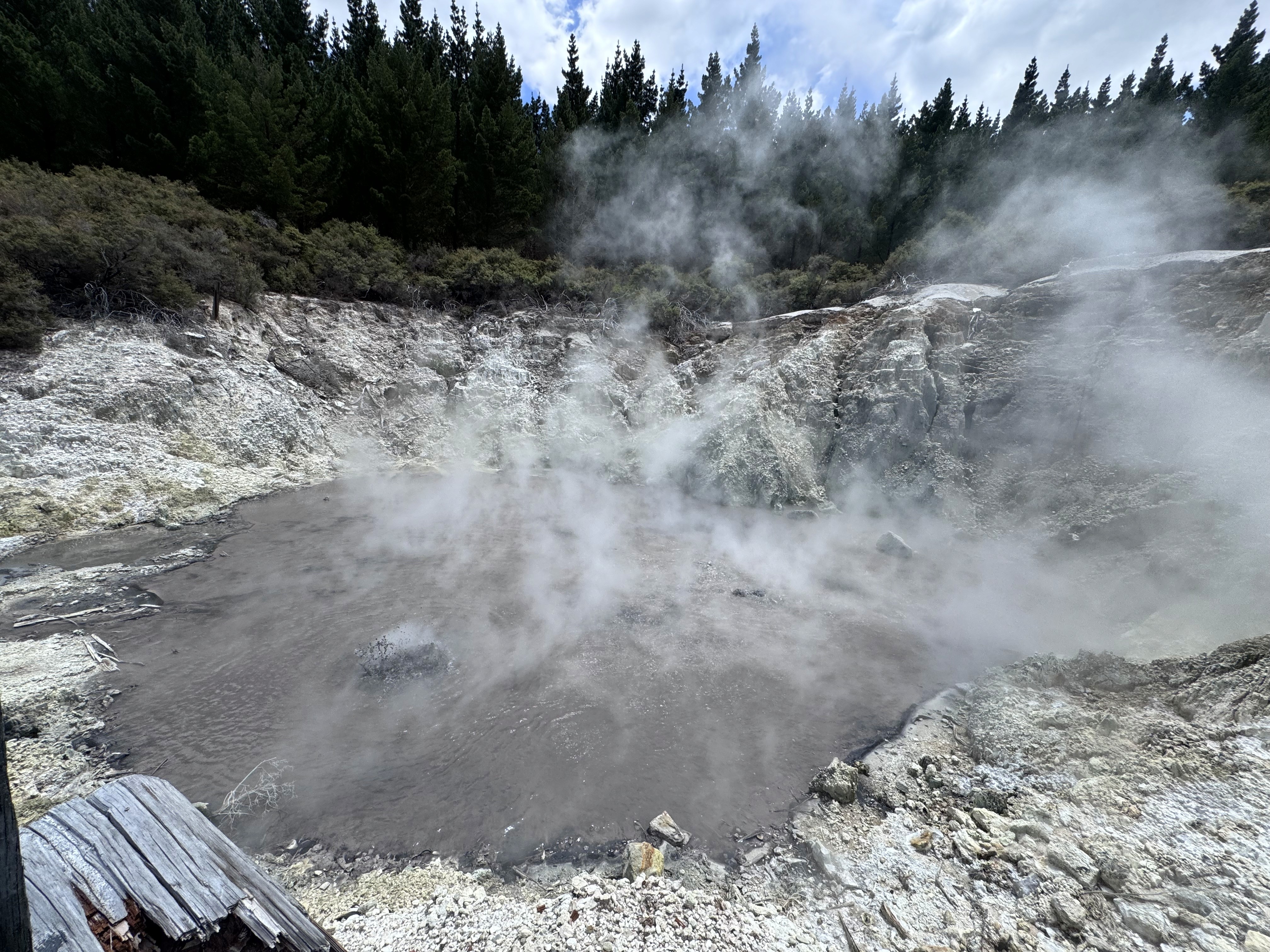
Vapours steaming everywhere at Hell's Gate
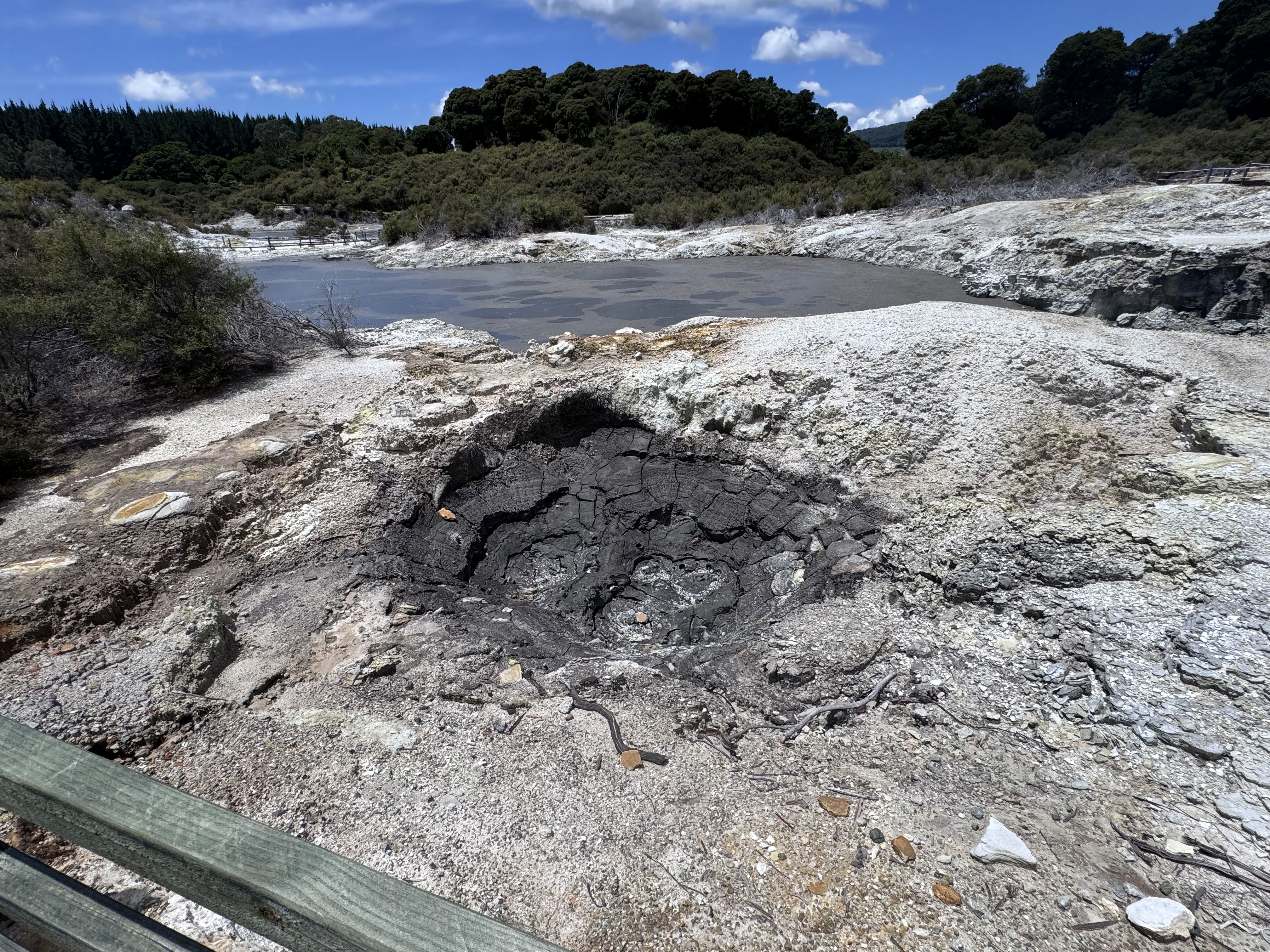
Scorched earth at Hell's Gate
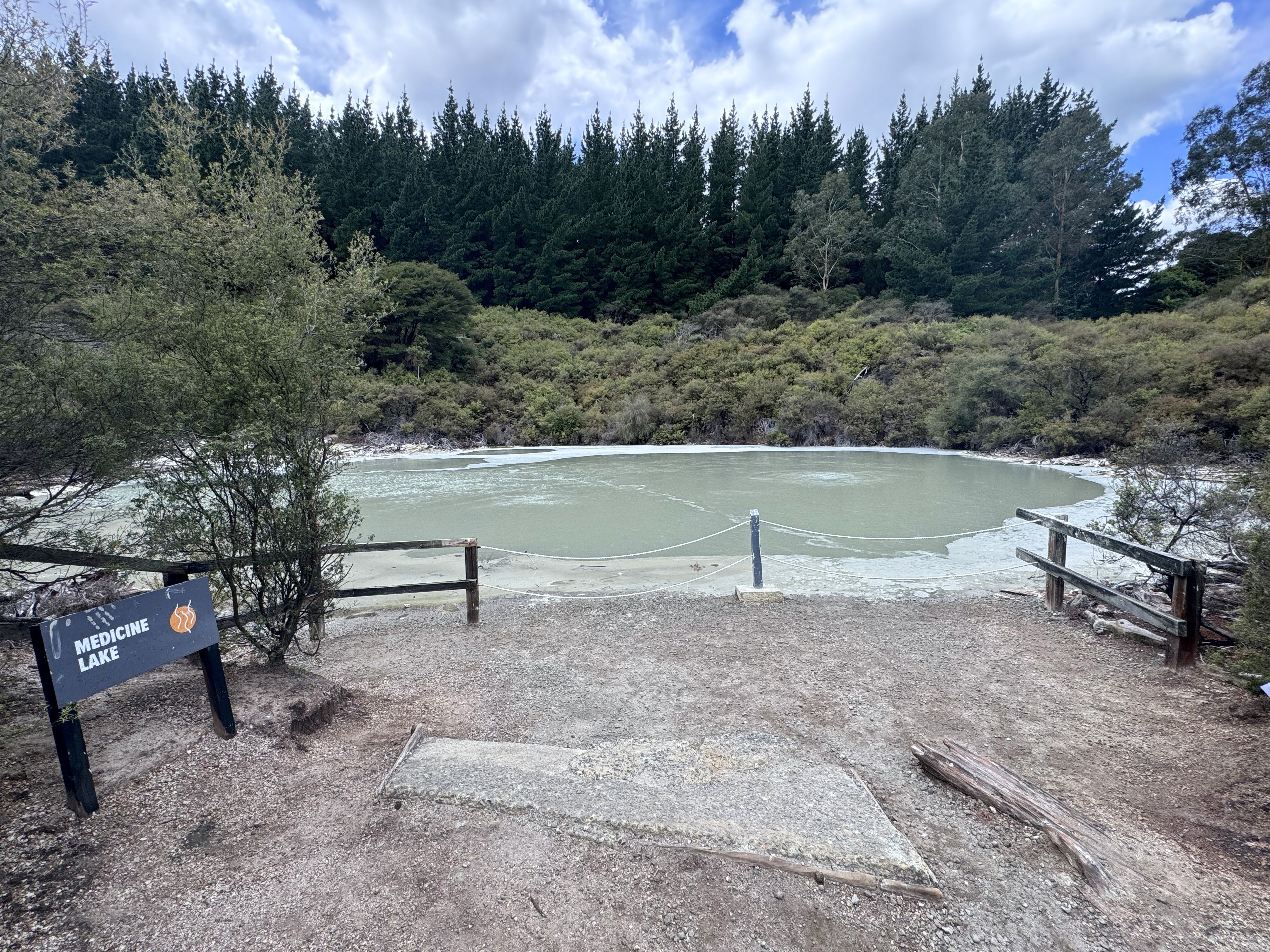
Medicine Pool - This was the only pool in Hell's Gate which was safe for visitors and its waters were used in the Mud Bath of the Reserve
Mud Bath
After the long hot walk around the geothermal reserve, we checked into the Mud Bath area. We deposited our belongings at the counter and entered the mud bath with a change of clothes and a towel.
The mud bath experience was organised very well with clean changing and shower areas for the visitors. After changing into bath apparel, we were led to one of the bath areas. Our time limit was capped at 20 minutes per person as per the recommended guidelines of the reserve. A bucket kept inside the bath was freshly filled with therapeutic mud/volcanic ash just for us.
We were supposed to apply the mud all over our body and let it dry off on our skin before taking a plunge again into the hot bath to rinse it off.
The mud and the sulfur water are procured from the Medicine Pool (shown in the picture above) of the geothermal reserve. The mud bath helps heal, soothe and exfoliate our skin, and is said to open the pores helping the skin to breathe and heal.
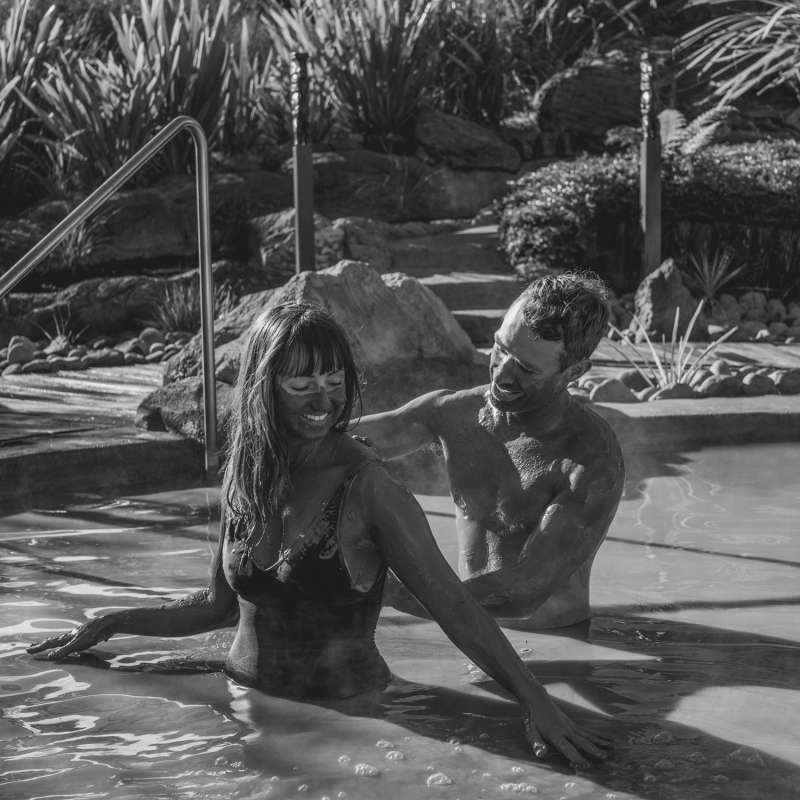
Picture courtesy: https://www.hellsgate.co.nz/experience
Sulfur Spa
Following the hot and rejuvenating mud bath, you can relax in the sulfur-rich mineral water pools built right next to the mud baths. These pools do not have any time limit and you can enjoy the healing experience as the Maoris did centuries ago.
Tips:
It is recommended that you bring an old swim suit for the mud bath experience as the volcanic ash and minerals can stain the clothes and odorize them.
Towels are provided onsite.
Bring a change of clothes
Bring a plastic bag to carry back your wet and dirty clothes
Avoid wearing jewellery immediately again to prevent staining them
Follow the instructions given at the entry counter to help you with the mud bath experience.
Rotorua is a happening place in New Zealand with no dearth of activities for its visitors. It is THE place for adventure junkies, Maori culture enthusiasts and a premier destination for geothermal activity. However, Hell's Gate is truly special with the Mud Bath imparting a wellness quotient to the entire experience. After all, it is the only place in Rotorura offering a geothermal mud bath experience. Not to be missed for anything else!