Serengeti Safaris | On the Path of the Great Migration
Travel
—
The Globetrotter
|
Leaving the Maasai Mara behind was not at all easy; especially the overland transfer from Kenya to Tanzania was a long and arduous journey. However, all our efforts paid off the moment we reached our lodge in the quietude of Serengeti National Park. The exhaustion was worth it. No wonder, Serengeti safaris are world famous for experiencing the Great Migration firsthand.Think of the Serengeti and you are immediately reminded of the National Geographic videos you watched for years. Taking a safari here is a dream chance to see the golden savannahs, witness the Great Migration, and catch predators in action during an exciting hunt. For our safaris, we stepped right through the TV screen into those very wild landscapes.
From the Mara to the Serengeti: The Arduous Transfer
If you are taking the land route to reach Tanzania from Maasai Mara, be prepared for a 12+ hours dusty and bumpy ride on dirt roads all the way from your lodge in Kenya to the Tanzania border at Isebania and then from Isebania to your lodge in Serengeti.
Here are a few essential tips to survive and enjoy this gruelling transfer day:
Pack Extra Patience: At the border, we were greeted by our next guide who was to help us with the border crossing and then take us all the way to our lodge in the Serengeti. Remember that you will need 2 additional hours at the border crossing for all the required paperwork in the long queues.
Pack Food: Make sure you carry some food and water with you from your Kenya lodge for your journey as cafes and road-side restaurants are non existent throughout the day-long journey.
Expect Hiccups: Lastly, be ready for some hiccups on the way like a flat tire as the ride is through dirt roads and villages in parts.
A Stark Eye-Opener: This ride offers a sobering peek into the living conditions of rural East Africa. The near-total lack of basic infrastructure and roadside amenities—things like cafes or small eateries that we completely take for granted at home—speaks volumes about the daily struggles here. Comparing the underdeveloped villages to my home country of India, the region felt like stepping back in time by at least 50 to 60 years.
Air Transfer Alternative: A popular alternative over road transfer to get to Tanzania. You can ask your travel company to get these flights booked for you. Check out the link for more details.
Checking In: Our Oasis in the Vast Serengeti Landscape
Our destination was the Serengeti Wilderness Camp, a beautiful, eco-friendly mobile camp hidden deep within the lush greenery of the African bush. Because it is a mobile camp, it changes locations every season to follow the natural rhythm of the wildlife and the Great Migration.
We were welcomed with a delicious, chilled passion fruit drink on arrival. It tasted divine, especially after the long, gruelling drive we had just endured. After completing the check-in paperwork, we were taken straight to our tented camp, which felt like a little slice of luxury bundled seamlessly into the wild.
Our canvas home was a huge, spacious tent featuring three separate beds, dedicated shelves to keep our belongings organized, and—the most amazing part—a private en-suite bathroom with a 24-hour, on-demand hot and cold water supply.
As darkness fell, we gathered with other travellers for a hearty dinner in a formal, seated setting. The camp served a fantastic three-course meal, providing a wonderful opportunity to mingle with the other guests and share stories of our respective safaris.
However, after our exhausting transfer journey, we were completely done for the day. We retreated to our tent and soon fell asleep to the mesmerising, wild rhythm of the jungle, eagerly awaiting the start of our Serengeti wilderness adventure the next morning.
Two Days in the Serengeti
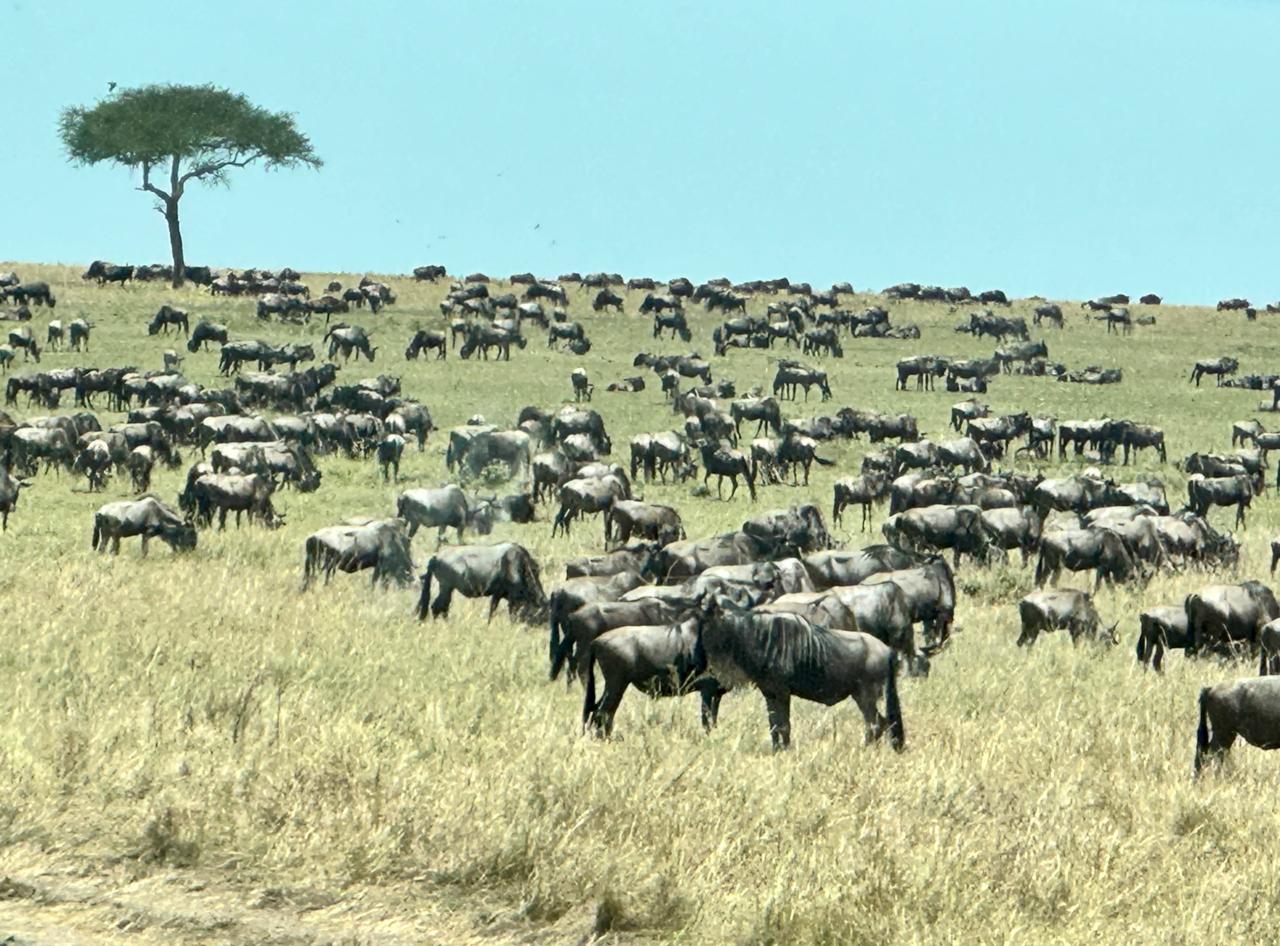
Wildebeest on the move - just before the migration.
We had two full days to ourselves in the Northern Serengeti, and we planned to make the best of it. Having already seen the Big Five and experienced many wild encounters in the Maasai Mara just a day prior, our main focus now was to witness the Great Migration—the phenomenon that makes the Serengeti one of the Seven Natural Wonders of Africa.
"Serengeti" is the anglicized version of the Maasai word Siringet, which translates to "endless plains." While the park encompasses thousands of square miles of vast savannah, this northern stretch is famous for its dramatic river crossings. Here, the unique geography creates a natural bottleneck where millions of wildebeest must brave crocodile-infested waters to reach greener pastures.
Nature is as merciless as it is beautiful and mystifying. Not every animal crosses safely; many fall prey to river predators or get swept away by the strong, unforgiving currents. Yet, this crossing is imperative. It is a continuous, never-ending journey of survival, spanning an 800-kilometer loop between the Serengeti and the Maasai Mara.
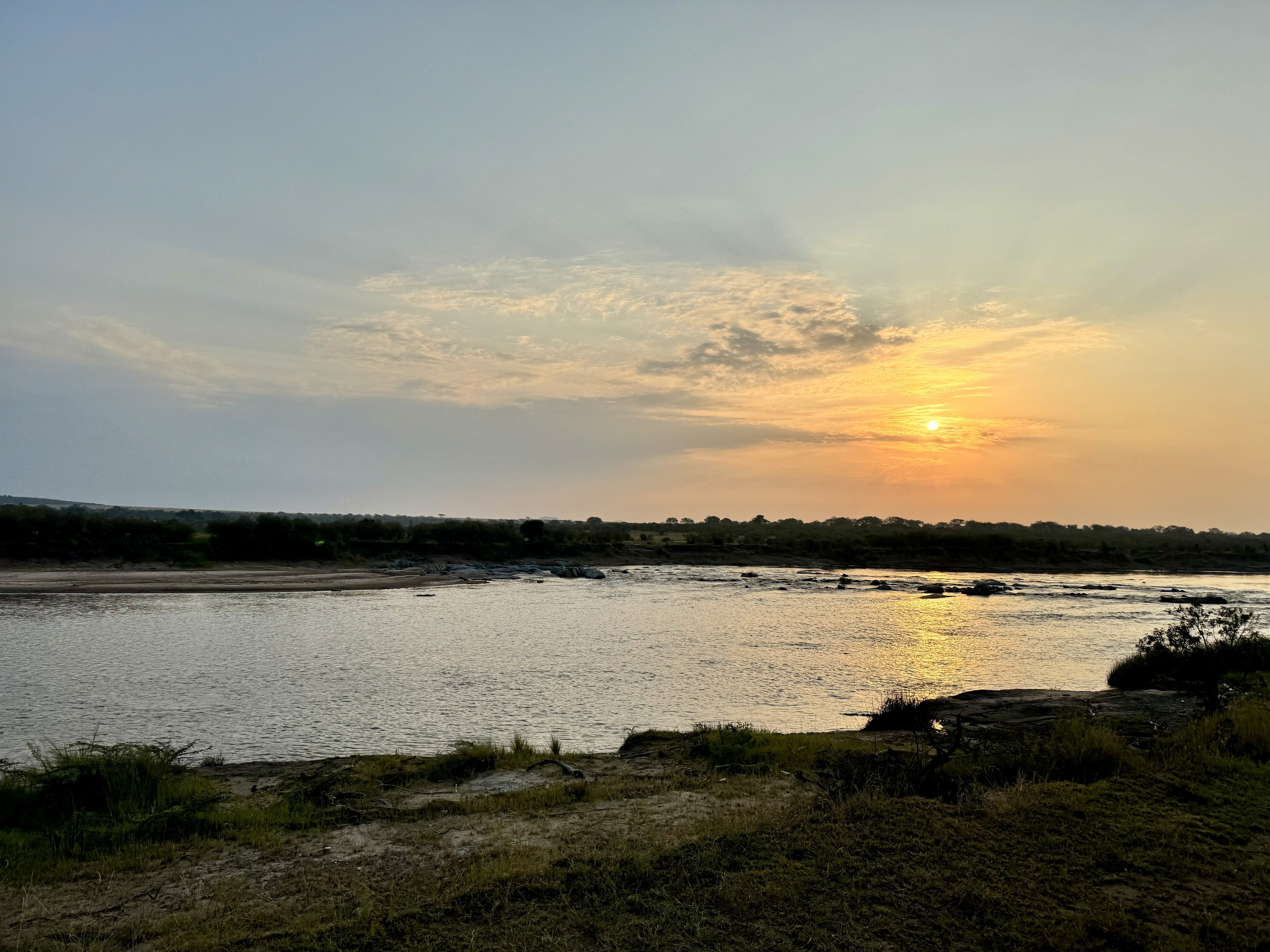
The calm before the chaos - The Mara river at Sunset
Pure Adrenaline: The Moment the Herds Finally Charged
Our first day in the Northern Serengeti was uneventful. We started early in the morning and waited by the Mara River, hoping the herds would cross at the opportune time. Yet, luck was not on our side. Instead, our guide took us around the massive park to take in the dramatic landscape.
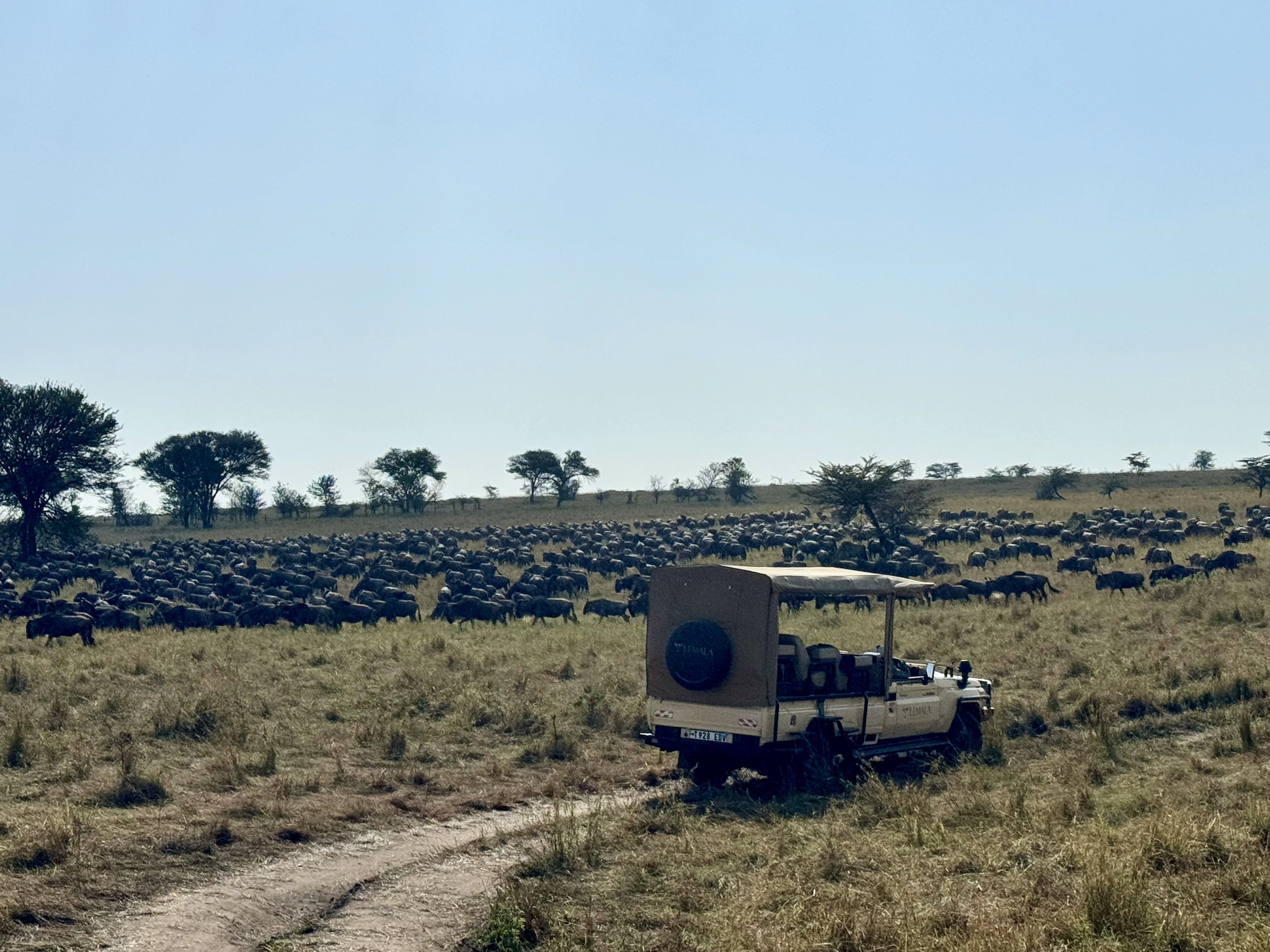
Thousands upon thousands of wildebeest were on the move all over the Northern Serengeti. We watched these herds—disciplined, eager, and following their elders in an orderly march toward the riverbanks. Even so, we did not witness an actual crossing that day.
By the next morning, our luck hadn't changed. By midday, however, massive herds had congregated along the water's edge. It felt as though the migration might ignite at any moment. Safari vehicles lined up, taking their spots by the river, but it was impossible to predict exactly when or where the movement would happen.
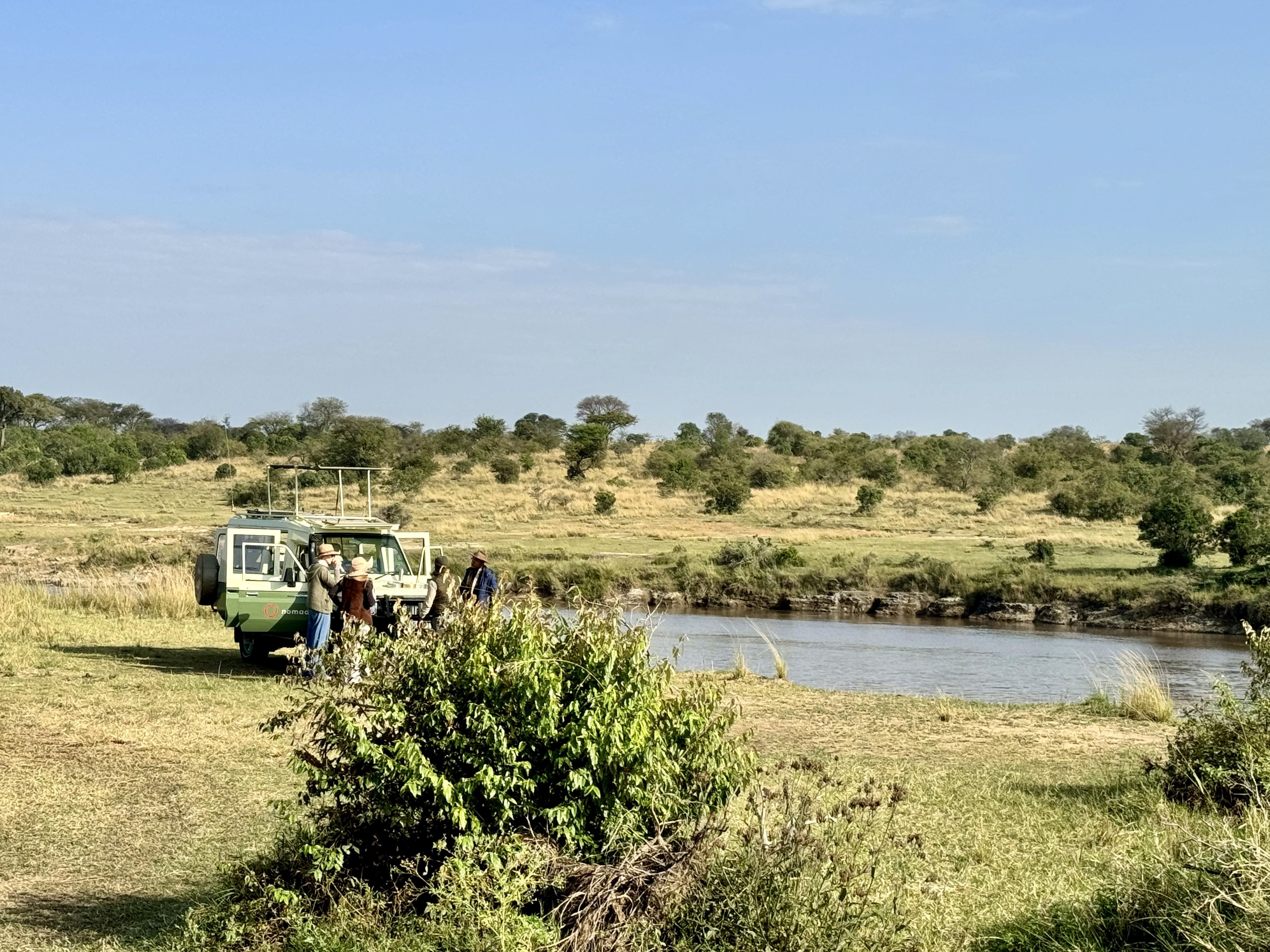
The waiting game…
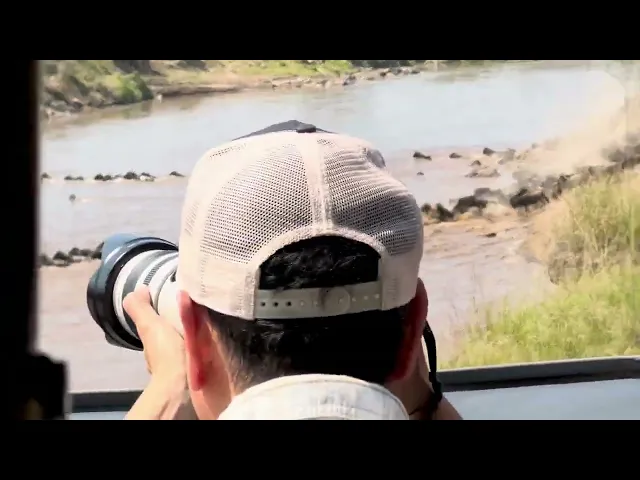
It was a game of patience. We waited inside our vehicle for nearly two hours before our prayers were finally answered. All of a sudden, the wildebeest herd charged into the river. It was pure chaos, a thundering mass of hooves driving in a single direction. At the water's edge, the madness intensified as the pace slowed. The lines fractured into multiple directions. Swept up in a collective frenzy, the wildebeest pushed forward blindly—even if it meant leaping into the river from the high, crumbling banks. They knew they could not be left behind; to stay back meant certain death.
Nature's Tall Order
The spectacle of the frenzied wildebeest crossing lasted for more than two hours. It wasn't just the wildebeest either; a few zebras managed to slip into the lines right along with them. Clever zebras, aren't they! Amidst the chaos, we also watched a young wildebeest get swept away by the swift river currents, only to be grabbed by a crocodile downstream. Everything happened in the blink of an eye. We sat there, simply too numb to react or process the emotion.
Nature simply takes its course, leaving no time to mourn or fight back. The rest of the herd carried on with the crossing, determined to reach the greener side. It was a stark reminder that life and loss are deeply intertwined, and nature's balancing act is far bigger than our individual fears.
Exhausted by the intense anticipation and the heat of the plains, we watched as the crossing finally slowed to a trickle and decided to call it a day. What we had witnessed was not just a frenzied drama, but a true masterpiece of life's rhythm.
Moving on to Ngorongoro
The Maasai Mara gave us the iconic Big Five, and the Serengeti introduced us to the raw tempo of nature. Now, we are heading to Ngorongoro to see what this legendary crater has in store for us. Stay tuned…
Click here to get our East Africa Itinerary and here to delve into our Maasai Mara adventures.