Yongmunsa Temple & The Gingko Tree

Travel
—
South Korea
|
Yongmunsa Temple is just a two-hour car ride away from Seoul in Yangpyeong, Gyeonggi-do—making it a perfect day trip destination. We absolutely love visiting temples in South Korea; they serve as profound oases of spirituality and peace, offering a beautiful escape from the concrete jungle of the capital. That October, we decided to visit this unique sanctuary, which is widely celebrated for its fiery autumn foliage, deep-rooted legends, and dramatic history.
Address: 782 Yongmunsan-ro, Yongmun-myeon, Yangpyeong-gun, Gyeonggi-do
Parking available: Yes, a parking lot is situated at the base and a small parking fee of 1000-3000 won can be charged at the gate. There are no parking fees for Temple Stay visitors
Temple Stay Information: The 2-Day, 1-Night experiential program at Yongmunsa typically ranges from ₩70,000 to ₩90,000 per person and usually includes a temple tour, a hands-on crafting session, 108 prostations and a tea ceremony with a monk. Reservations can be made through their Official Temple Stay Platform.
The history of the Yongmunsa temple:
Yong means Dragon
Mun means Gate
Sa means Buddhist temple.
The name Yongmunsa literally translates to Dragon's Gate Temple and this name can be attributed to its location on the slopes of Mount Yongmun and the spiritual beliefs of Korean Buddhism in the dragon deities to guard kingdoms against foreign invasions.
The temple is really ancient. Historical records attribute the founding of the temple to the monk Daegyeong in 913 AD during the late Silla/early Goryeo transition period.
Through all these eras, the temple has maintained its timeless beauty. It has survived changing dynasties, raging wars, and devastating fires. Standing proudly on the slopes of Mount Yongmun, it has become a symbol of resilience, and remains an active sanctuary for Buddhism.
The Ginkgo Tree & its Legends:
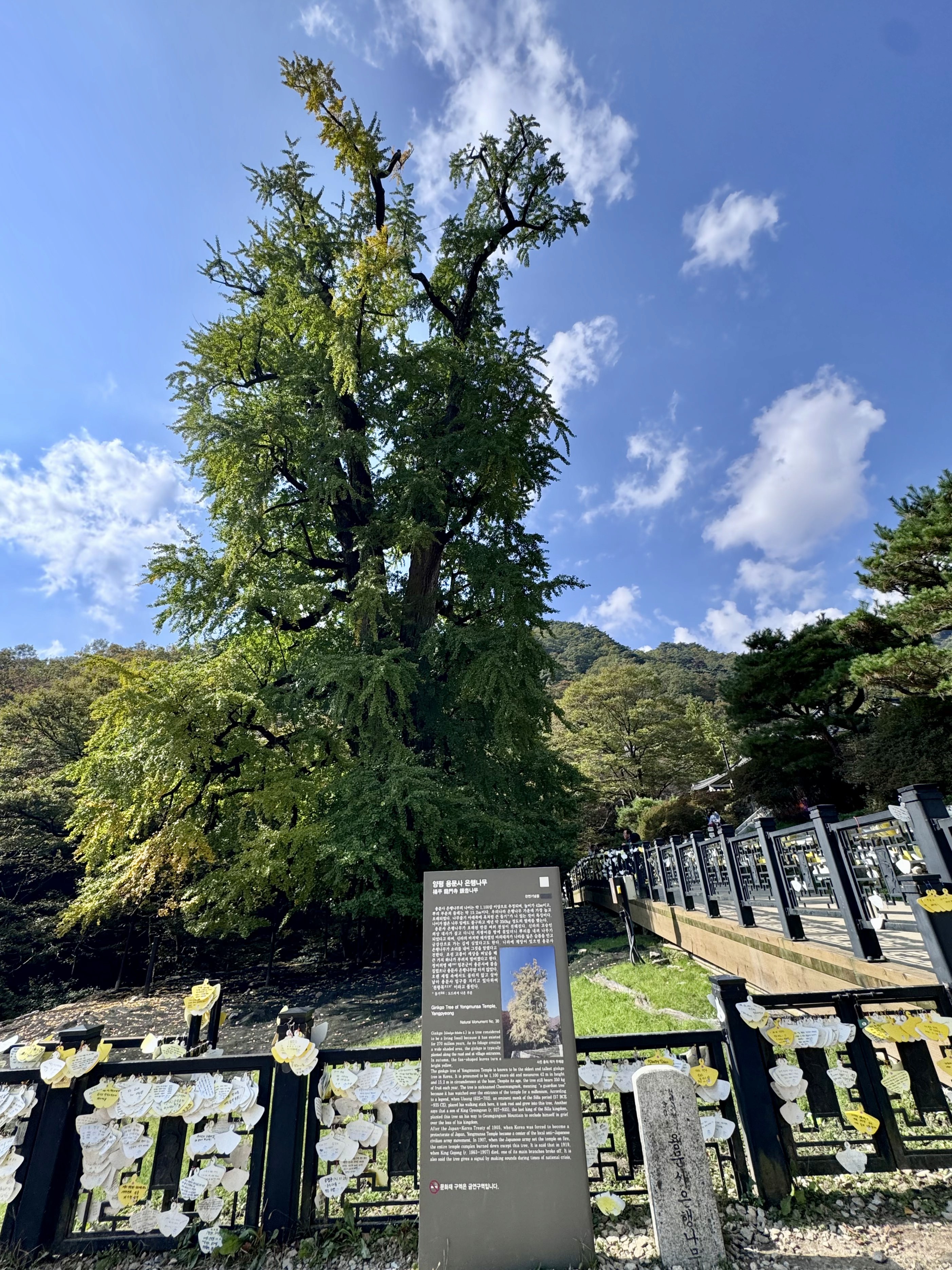
The legendary ginkgo tree of Yongmunsa
The focal point of the temple is its legendary ginkgo tree, which has stood tall in the courtyard for over 1100 years. Towering over 60 meters high, this ancient giant is wrapped in local folklore. Legends say that the tree was planted by Prince Maui, the last prince of the unified Silla dynasty. After being heartbroken that his dynasty fell, in his sorrow he planted his walking stick in the courtyard of the Yongmunsa temple. His copious tears watered the stick that grew into the 60-meter tall ginkgo tree that it is today.
According to another centuries-old tale, Monk Uisang was traveling through the mountains. He stopped to rest and shoved his walking shaft deep into the fertile ground. He chose to leave it behind when he left. Miraculously, the stick took root in the ground and sprouted into the magnificent tall tree that it is today.
The ginkgo tree today has been designated as a National Monument (#30) and is a living symbol of the country's deep spiritual and cultural roots. It has miraculously survived all the attacks on the temple too over the centuries. It escaped without a scratch while the surrounding slopes turned barren due to the bombing and fires. Come spring and each time the resilient gingko tree once again turned green after the war earning it the title of Cheonwangmok - The Sacred Tree of the Heavenly King.
The Temple Precincts:
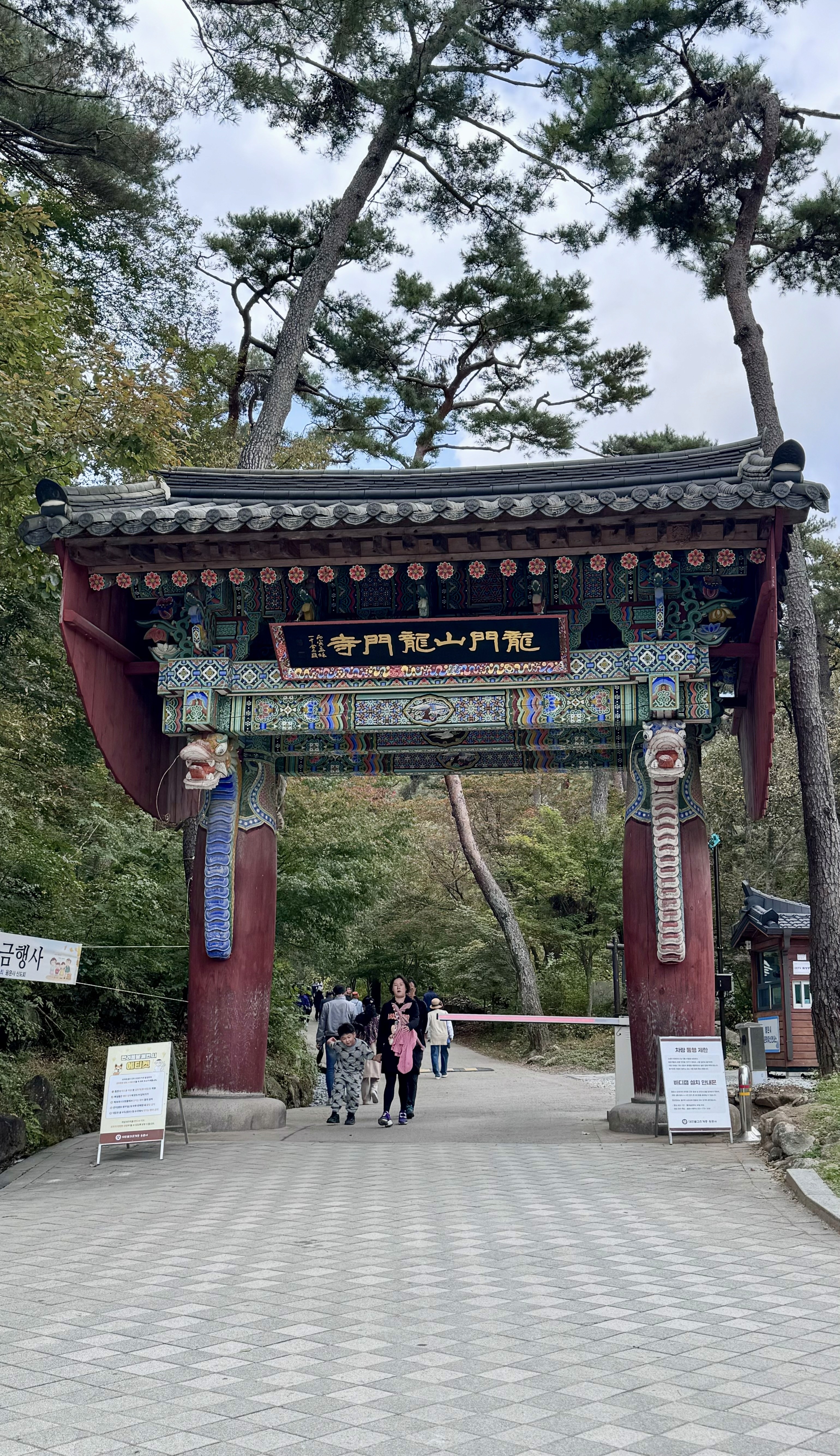
The temple gate along the Courtyard walk
The Courtyard Walk to the Temple:
Temples in South Korea were intentionally built deep in the mountains or forests, away from the worldly distractions for spiritual reasons and also to escape persecution in the past. Whatever the cause might be, today a journey to most temples involves a long walk from the parking lot to the main shrine which is an experience in itself.
Yongmunsa is no exception.The Courtyard Walkway starts from the parking lot to the temple complex, ideal for families with children and elders and ends at the temple courtyard beyond the ginkgo tree. Here, you walk alongside a gurgling stream under the canopy of a dense forest to reach the holy place. The journey takes you further and further away from the mundanes of daily life towards the sanctity of the temple where calm and peace reign supreme.
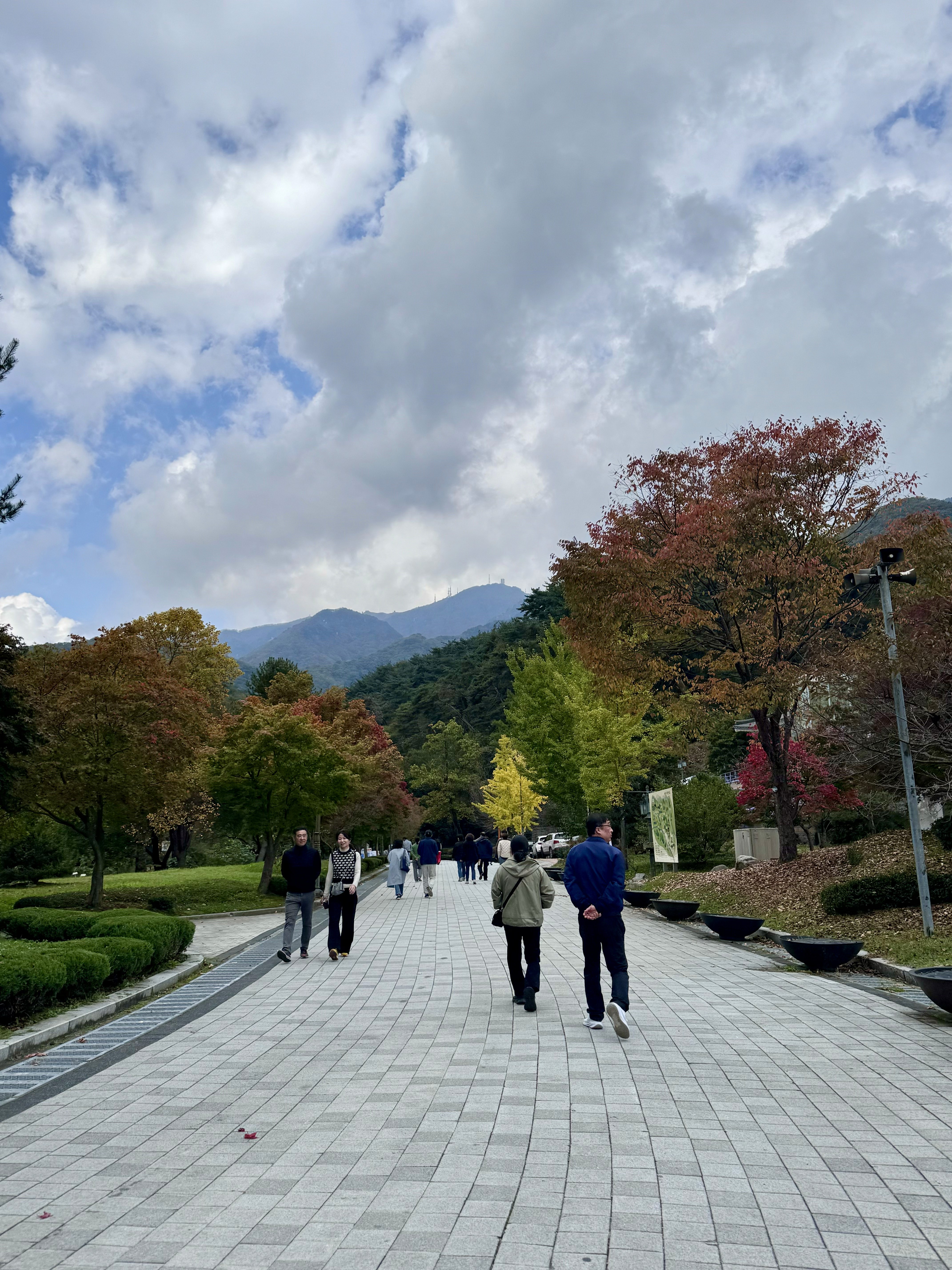
Autumn colours along the Courtyard Walk
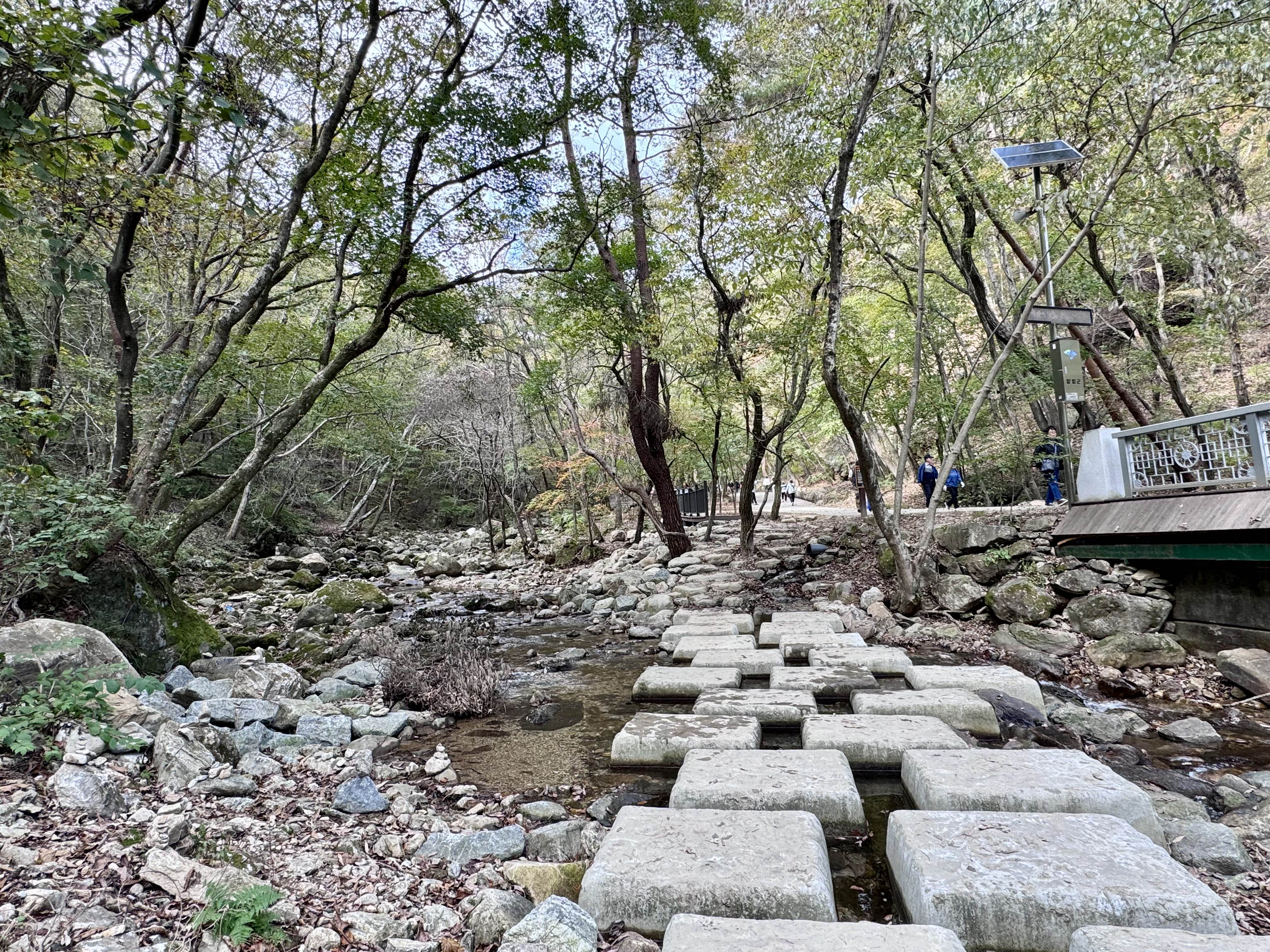
The constant happy stream along the walking path towards the temple

Seven stones stacked on top of each other symbolise balance, mindfulness and the journey towards inner peace.
Rebuilt Across Centuries:
The temple was completely burned to the ground twice in the 20th century. First, it was razed to ground in 1907 by the invading Japanese forces. Korea's civil militia and guerilla fighters known as the Righteous Army fought against Japan using the strategic location of Mount Yongmunsan and the temple as their hidden headquarters. The temple was in the epicenter of the battle and suffered heavy damage.
Next, the Korean War from 1950-1953 too almost reduced the entire temple complex to ashes. Only the gingko tree survived barely metres away from the burning wooden halls of the temple complex.
However, every time the temple was built again. Today, the halls and structures that proudly stand again within the temple premises are:
The Daeungjeon Hall (Main Hall): Foundation dates back to the Silla dynasty with renovations carried on later. It is the primary worship hall of Buddha.
Jijangjeon Hall: This hall is dedicated to Kshitigarbha - the Bodhisattva of Afterlife
Beomjonggak Pavilion: The traditional temple-bell pavilion holding the massive bronze drum and bell.
Gwanseumjeon Hall: The hall houses a rare gilt-bronze Avalokitesvara statue that dates back to the Goryeo dynasty.
Samsunggak Shrine: A small shrine dedicated to three shamanic/Buddhist spirits.
Iljumun Gate & Yosachae: The single-pillar entry gate and the monks' residential/administrative living quarters.
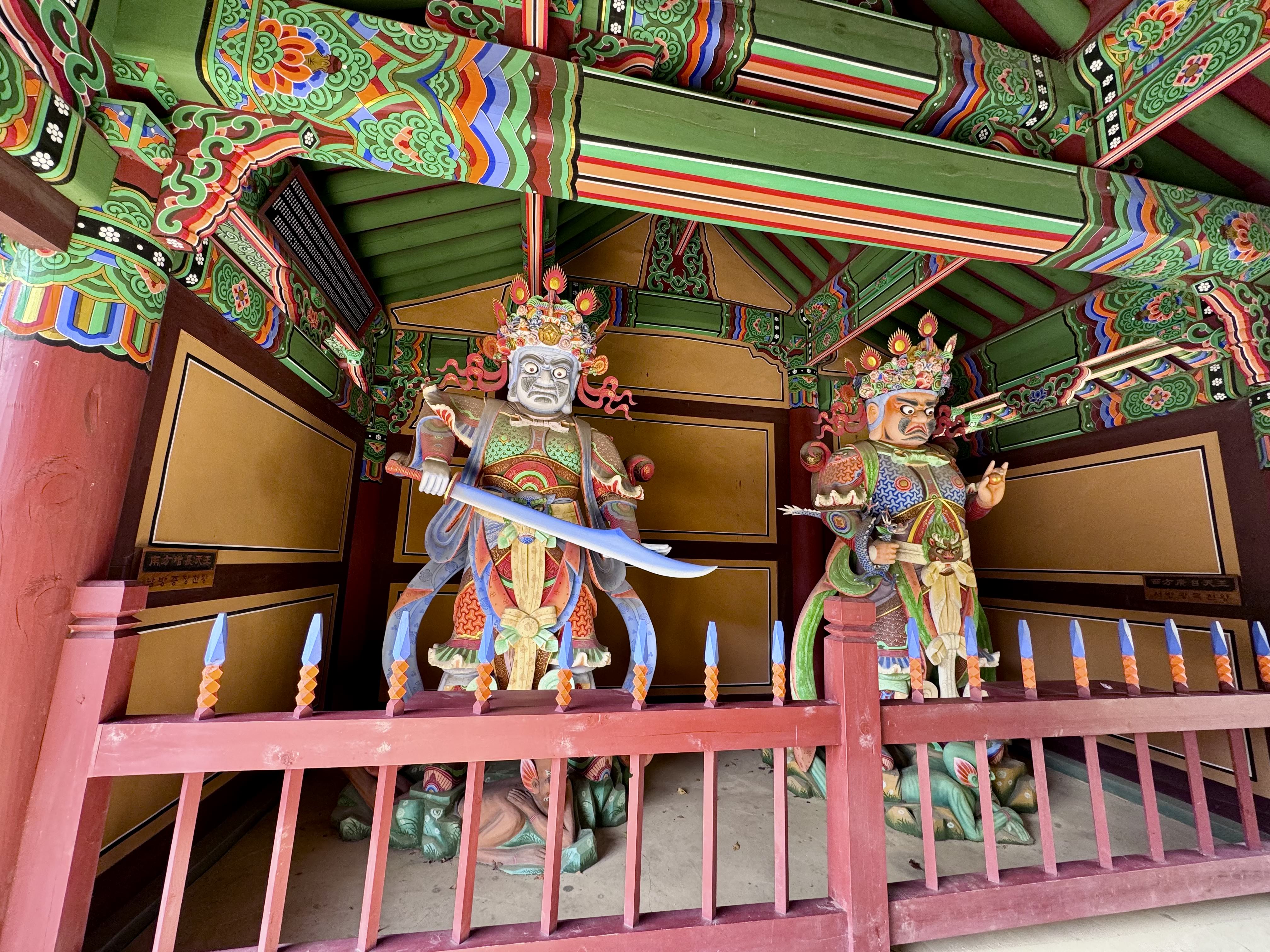
The dwarpalakas at the entrance of the temple..
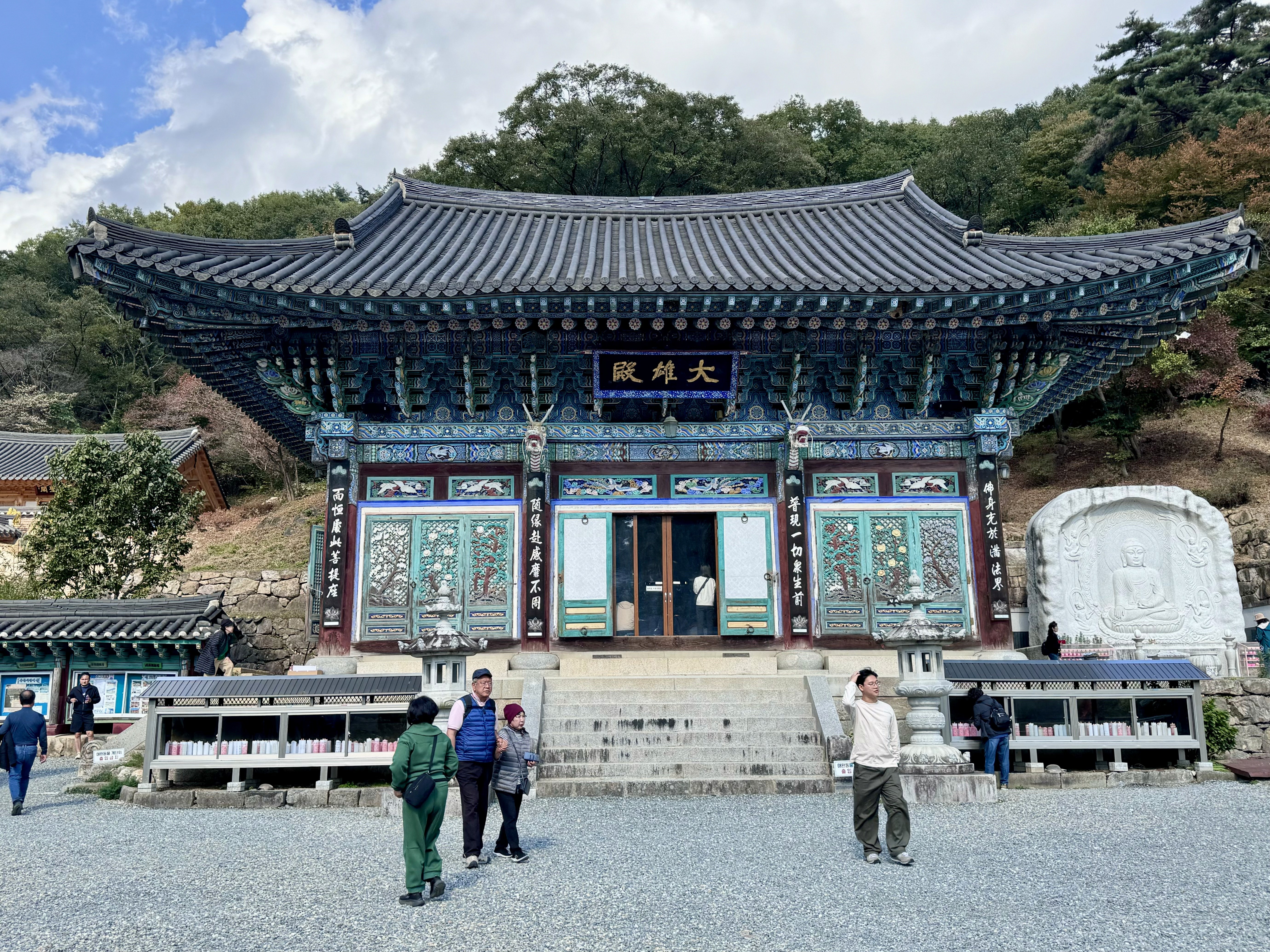
The Daeungjeon Hall
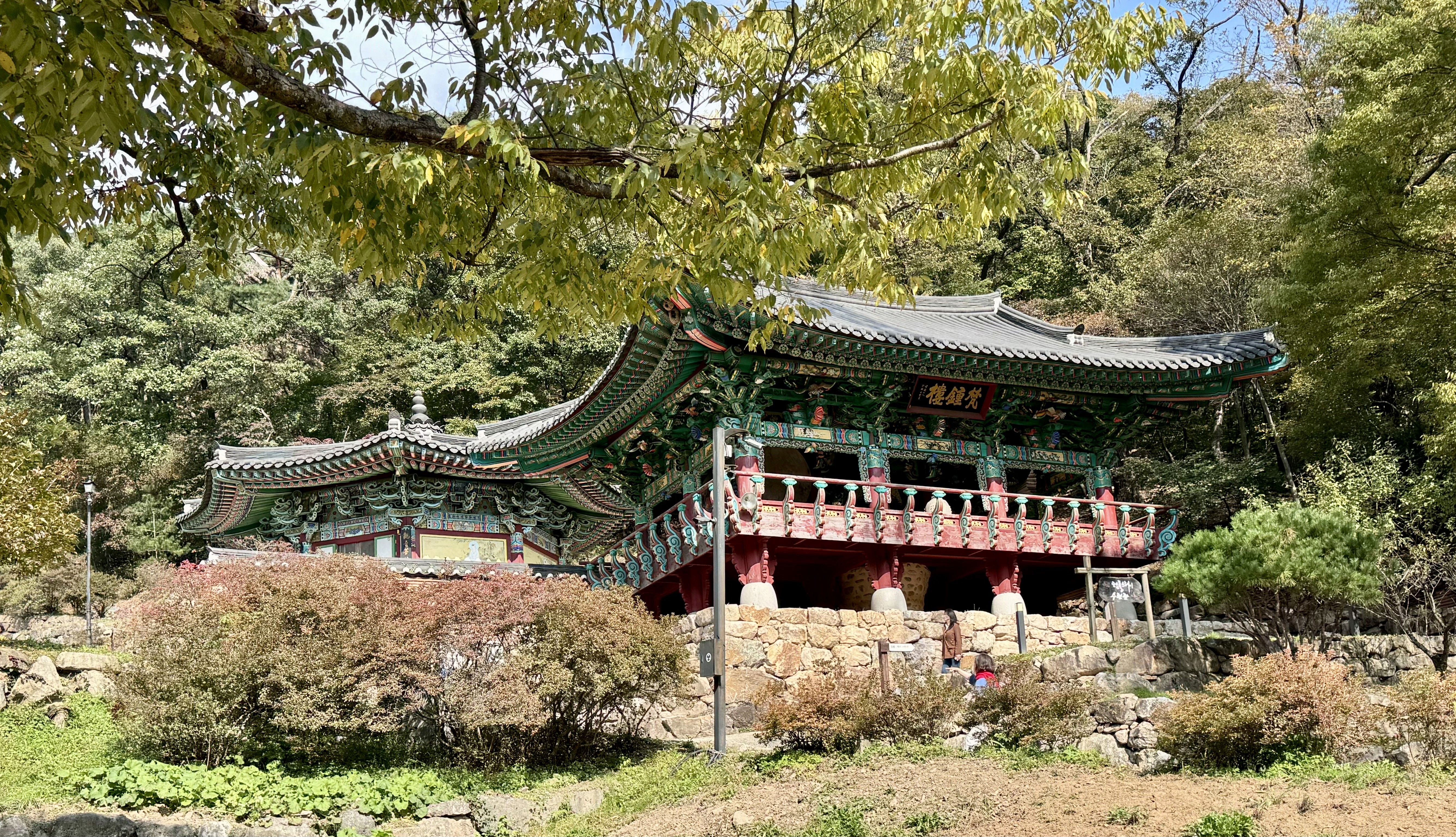
The temple pavilion at Yongmunsan
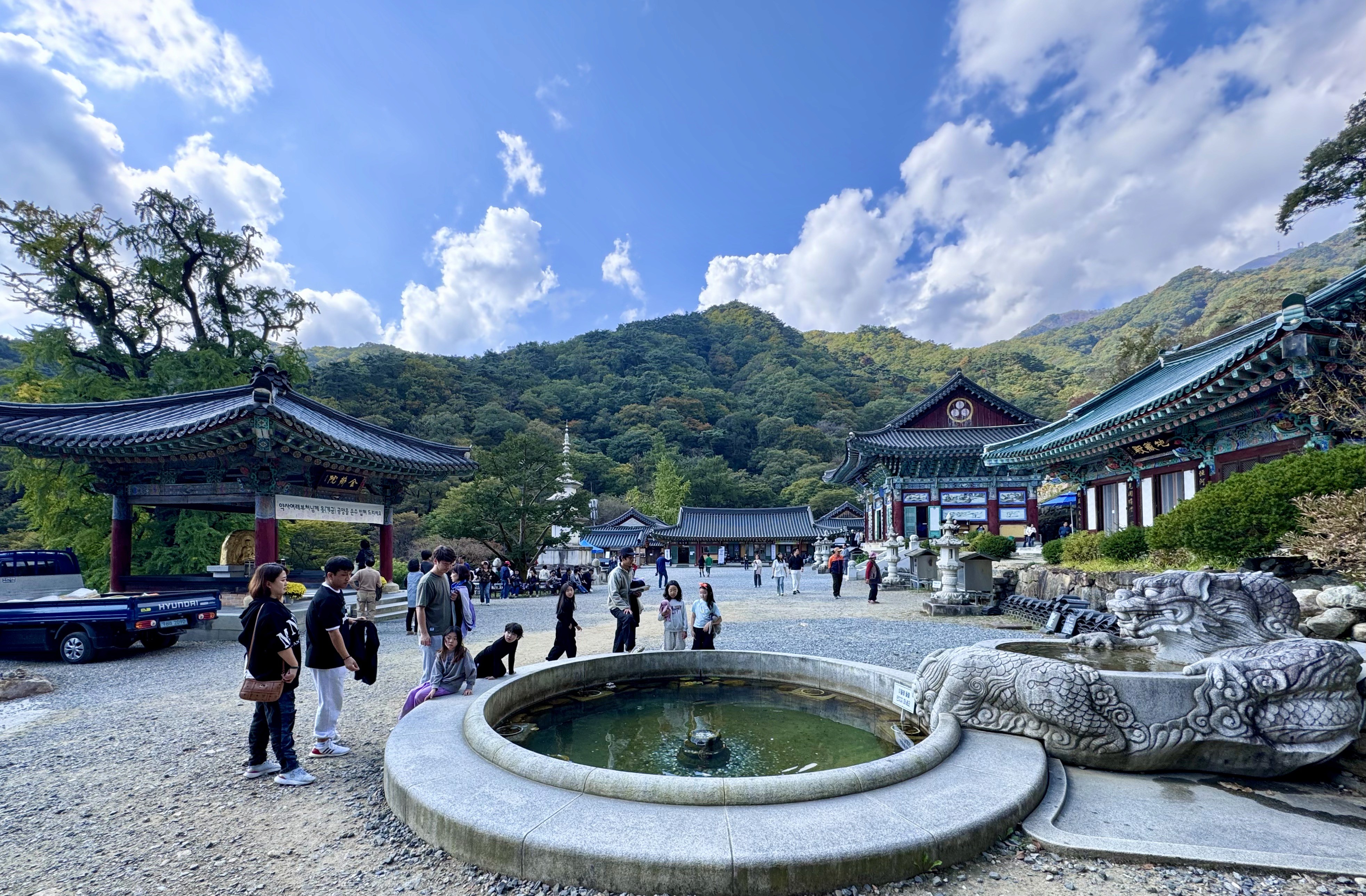
A panorama of the temple with the popular temple dragon spring in the fore.Pure mountain spring water continually flows directly out of the dragon's mouth into a large stone basin. Visitors can use the traditional ladles kept at the basin to quench their thirst and recieve blessings before entering the main hall.
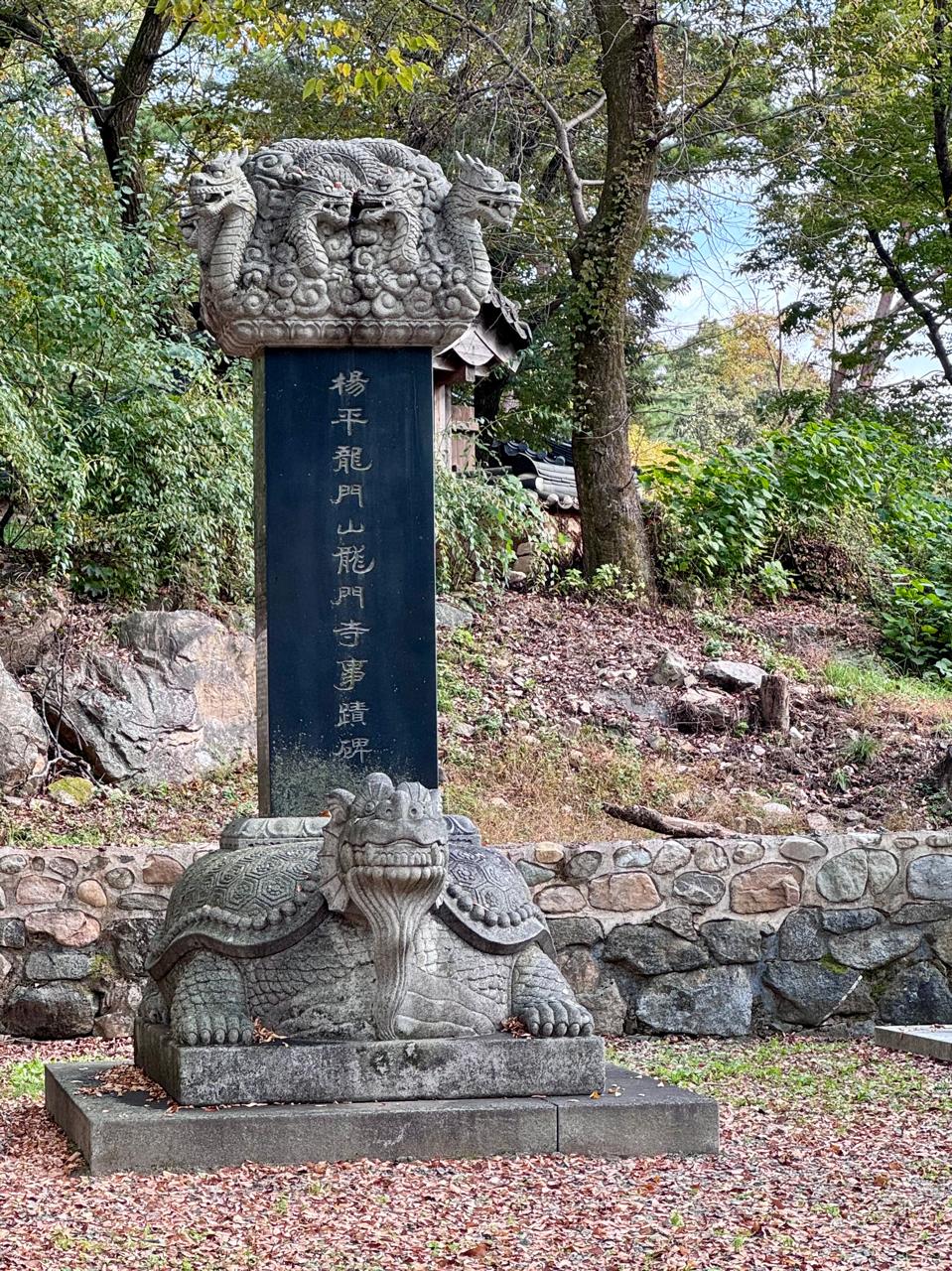
The Stupa of National Master Jeongji, a Zen Buddhist who passed away in 1395 during the transition period from Goryeo to Joseon dynasty. His ashes emitted radiance a rare spiritual phenomenon which moved the King Taejo, the founder of Joseon dynasty, to create this stupa in honour of the monk. It is situated some 300 metres from the temple grounds.
Beyond the Temple:
The Yongmunsa Temple complex and its scenic courtyard walk are legendary for autumn foliage. Every fall, the entire pathway transforms into a sea of vibrant maple hues, matching the allure of the ancient ginkgo tree that has beckoned visitors with its massive, golden-yellow canopy for over a millenia.
Beyond the temple walls, the courtyard also serves as the starting point for challenging hikes into the nearby peaks. Reaching the Gaseopbong summit or trekking over the ridge to Sanasa Temple are highly recommended routes if you are looking to conquer the rugged trails of Yongmunsan.