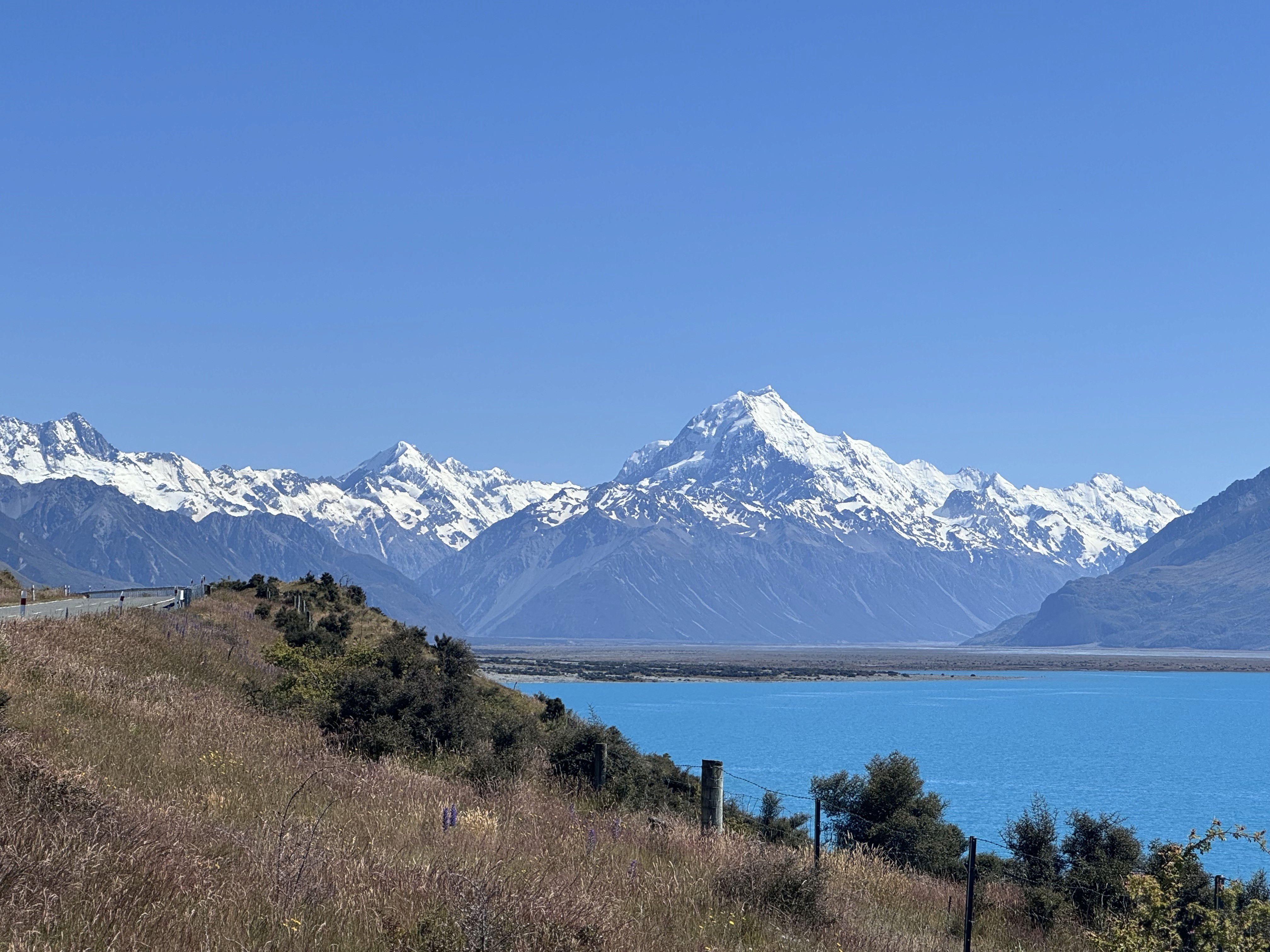
Conquering Ulsanbawi: The Ultimate Seoraksan Hiking Guide
Travel
—
South Korea
|
Ulsanbawi Rock is a legendary hiking destination nestled within Seoraksan National Park. It is a congregation of 6 granite peaks that form a formidable ridge above the lush, forested valleys below. Spectacular views, rich cultural sights, and a unique, adrenaline-pumping trail make it one of the most iconic short treks in South Korea. Summiting it is a deeply rewarding experience, offering gorgeous panoramas of Sokcho City and the East Sea on one side, and imposing granite cliffs on the other. The hike is considered a true test of your endurance with the final mile requiring a demanding ascent up more than 888 steep stairs to reach the summit
Trail Stats:
Total Distance: Around 7.5 km round trip/ 3.8 km one way.
Time Required: Depends on one's pace but still anywhere between 4 to 5 hours to and fro.
Elevation Gain: Roughly 650 meters (2200 feet) from the entrance gate, topping out at an altitude of 873 meters.
Difficulty: Moderate for the first two-thirds with little elevation gain of around 550-600 meters, turning strenuous at the final staircase with an almost vertical elevation gain of 400-450 meters in the final 1 kilometer of the stretch.
Cost: Free admission to the the temple and for the hike.
To beat the traffic, we left Seoul at the crack of dawn. The drive to the parking lot near the main gate took about 2.5 to 3 hours, putting our arrival time right around 9:30 AM to 10:00 AM.
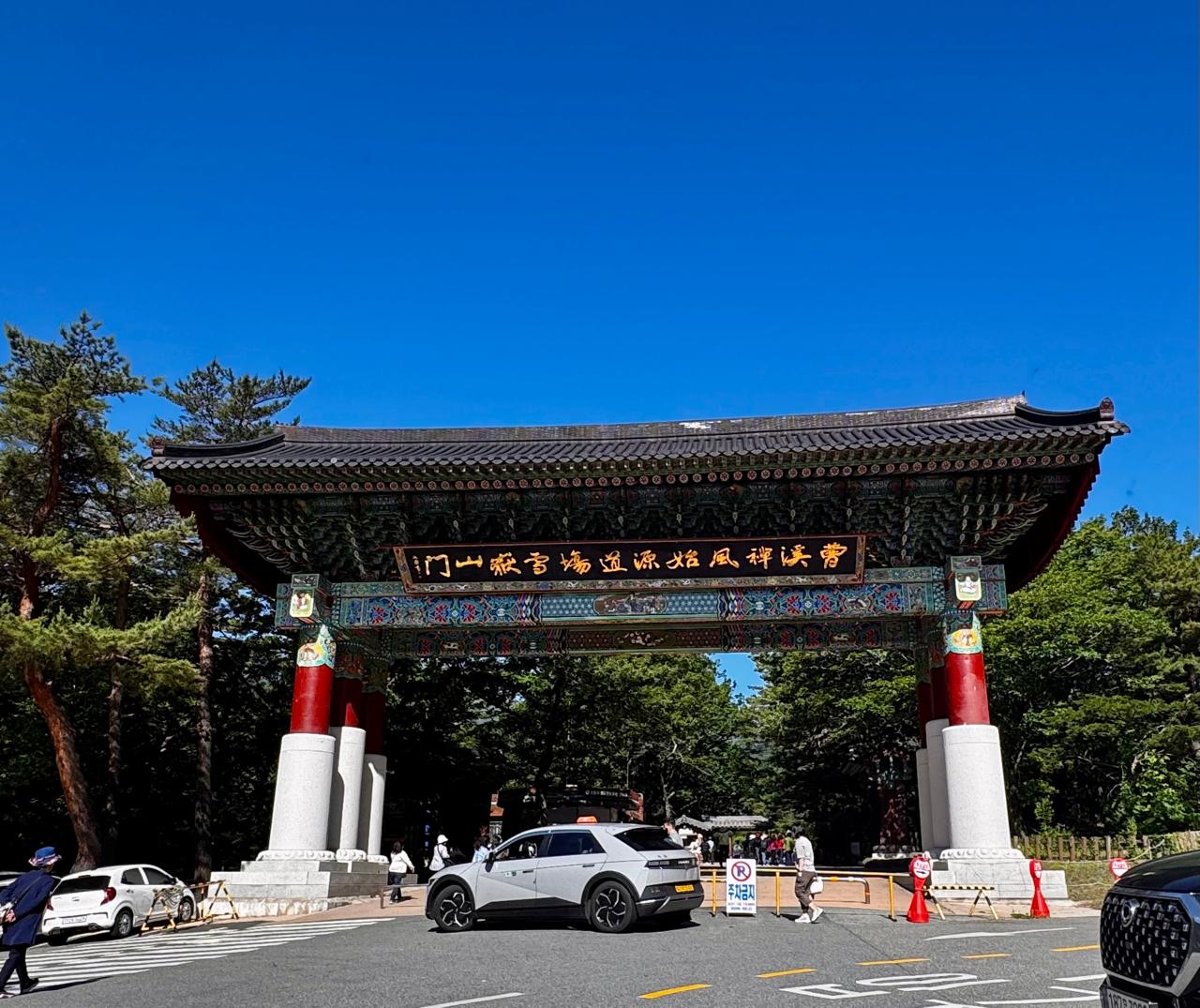
Sogongwon Entrance leading to the temple and the hike
The Three Phases of the Trail:
From there, Phase 1 of the hike begins, featuring a flat 2.2-kilometer walk from the entry gate to the official trailhead. This section follows a smoothly paved path and feels more like a casual stroll, with a very mild elevation gain of only about 80 meters.
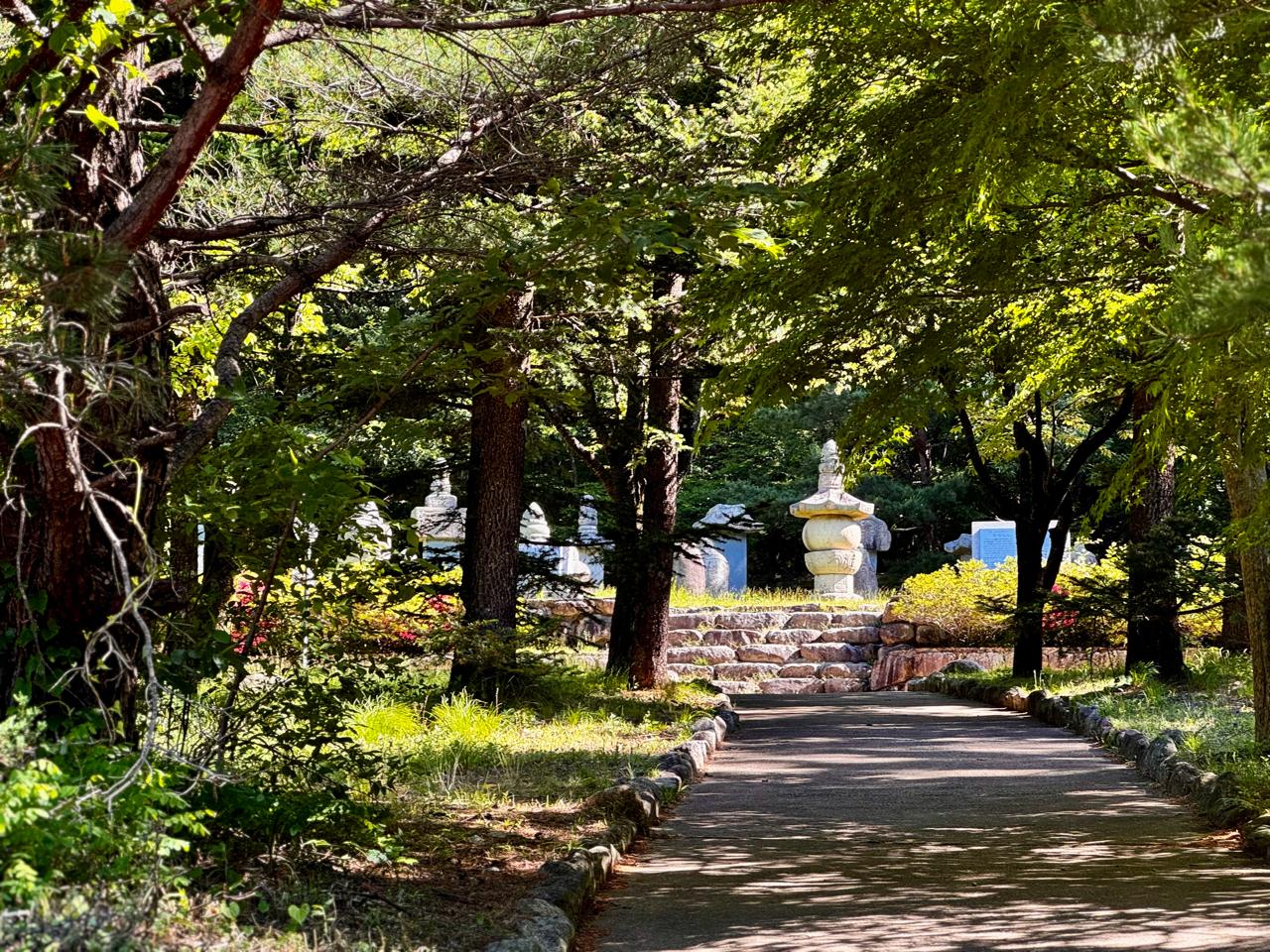
On the way to the Sinheungsa temple…
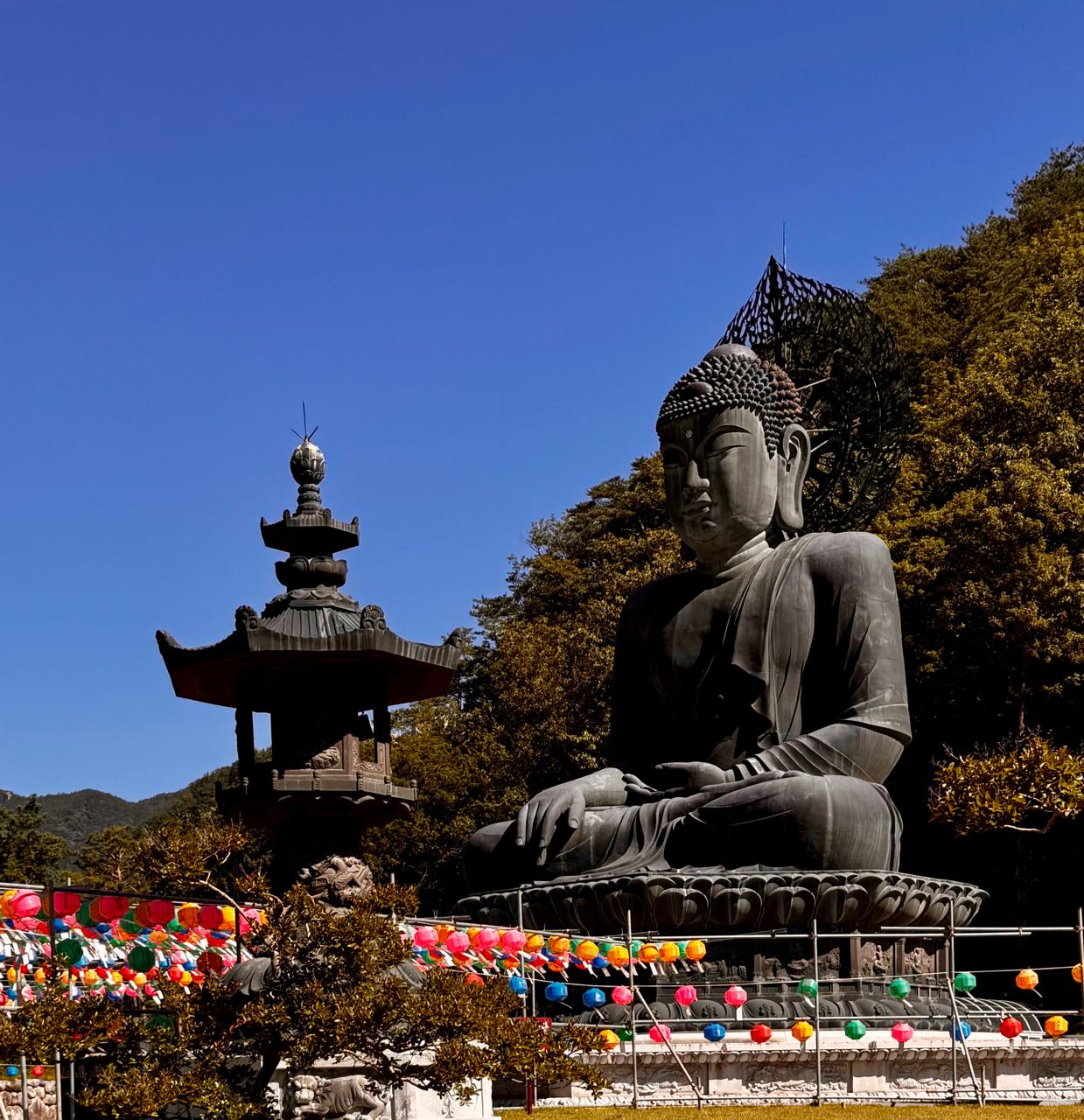
The 48-feet giant bronze Buddha which stands for the reunification of Korea
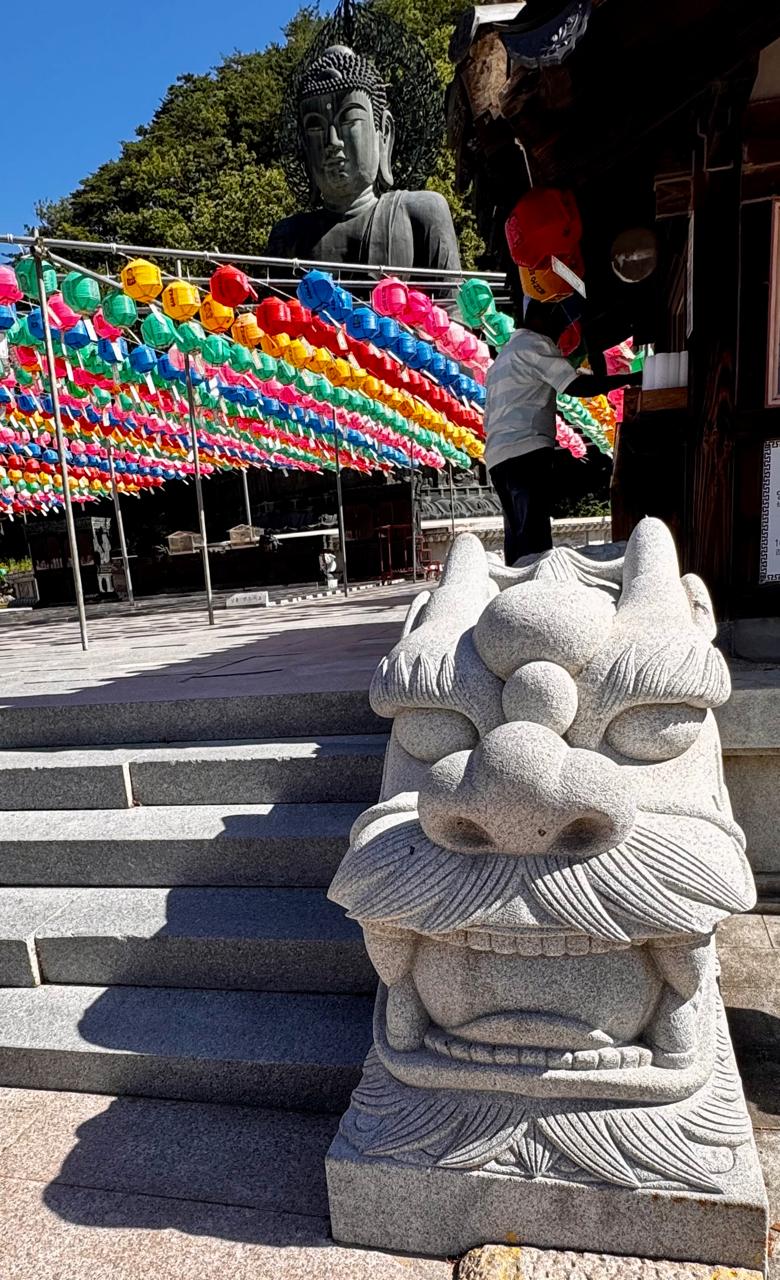
Mythical lion-like Haetae guarding the sacred temple grounds at Sinheungsa - they stand for justice and protection against disaster
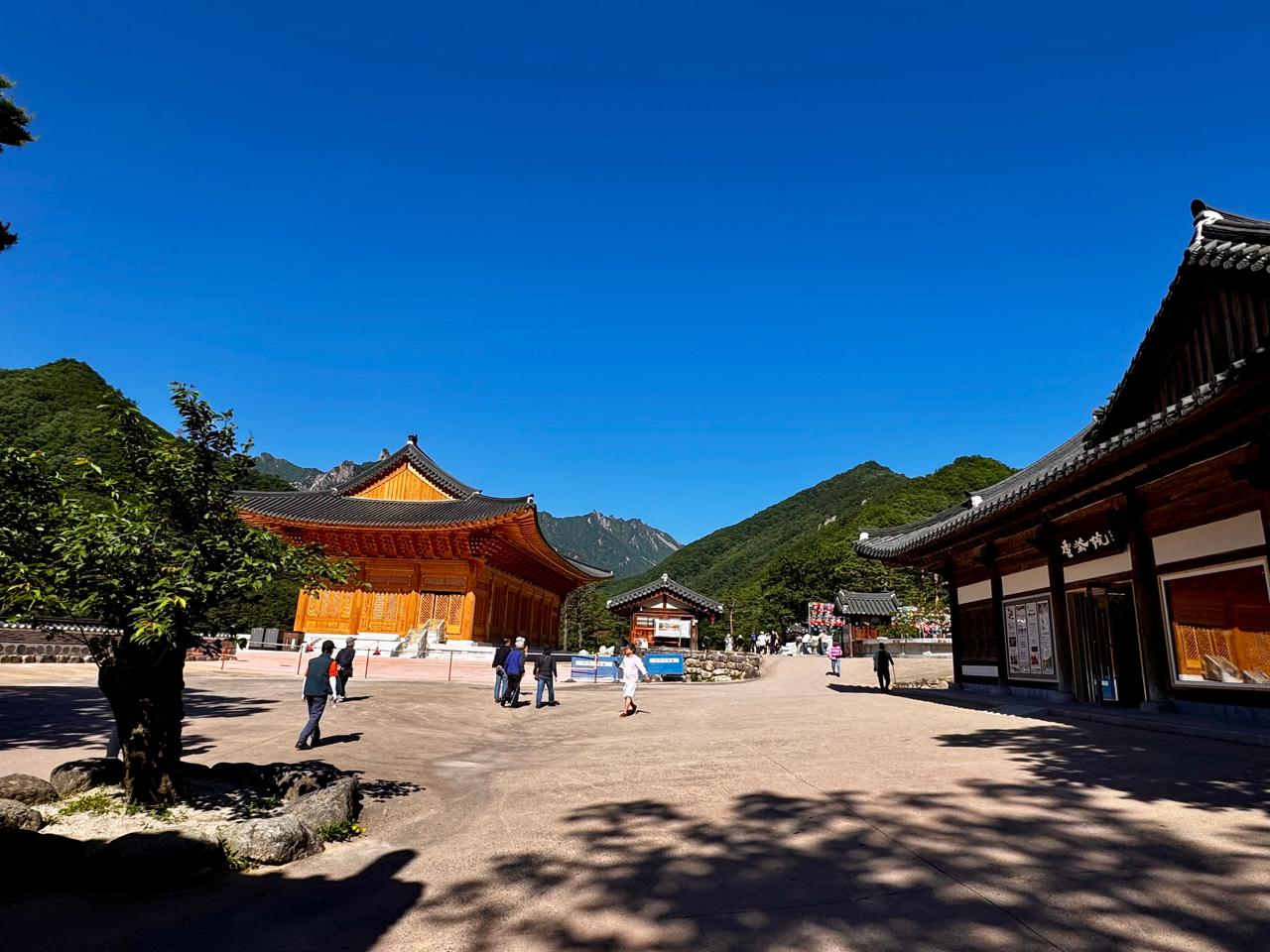
The temple grounds at Sinheungsa
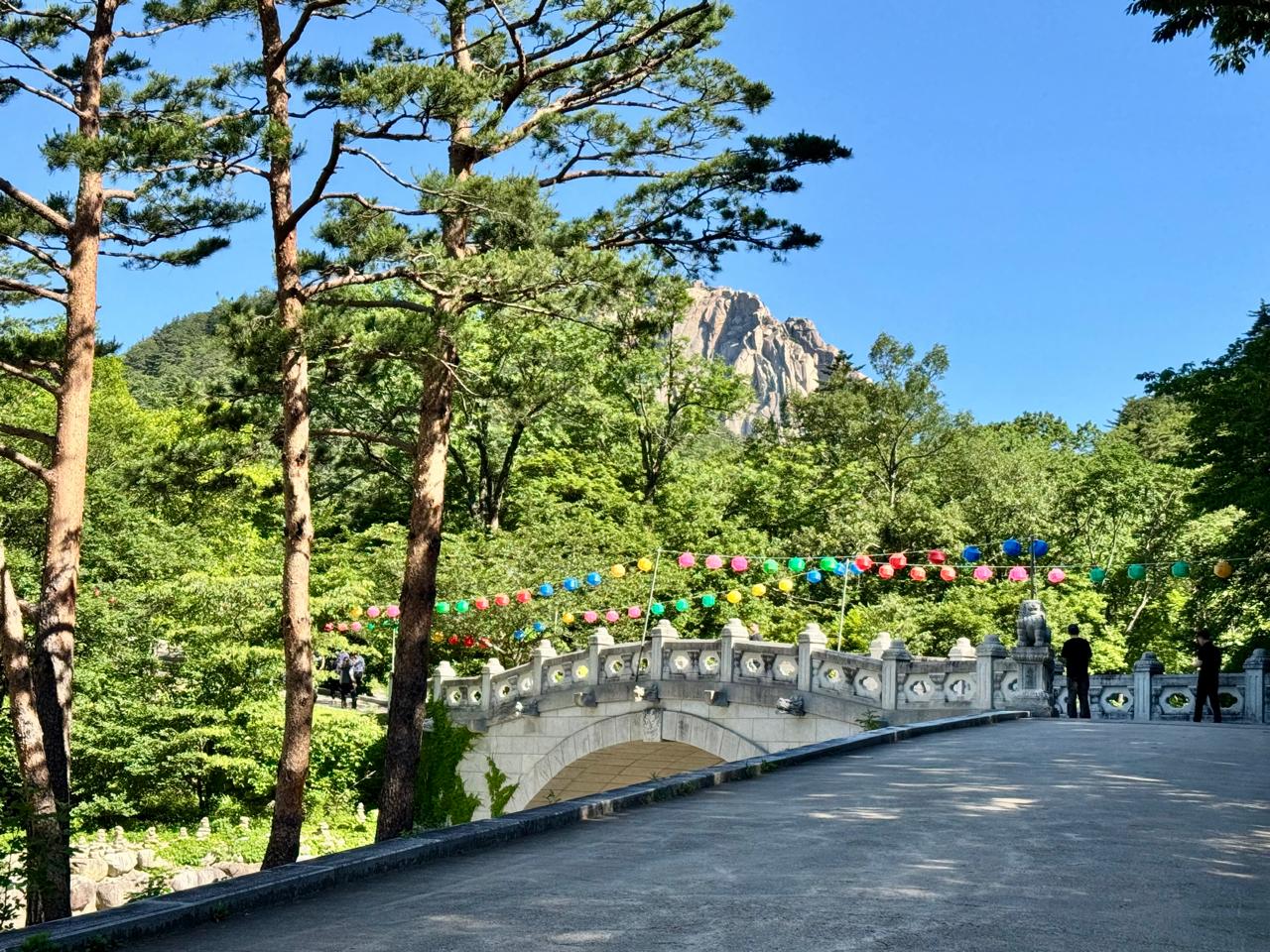
The Heonsugyo bridge just after the Sinheungsa temple connecting the temple grounds to the Seoraksan National Park pathway
From the bridge, you can catch your first glimpse of the jagged peaks of Ulsanbawi towering high above the lush green forest canopy. After crossing into the historic Sinheungsa Temple complex, you will enter a peaceful forest path shaded by dense maple and pine trees alongside a gurgling mountain stream.
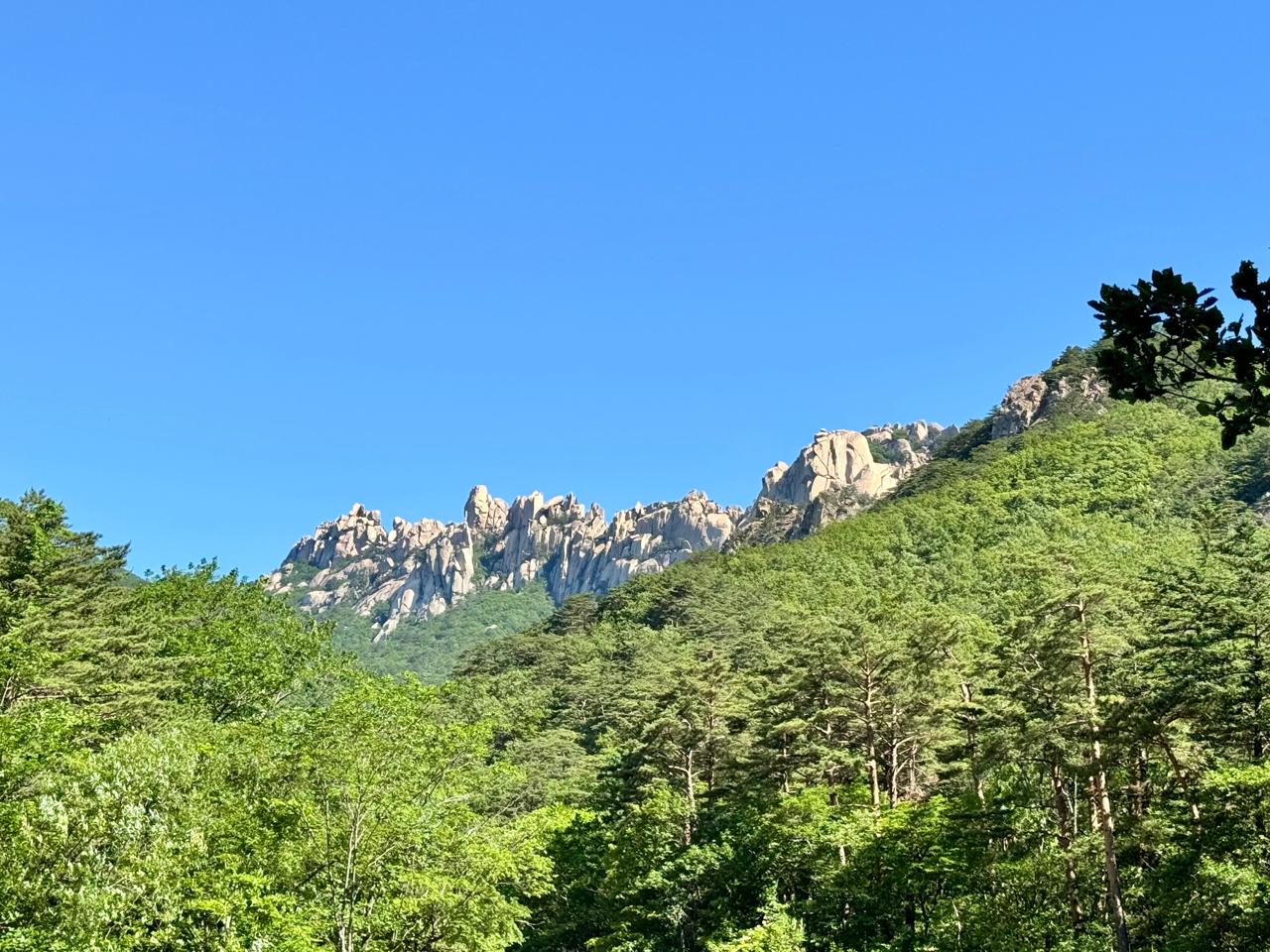
A glimpse of the Ulsanbawi peaks
Phase 2 of the Ulsanbawi hike is primarily a 0.4-mile transition zone. The trail shifts from the paved asphalt roads of the Sinheungsa temple complex into a dense forest, climbing a steady 100 meters of elevation before culminating at the famous Gyejoam Grotto and Heundeulbawi Rock.
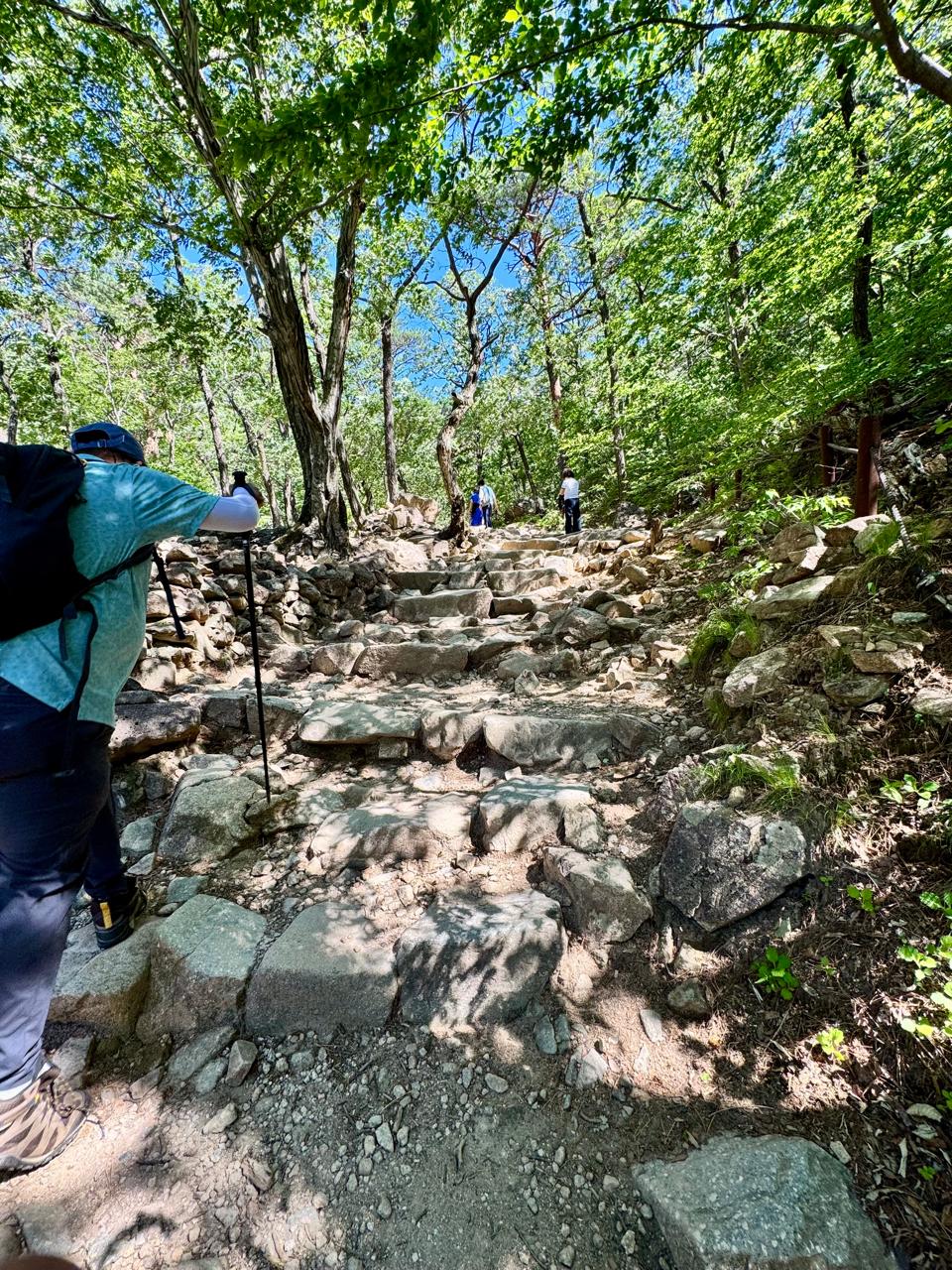
The forested trail of the hike after the temple complex
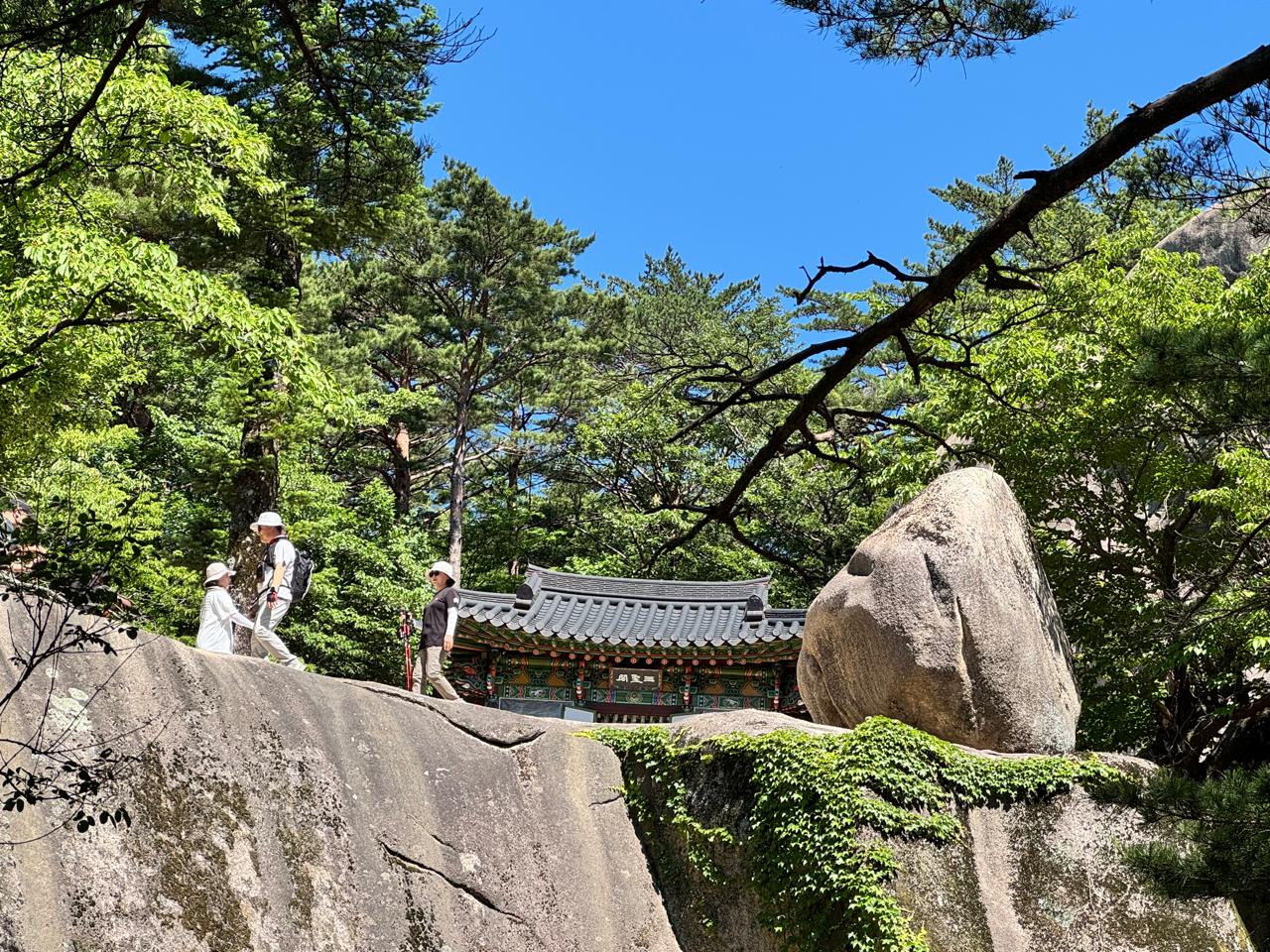
The Heundeulbawi rock
The Heundeulbawi Rock, or the Rocking Stone, is another fascinating feature on this trail. This massive, spherical granite boulder sits directly opposite the grotto and is famous for its unique physics: it sways back and forth when pushed with firm pressure, yet it has never dislodged from its base. It serves as a fantastic photo-op for hikers and visitors alike.
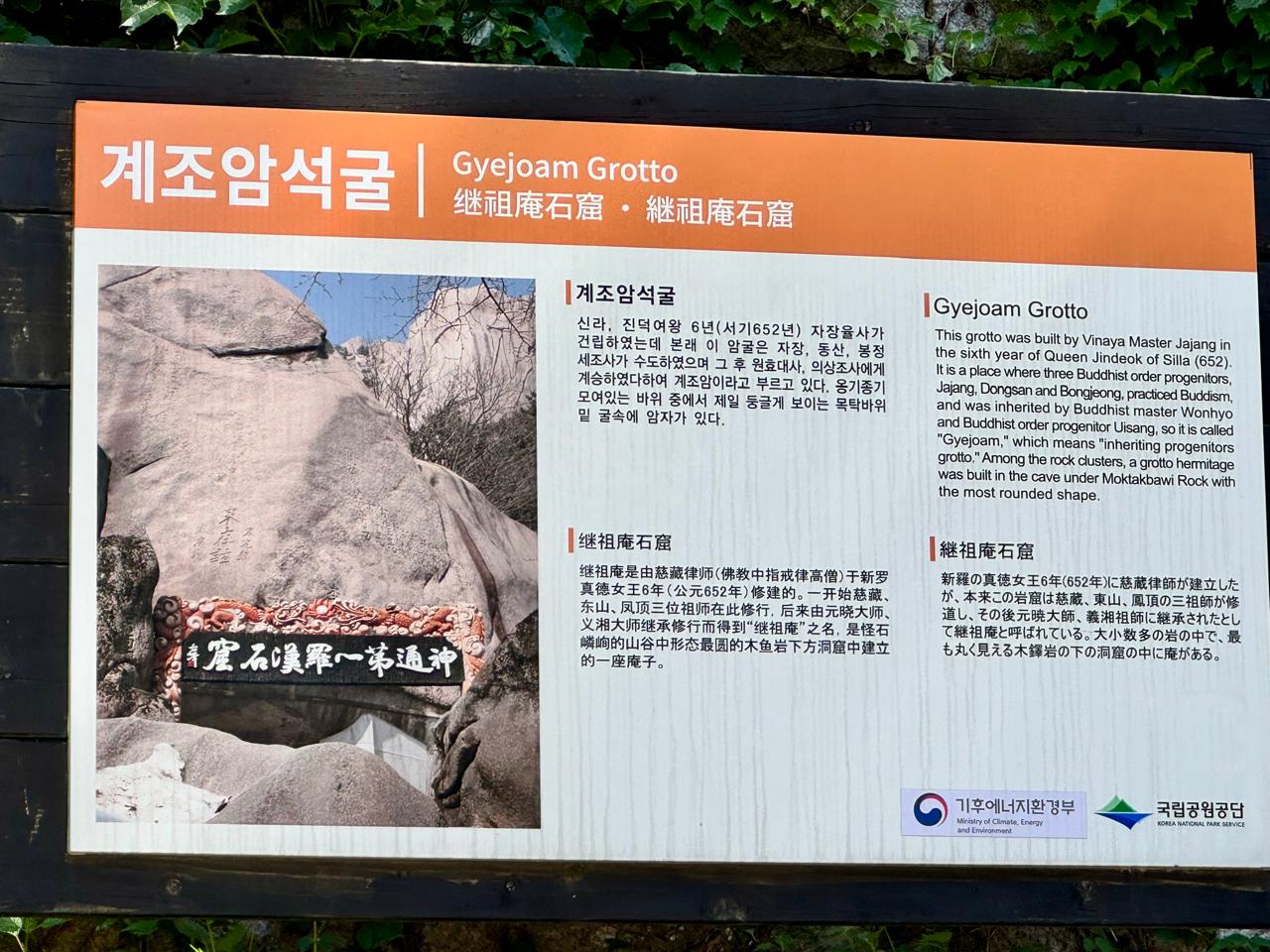
The Gyejoam grotto was founded in 652 AD in the Silla dynasty and is the spiritual sanctuary and resting area before the vertical stairs of the hike begin. Here you can refill your water bottle one last time before the stairs begin.
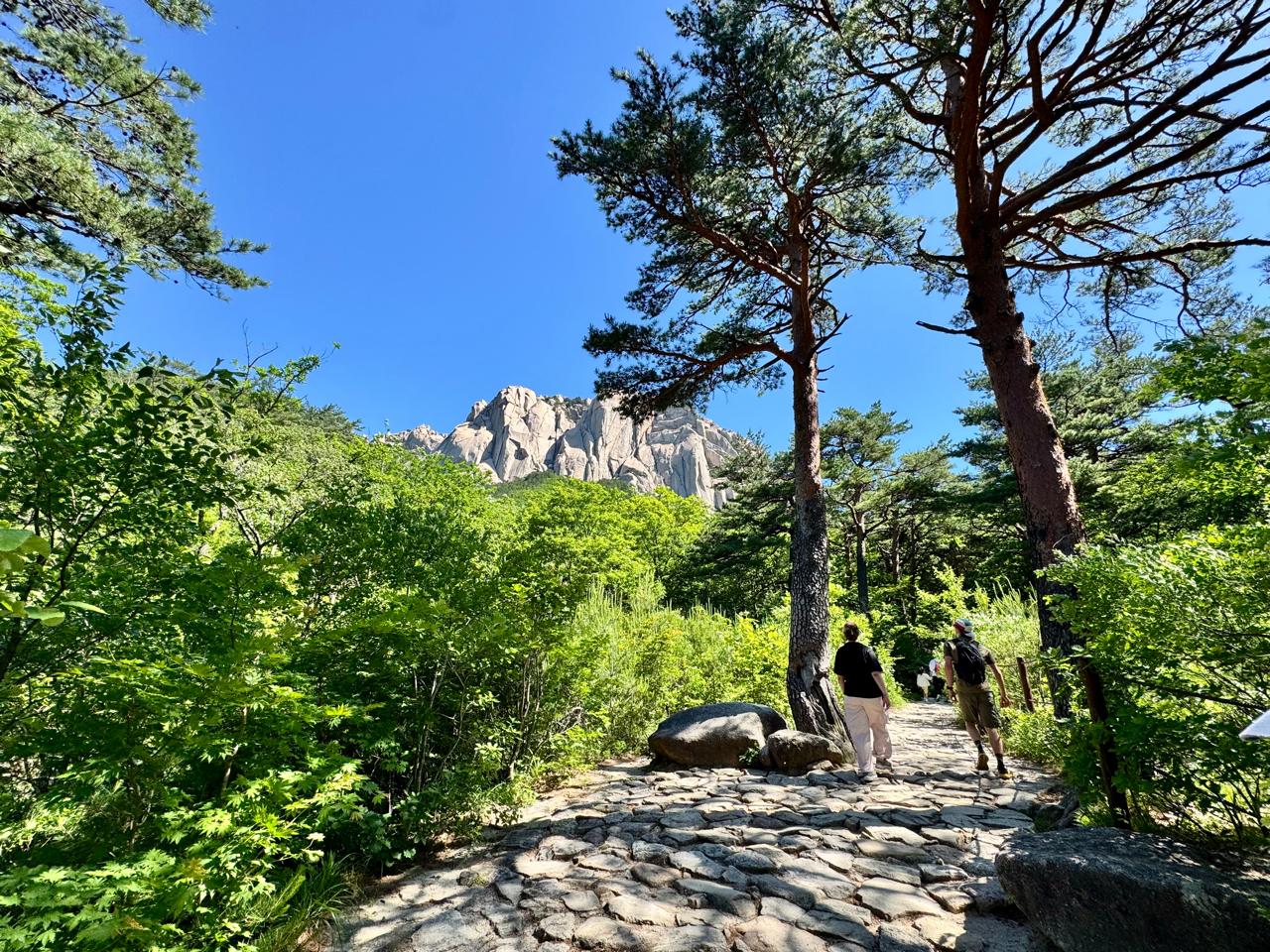
The Ulsanbawi peaks once again lure us to summit them…
The third phase of the hike begins soon after. As the most exhilarating part of the Ulsanbawi hike, this section is popularly known as the 'Stairway to Heaven'. Here, you must conquer 888 steep metal and wooden steps bolted directly into the sheer face of the granite cliff. Entirely exposed to the elements, it is a gruelling climb with howling winds and dizzying drop-offs beneath your feet. However, the breathtaking visuals at the summit make every ounce of effort worth it. Take a look yourself:
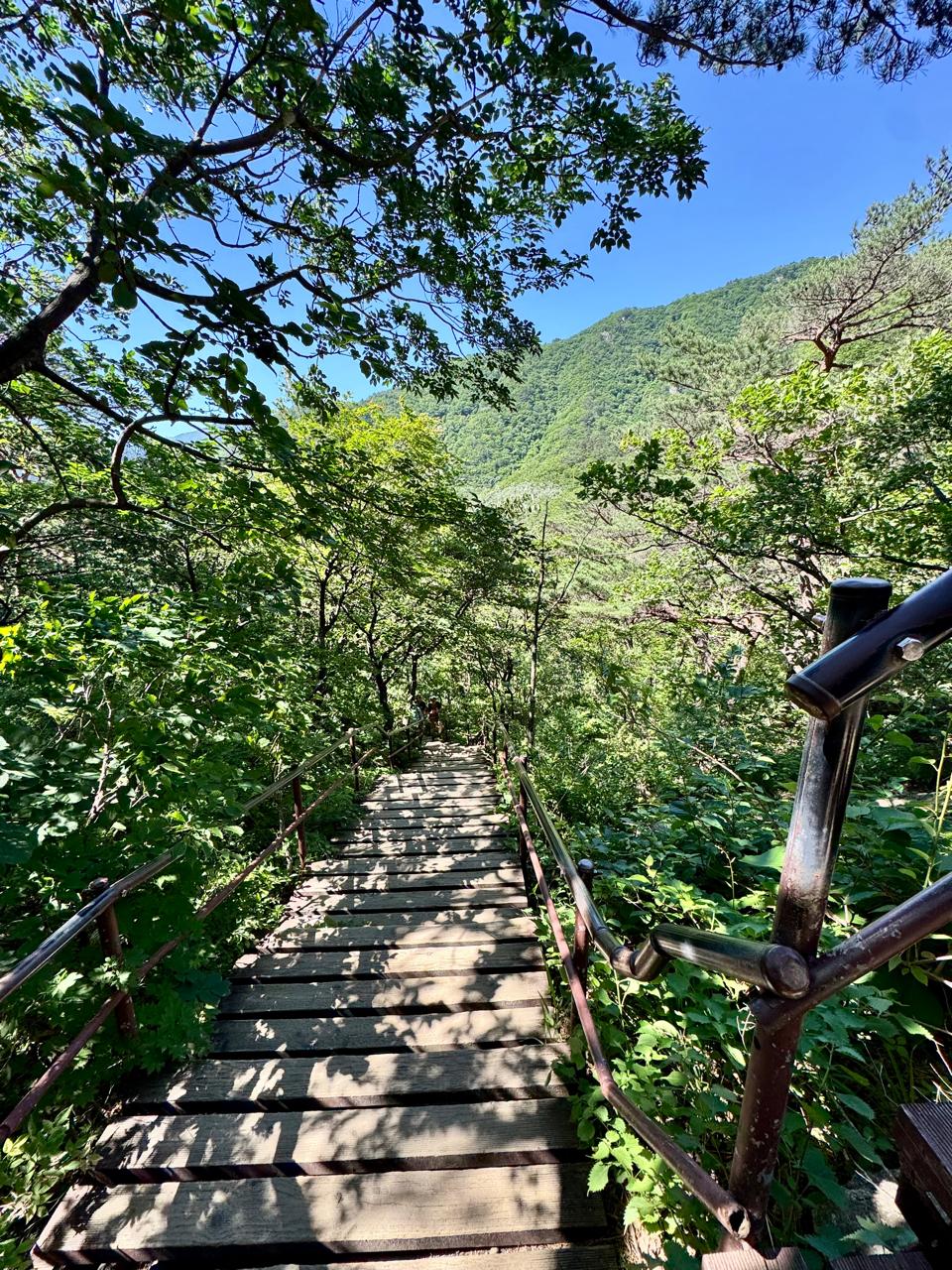
The thinning forest cover after crossing the grotto as one approaches the staircase summit, the final vertical mile of the hike.
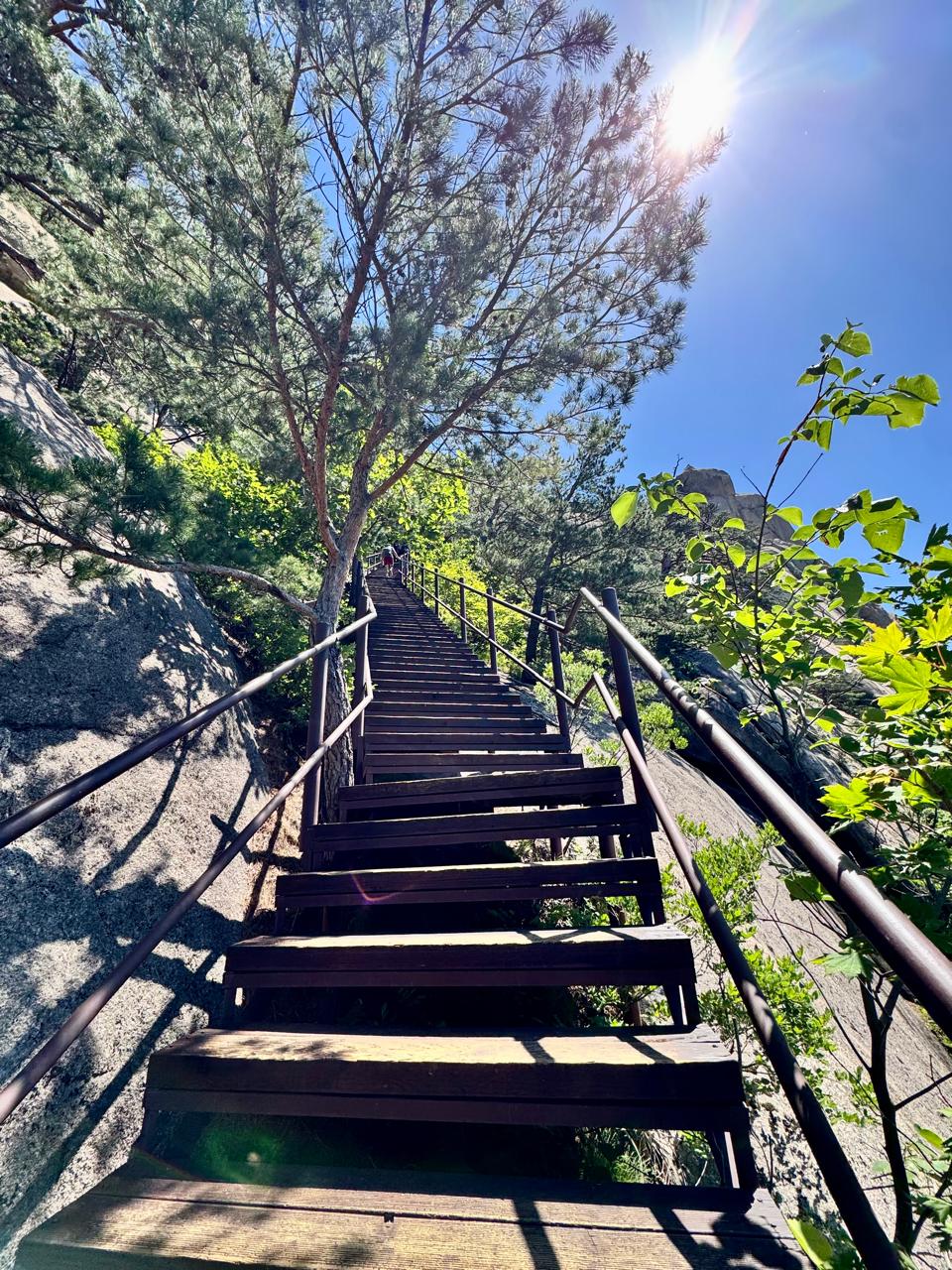
The vertical grind begins…
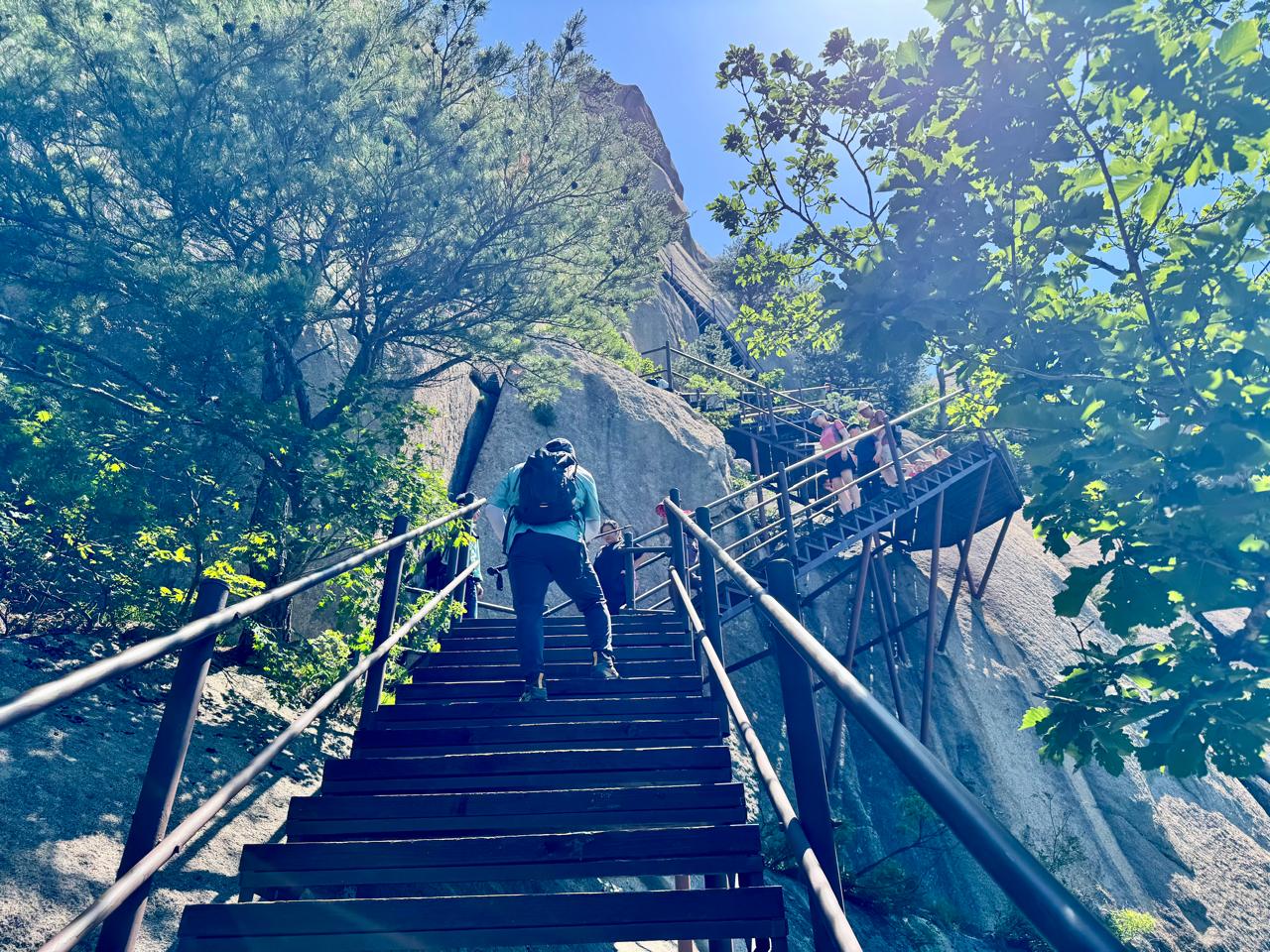
It continues for over a kilometer…
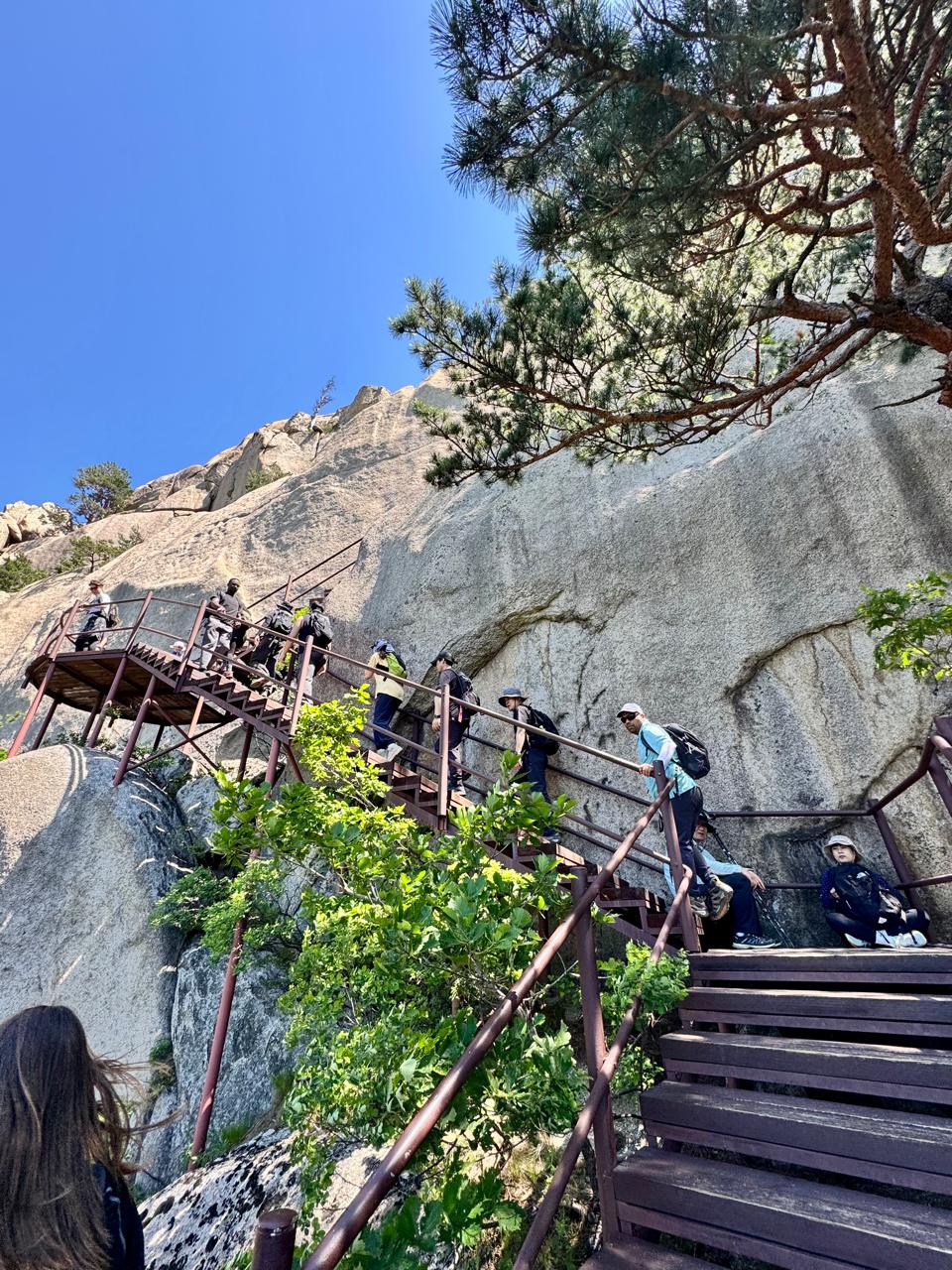
Through twists and turns, the climb continues along the exposed granite walls of the cliff.
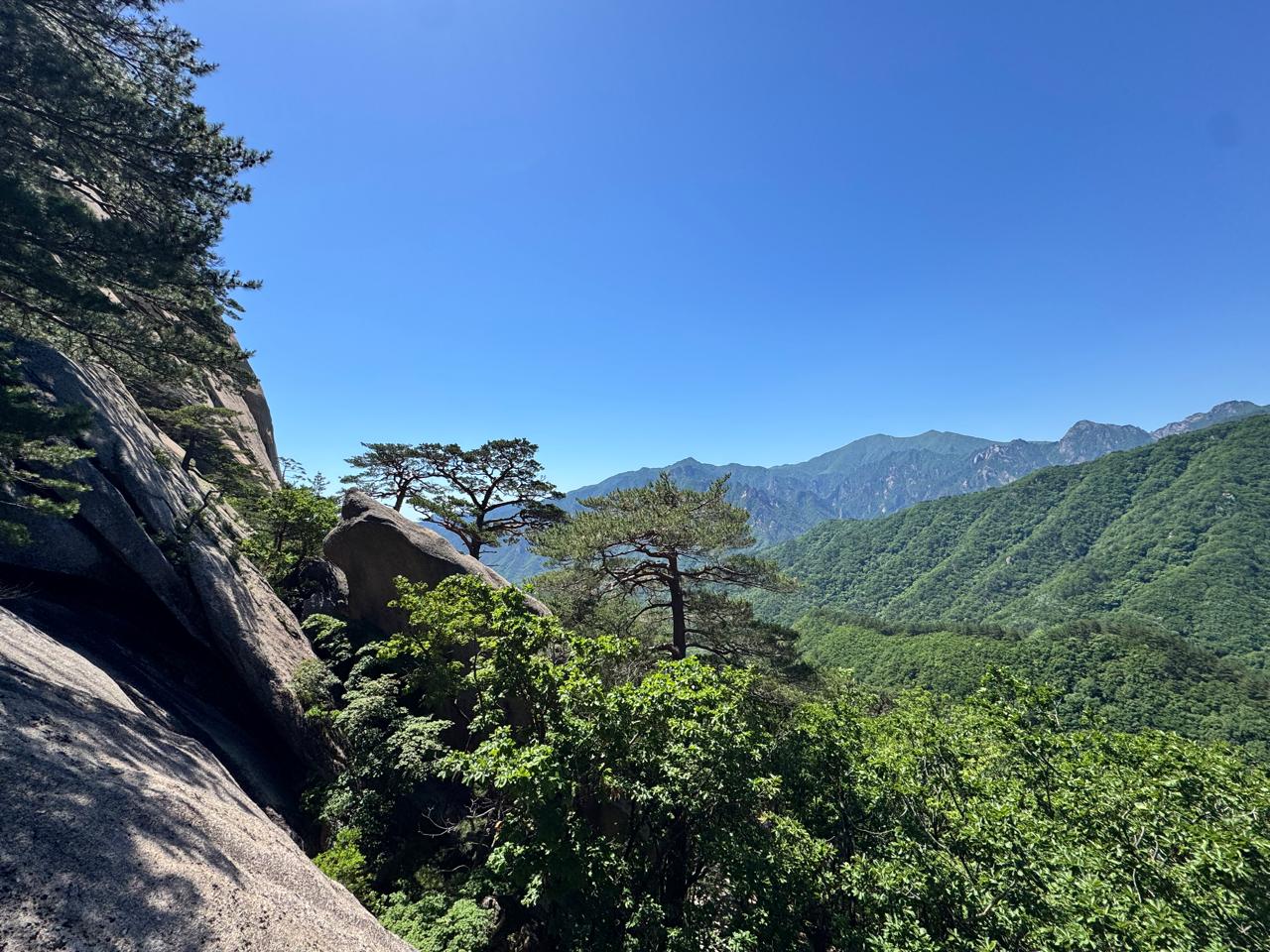
Sheer vertical drop-offs from the stairs…
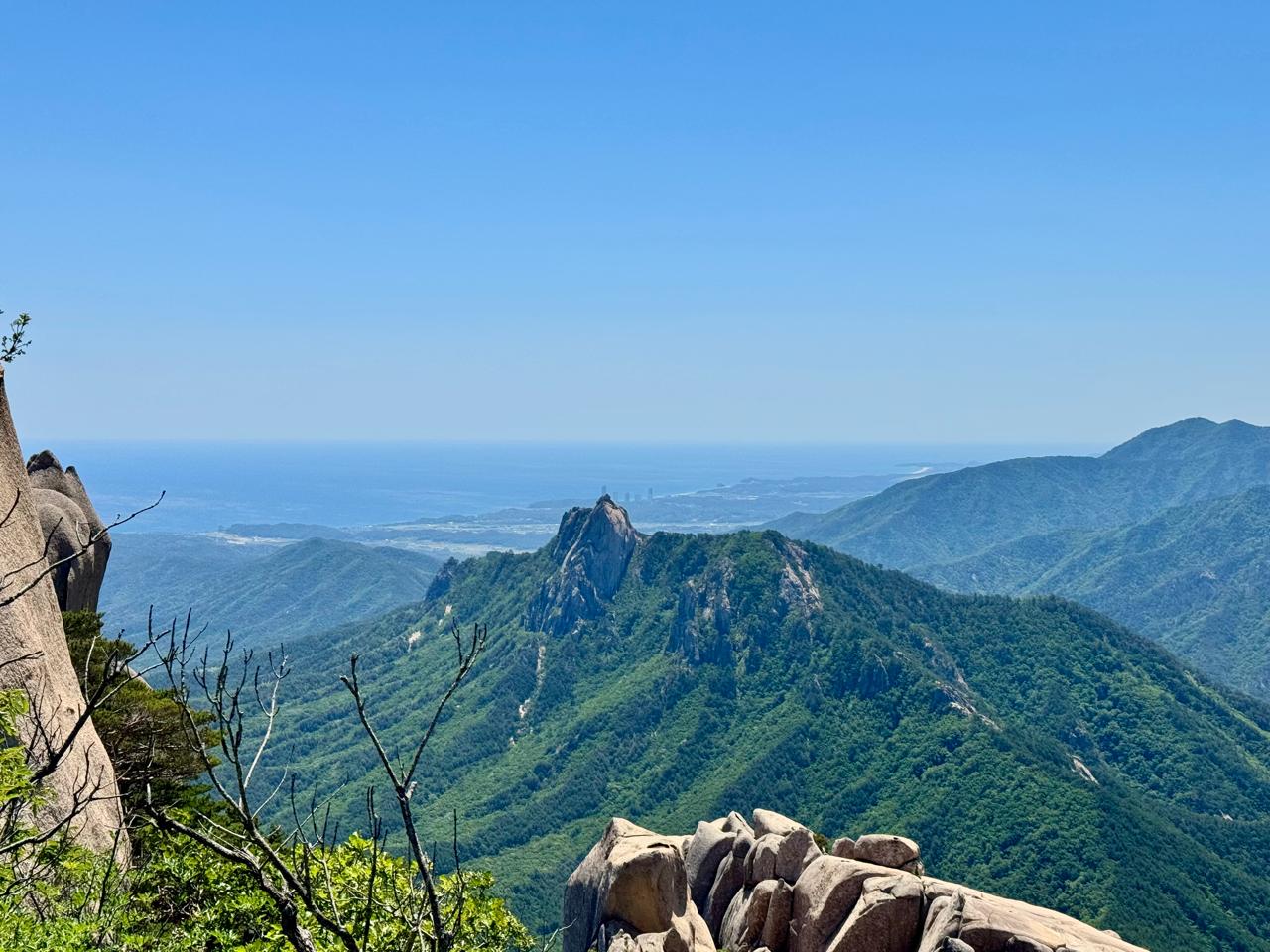
The East Sea and the city of Sokcho spread in front of us
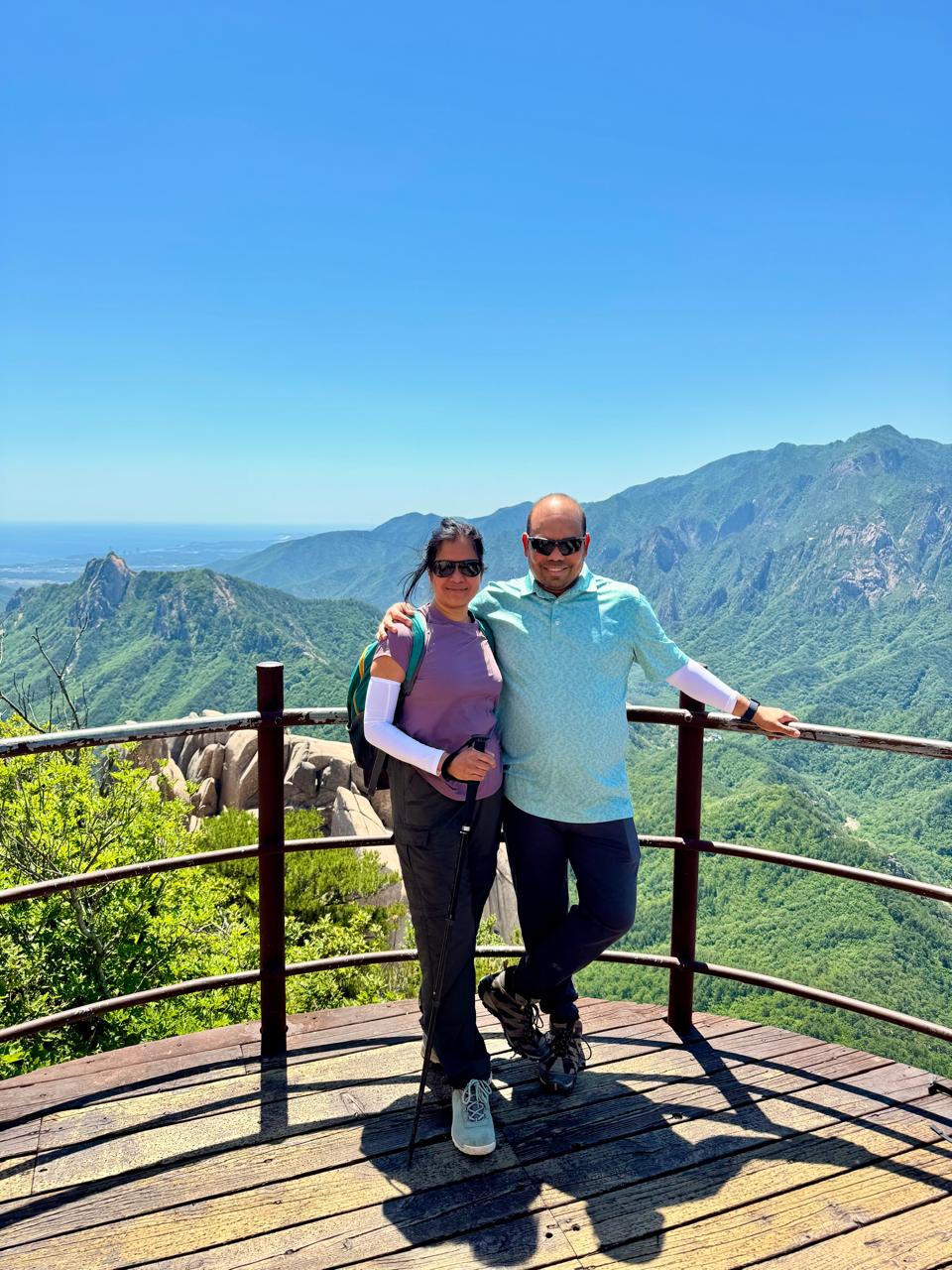
The summit splits into distinct eastern and western viewing areas once you clear the final staircase - this is the eastern deck with the East Sea and Sokcho views behind us.
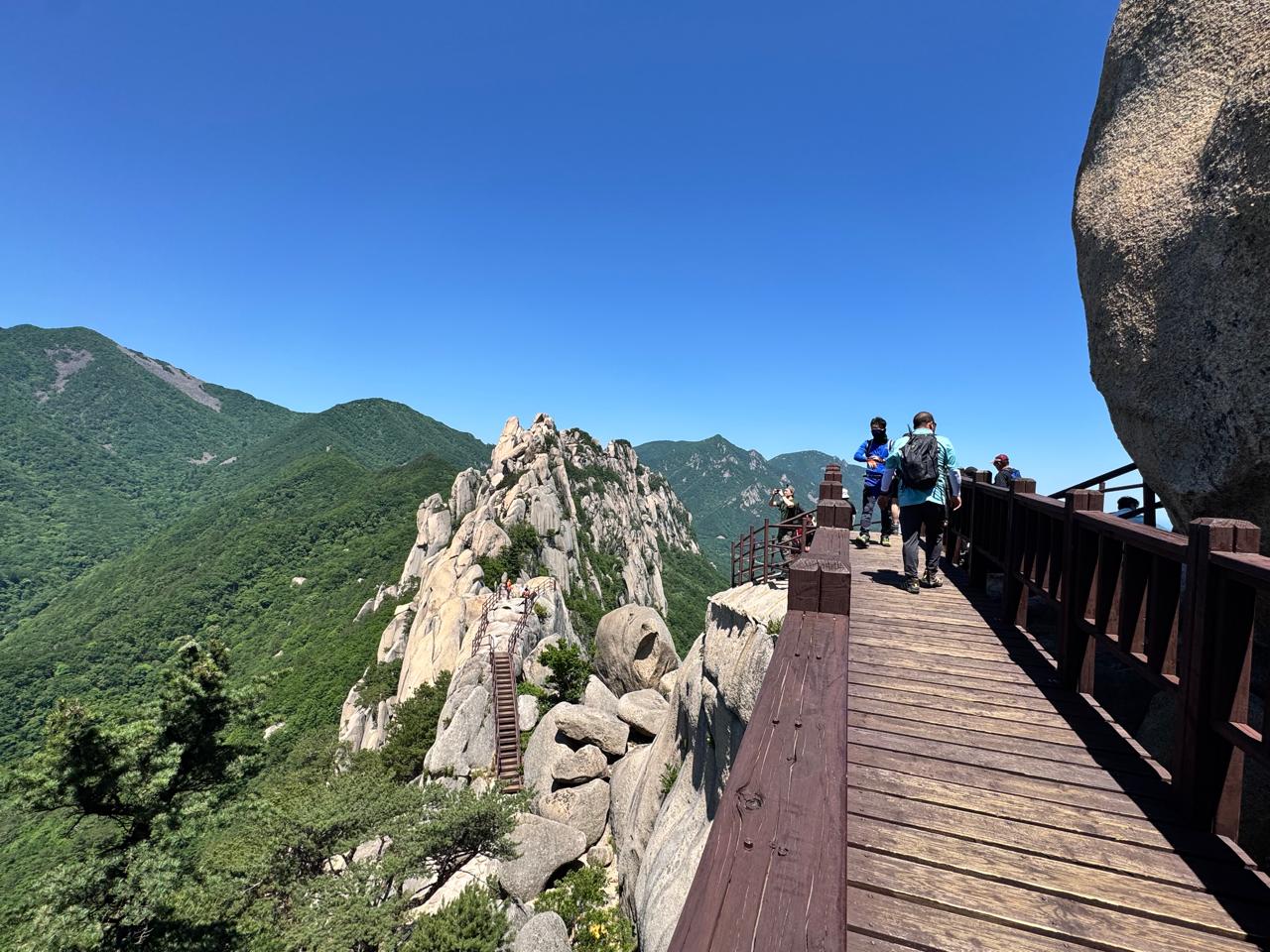
The western viewing deck
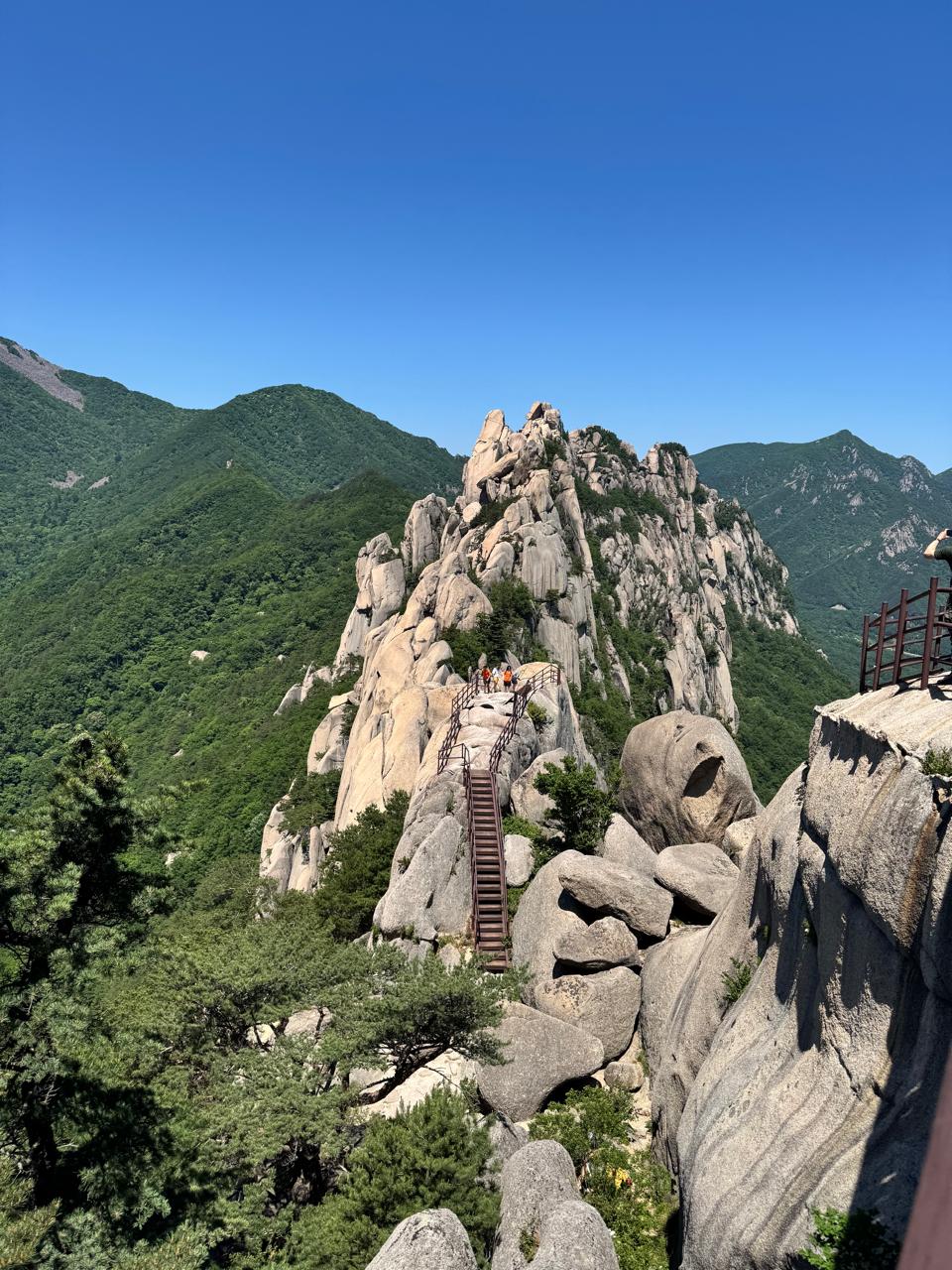
The jagged peaks of the Ulsanbawi beckoned…
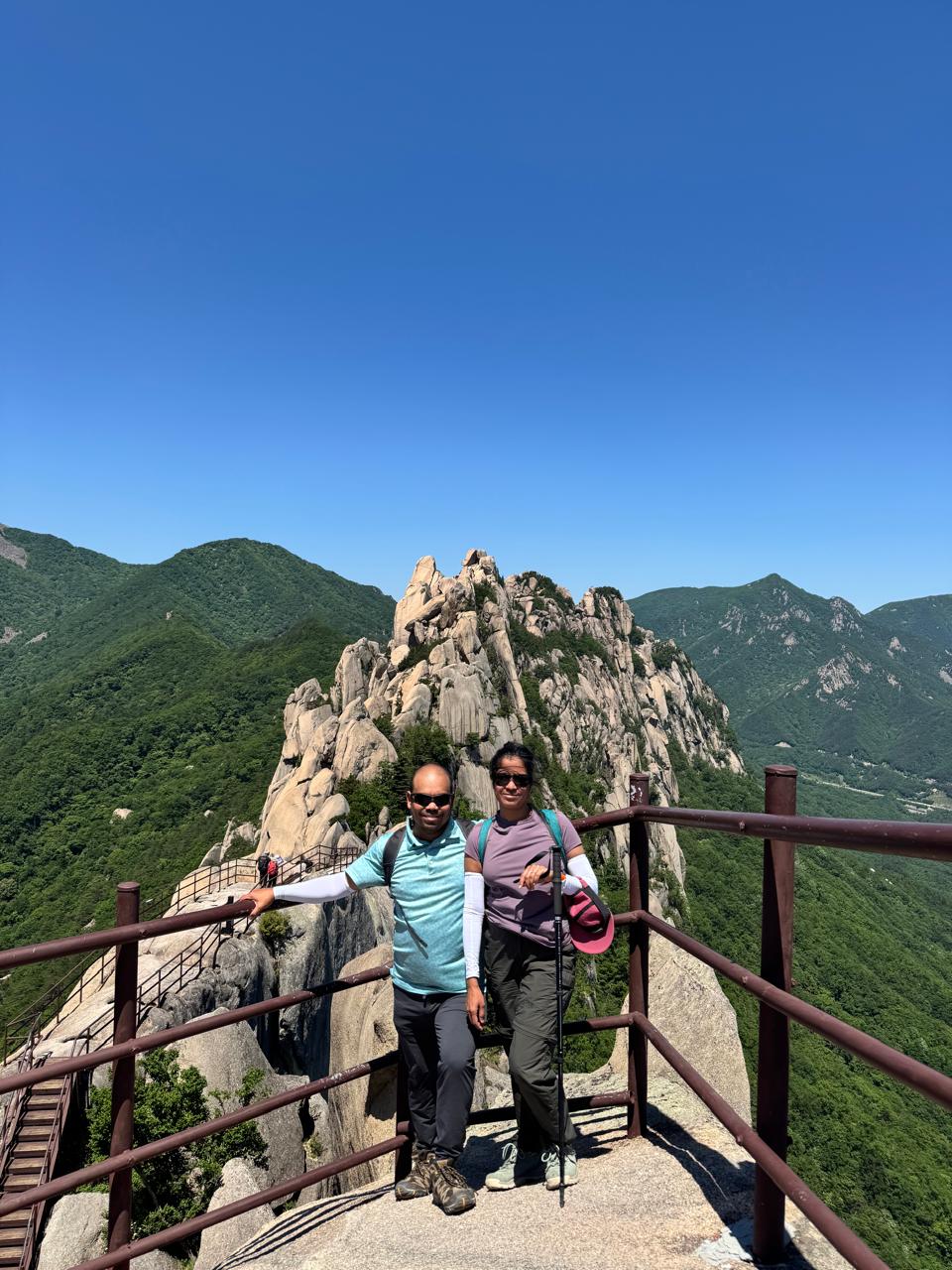
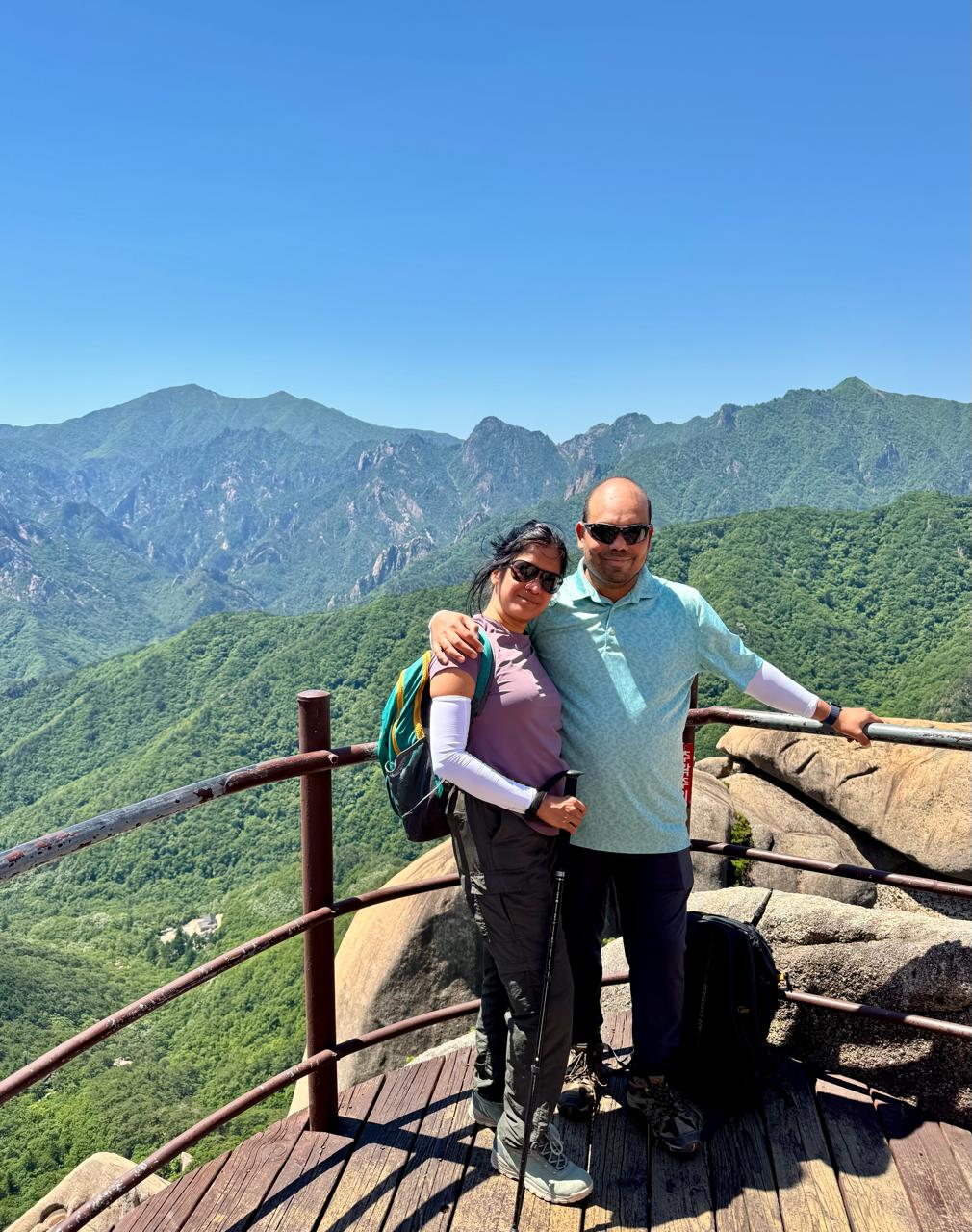
A photo-op not to be missed :)
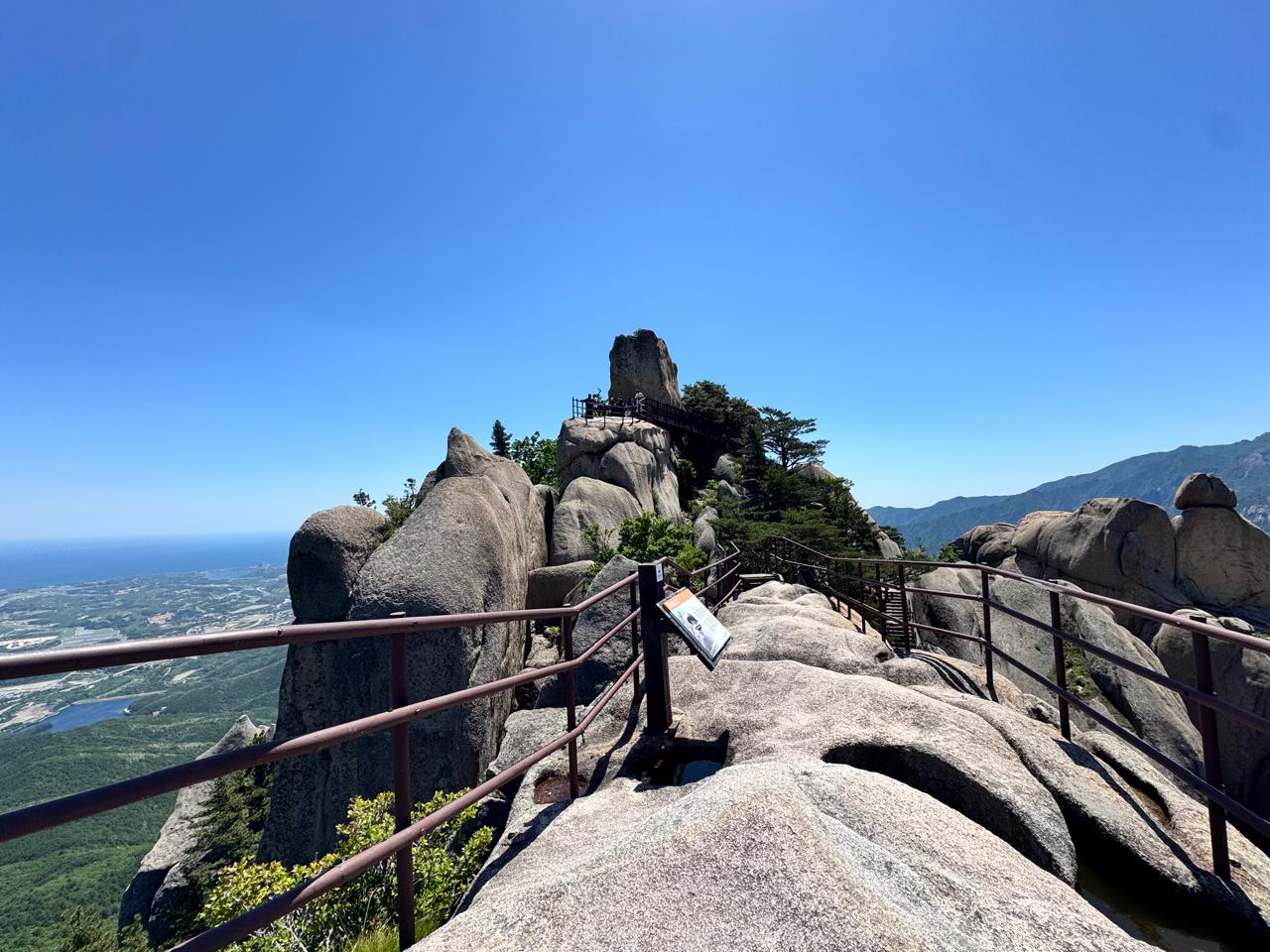
The furthest accessible viewing point of the Ulsanbawi hike
For me, the ascent actually felt easier than the descent. It was a clear sign that I need to strengthen my 'braking muscles' to handle steep downhill treks more efficiently. However, the moment we finally made it back to the flat Sinheungsa Temple complex, the hard work was done. We decided to unwind at a charming little cafe right by the stream. To beat the heat, we ordered some ice-cold pumpkin sikhye (a traditional sweet rice punch)—and it was incredibly refreshing.
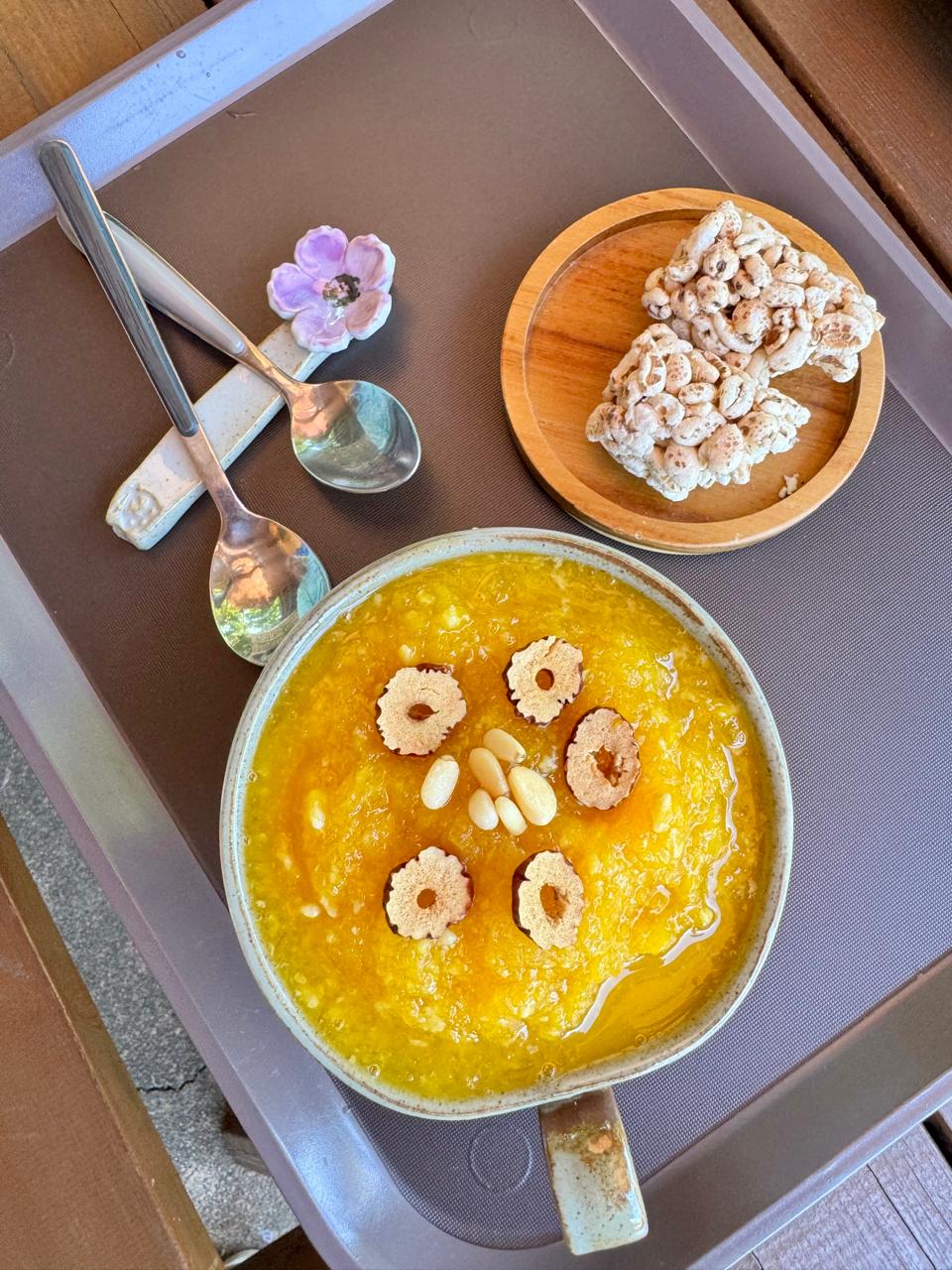
The pumpkin sikhye was truly refreshing after the hike!
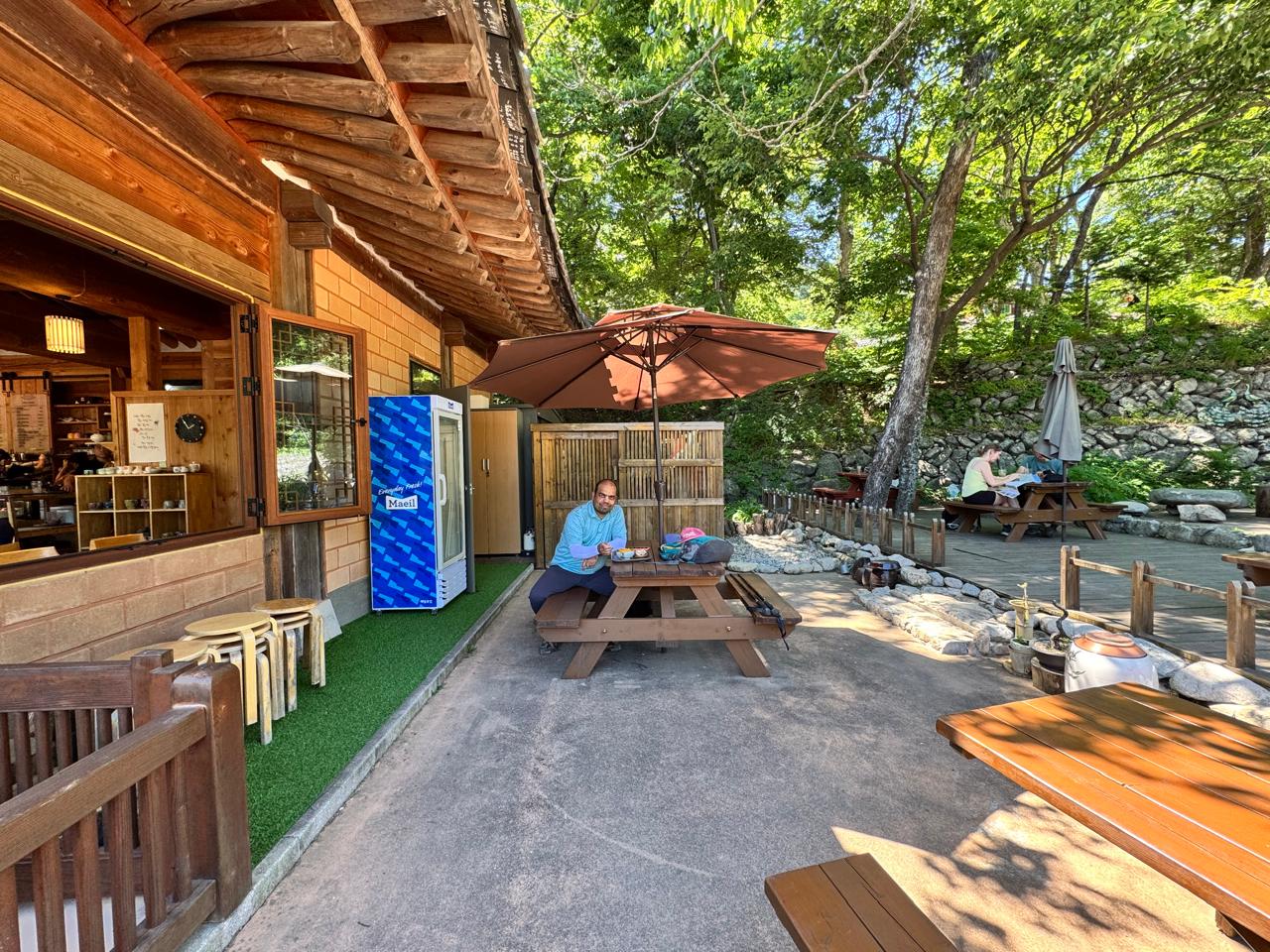
The cozy little cafe at the base of the hike
We stayed back at Sokcho for the night and headed back to Seoul the next day.
At the end of the day, Ulsanbawi was so much more than just a tally of 888 steps. The hike transformed into a beautiful memory of spiritual landmarks and stunning natural beauty—etched deeply in our minds long after our sore muscles healed. So, if you are in South Korea, definitely put this hike on your bucket list. Your legs might protest for a day or two, but your memories will always cheer you on.